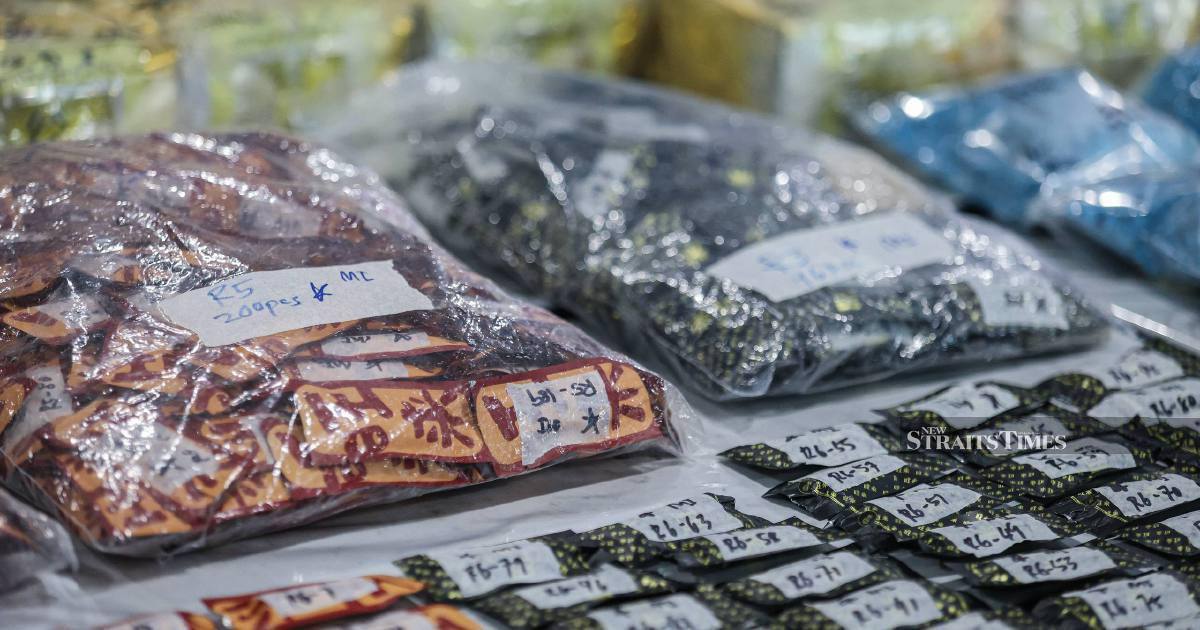
A major drug interdiction operation off Johor has resulted in the arrest of two brothers suspected of orchestrating a maritime smuggling attempt involving contraband worth RM6.85 million. The Malaysian Maritime Enforcement Agency (MMEA) intercepted the operation on Sunday, preventing what would have constituted one of the region's more substantial illegal drug transfers and drawing fresh attention to the evolving methods employed by transnational trafficking networks operating across Southeast Asian waters.
The seized shipment included quantities of a synthetic drug known as 'Piu Piu', which has emerged as a concerning addition to the region's illicit pharmaceutical landscape. The substance represents part of a broader pattern of new synthetic drugs proliferating throughout Southeast Asia, often manufactured in clandestine laboratories across the region before being distributed through established trafficking routes. The identification of this particular drug in the bust underscores how criminal organisations continue to innovate their product offerings in response to enforcement pressure and shifting market demand across the region.
The MMEA's success in intercepting this operation reflects ongoing enhancement of maritime surveillance capabilities and intelligence-sharing mechanisms designed to combat cross-border smuggling activities. The agency's ability to detect and intercept the trafficking attempt demonstrates the critical importance of maritime enforcement in disrupting supply chains that rely on sea routes to circumvent land-based border controls. Given Malaysia's extensive coastline and strategic position within major shipping corridors, the effectiveness of such operations proves essential to regional security efforts.
The destination country for this shipment remains significant in understanding the broader trafficking pattern, as the attempted transfer highlights how criminal syndicates exploit maritime routes to move contraband between neighbouring nations. The choice of sea-based transport provides traffickers with perceived advantages in evading detection compared to land crossings, where checkpoint infrastructure and personnel create more visible enforcement bottlenecks. However, enhanced coordination between maritime agencies and improved detection technologies have progressively narrowed these advantages.
Synthetic drugs like 'Piu Piu' present particular challenges for law enforcement agencies across Southeast Asia, as their chemical compositions can be modified relatively quickly to circumvent existing legal restrictions. This cat-and-mouse dynamic between manufacturers and regulators creates an ongoing arms race where authorities must continually update controlled substance lists while chemists adapt formulations. The high street value of these substances—as evidenced by the RM6.85 million valuation—makes them particularly attractive to trafficking organisations despite the heightened legal risks involved in their distribution.
The arrest of the two brothers adds another chapter to Malaysia's intensifying struggle against organised drug trafficking, which remains among the country's most persistent security concerns. Family-based criminal enterprises, where close relatives coordinate smuggling operations, represent a notable aspect of trafficking networks operating throughout the region. Such arrangements potentially offer advantages in operational security and trust, though they also expose entire family units to severe legal consequences under Malaysia's strict narcotics laws.
The case illustrates the cross-border nature of drug trafficking challenges confronting not only Malaysia but the entire Southeast Asian region. Criminal syndicates operating across multiple countries create enforcement complexities that require sophisticated intelligence gathering and international cooperation. The Malaysian authorities' ability to identify, track, and intercept this particular operation demonstrates the value of sustained commitment to maritime security and transnational criminal intelligence.
Looking forward, this bust serves as a reminder of the substantial profits driving trafficking activities and the persistent ingenuity of criminal organisations in adapting their methods. The emergence of new synthetic substances adds another layer of complexity to enforcement efforts already stretched across numerous fronts, including traditional heroin and methamphetamine trafficking. Regulatory agencies must balance rapid response protocols with scientific verification to ensure that newly identified drugs are promptly added to controlled substance schedules.
The seizure also underscores the critical role of inter-agency coordination within Malaysia's law enforcement ecosystem. The MMEA's operation likely benefited from intelligence sharing with police narcotics units, customs authorities, and possibly international partners, reflecting how modern drug enforcement increasingly depends on integrated approaches rather than siloed institutional responses. Such coordination remains essential as trafficking organisations themselves operate across jurisdictional boundaries with increasing sophistication.
For Malaysia's maritime security apparatus, operations of this scale demonstrate both the agency's operational capacity and the ongoing challenge posed by the sheer volume of vessel traffic through Malaysian waters. Detecting contraband amid legitimate commerce requires a delicate balance between effective security measures and maintaining efficient maritime commerce that remains vital to the regional economy. The ability to identify and intercept high-value smuggling attempts while minimising disruption to legitimate trade flows represents a defining challenge for enforcement agencies.

