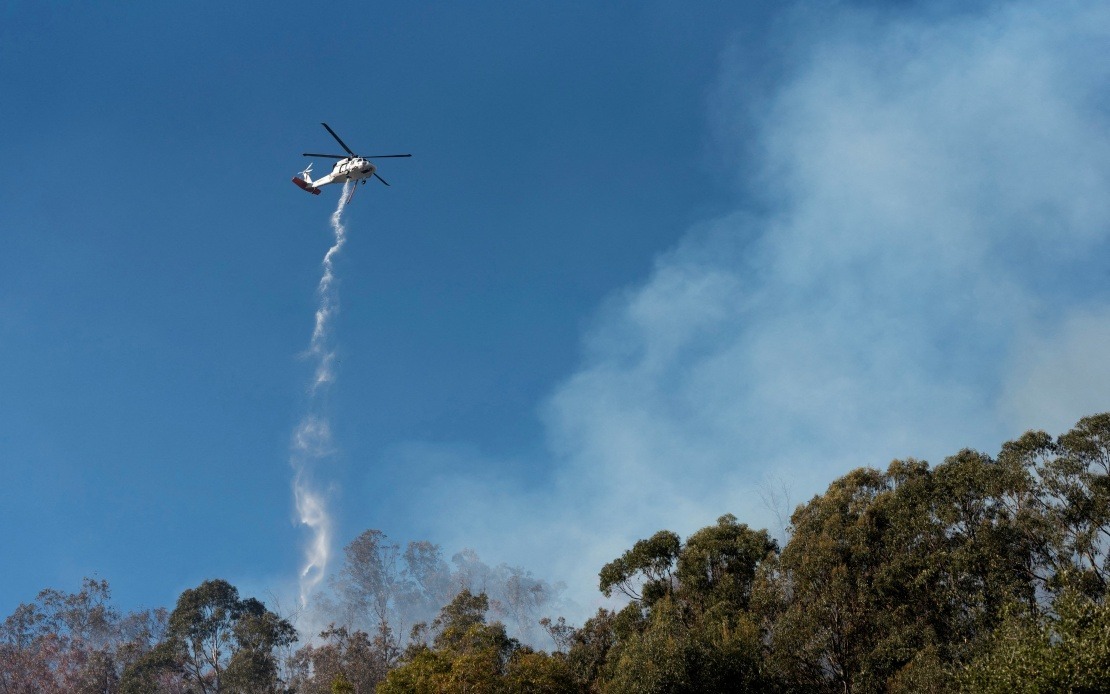
A tragic accident unfolded in central Utah on Friday when a helicopter contracted to assist in battling one of the state's most significant wildfires this season plummeted from the sky, claiming the lives of its pilot and one crew member. Authorities confirmed the fatal crash on Saturday as emergency responders grappled with the challenge of accessing the remote wreckage site while simultaneously managing one of Utah's most demanding fire incidents. The incident underscores the inherent dangers faced by those working on the frontlines of wildland firefighting, a profession that demands extraordinary courage under extreme conditions.
The aircraft involved, a Sikorsky S-64 operated under contract with the US Forest Service, crashed near Richfield at approximately 10 am local time on Friday while providing critical support to the Widemouth 2 Fire suppression effort. The Federal Aviation Administration has identified the aircraft type, though the identities of the deceased pilot and crew member remain undisclosed pending family notification. The National Transportation Safety Board has taken the lead in investigating the circumstances surrounding the accident, with preliminary findings pointing to unknown factors that contributed to the aircraft going down in the rugged, sparsely populated terrain where the fire continues to burn.
The challenge of accessing the crash site revealed itself almost immediately as a compounding factor in the emergency response. Fire personnel attempting to reach the wreckage found themselves obstructed by both the unforgiving landscape and the very flames they were attempting to suppress. The crash itself generated additional fire activity at the impact site, creating a hazardous situation that forced rescue teams to proceed with extreme caution. Officials acknowledged that the remote location and active fire conditions necessitated a measured approach to recovery operations, prioritizing the safety of responders over speed in reaching the wreckage.
Utah Governor Spencer Cox issued a statement reflecting on the gravity of the moment, characterising wildland firefighting as one of the world's most hazardous professions. His remarks acknowledged the extraordinary risks undertaken daily by firefighters and aerial support personnel who operate in dangerous environments where weather, terrain, and unpredictable fire behaviour combine to create life-threatening scenarios. Cox appealed to residents to afford investigators and emergency personnel the space required to conduct thorough investigations and response operations without unnecessary public interference.
The Widemouth 2 Fire itself represents a significant challenge to Utah's firefighting resources and personnel. The fire ignited on July 27 following a lightning strike that found purchase in the drought-stressed forests, brush, and grasslands of the Fishlake National Forest near Kanosh, a small community in the state's central region. From its inception, the fire demonstrated the aggressive behaviour characteristic of blazes burning through accumulated fuel loads during periods of elevated temperatures and erratic wind patterns. Rapid expansion during the initial weeks of July prompted evacuation orders affecting residents and property across the affected region.
By the time of the helicopter crash, the Widemouth 2 Fire had consumed more than 114,000 acres, equivalent to approximately 461 square kilometres of terrain. Despite ongoing suppression efforts involving aerial resources and ground crews, the fire remained only 24 per cent contained according to Utah Fire Info, the interagency coordination centre managing public information about wildfires across the state. The destruction already wrought by the fire included the loss of at least six structures, with the financial and environmental toll continuing to mount as containment efforts proceeded.
The incident carries particular significance for Southeast Asian readers given the region's own escalating wildfire challenges. Southeast Asia, including Malaysia, has witnessed increasingly severe fire seasons in recent years, driven by climate variability and land-use practices. The Widemouth 2 Fire tragedy serves as a sobering reminder of the human cost associated with wildfire suppression, particularly when deploying specialized aerial assets in challenging conditions. Malaysia and neighbouring nations employ similar helicopter-based fire suppression technologies during major incidents, making the operational hazards illustrated by this crash directly relevant to regional emergency management considerations.
The broader context of US wildfire management reveals an infrastructure straining under the demands of increasingly severe fire seasons. The United States National Interagency Fire Centre, which reported this incident, coordinates responses across vast territories where multiple fires simultaneously demand aerial and ground resources. The utilization of contracted aircraft like the Sikorsky S-64 reflects the capacity constraints facing federal and state wildland fire agencies, which must continuously balance the need for rapid response against the risks inherent in operating specialized equipment in extreme environments.
The crash at Widemouth 2 Fire adds to the annual toll of wildland firefighting accidents across North America, where aerial operations pose documented risks despite rigorous safety protocols and extensive experience among operators. Investigations into such incidents typically yield findings that inform future operational decisions, equipment modifications, and training programmes. The National Transportation Safety Board's investigation will likely examine weather conditions, pilot experience, maintenance records, and fire behaviour dynamics at the time of the accident, generating findings with potential implications for wildfire suppression operations throughout the continent.
For the broader community of wildland firefighters across the United States and internationally, the crash serves as a sobering reminder of the ultimate price sometimes exacted by the profession. The pilot and crew member who perished represent thousands of individuals who engage daily with natural hazards to protect lives, property, and natural resources. Their sacrifice raises important questions about resource allocation, technology deployment, and risk management in fire suppression operations, conversations that will inevitably occur as investigations conclude and findings circulate through the emergency management community.

