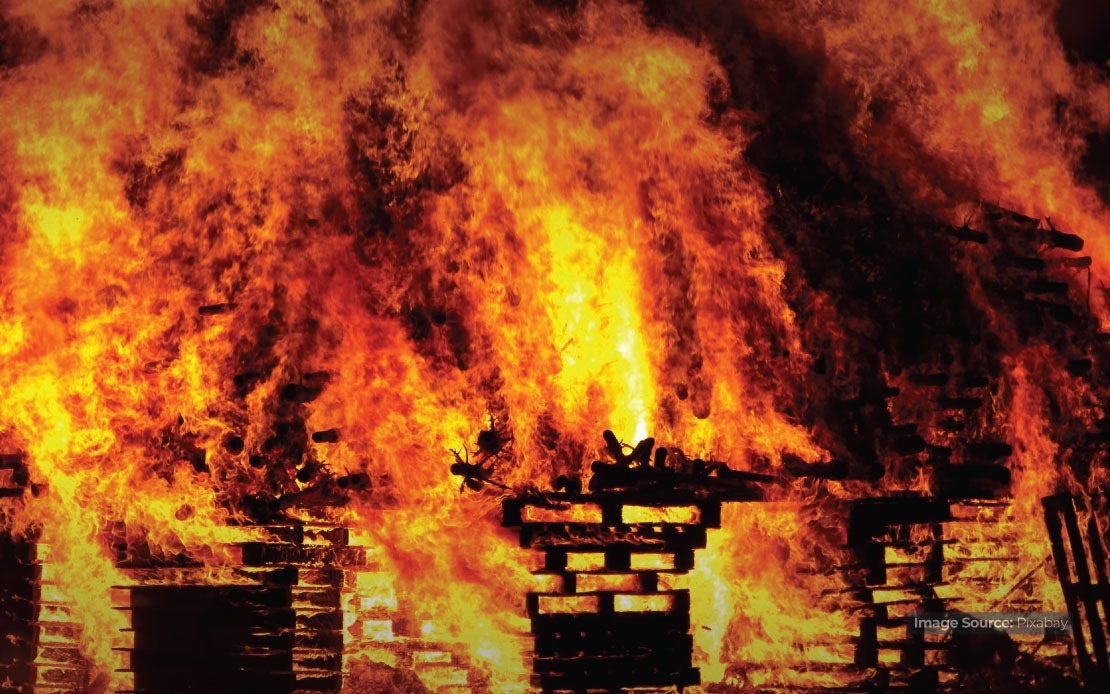
Two firefighters perished on Tuesday while combating a fire that erupted near Bordeaux Airport in southwestern France, French Interior Minister Laurent Nuñez informed parliament in Paris. The fatalities occurred as emergency personnel fought the blaze that engulfed two adjacent buildings located close to the airport's extended parking facilities. The incident underscores the serious hazards faced by emergency responders even in developed nations, where airport infrastructure and surrounding areas can present complex firefighting challenges.
According to regional reporting from Sud Ouest newspaper, the fire originally ignited on terrain bordering the airport's long-term parking zone. The exact cause of the fire remains under investigation, though conditions in the region have been extraordinarily hazardous. The Gironde region, which encompasses Bordeaux as its administrative centre, has been placed under the highest red-level alert for wildfire danger due to meteorological conditions creating extreme susceptibility to forest fires. This alert level reflects authorities' concerns about rapid fire spread during the summer season.
The response to the emergency highlighted coordinated action between multiple agencies. Beyond the local fire service deployed from the surrounding area, the airport operated its dedicated firefighting unit to assist in containing the flames. Additionally, aviation authorities dispatched a specialized firefighting aircraft to support ground crews in their efforts to control the spreading blaze. Such multi-agency responses demonstrate standard protocols in developed European airports, where contingency plans account for major infrastructure threats.
Visibility of the disaster extended well beyond the immediate airport vicinity. Towering plumes of smoke rose dramatically into the atmosphere, visible from Bordeaux city itself, located approximately 10 kilometres away. These visible columns indicated the fire's considerable intensity and the substantial volume of combustible material involved. Emergency crews worked methodically throughout the afternoon and evening to suppress the flames and prevent further spread to adjacent areas.
Airport operations sustained measurable disruption from the incident. Departing flights faced temporary suspension while authorities assessed the situation and ensured safety protocols remained intact. However, inbound traffic continued, with landing operations authorized to proceed normally, reflecting a calibrated risk assessment that permitted certain operations while restricting others. This measured approach prevented complete operational shutdown while maintaining passenger safety standards.
Regular service attempted resumption as evening approached. An aircraft scheduled for departure to Munich was expected to operate as planned, suggesting authorities had determined the immediate threat sufficiently contained by early evening hours. This relatively swift resumption indicates the fire, while fatal and disruptive, remained localized enough that normal airport functions could gradually recommence.
For Malaysian and Southeast Asian observers, this incident carries several implications. Tropical and subtropical nations across the region face heightened fire risks during extended dry seasons, particularly as climate patterns become increasingly unpredictable. Major airport infrastructure, which handles significant international traffic and employs substantial emergency response capabilities, represents critical nodes deserving enhanced preparedness measures. The coordinated response demonstrated by French authorities—involving local firefighters, airport units, and aerial support—provides a template for regional facilities to evaluate their own readiness.
The tragedy also reminds stakeholders across aviation and emergency management sectors that firefighting remains among the most dangerous occupations, claiming lives even in wealthy nations with modern equipment and training protocols. Firefighters in Malaysia and neighbouring countries face comparable risks during industrial and wildfire emergencies. Their sacrifice deserves recognition alongside investment in protective equipment, training enhancement, and mental health support.
Climate change implications merit consideration for the broader Southeast Asian context. The Gironde region's red-level wildfire alert reflects conditions increasingly common across Mediterranean Europe during summer months. Similar escalating fire seasons have emerged in parts of Southeast Asia, particularly in Indonesia, Malaysia, and Thailand during dry periods. Enhanced regional cooperation on fire management, early warning systems, and cross-border firefighting assistance may become increasingly valuable as such extreme weather events grow more frequent and intense.

