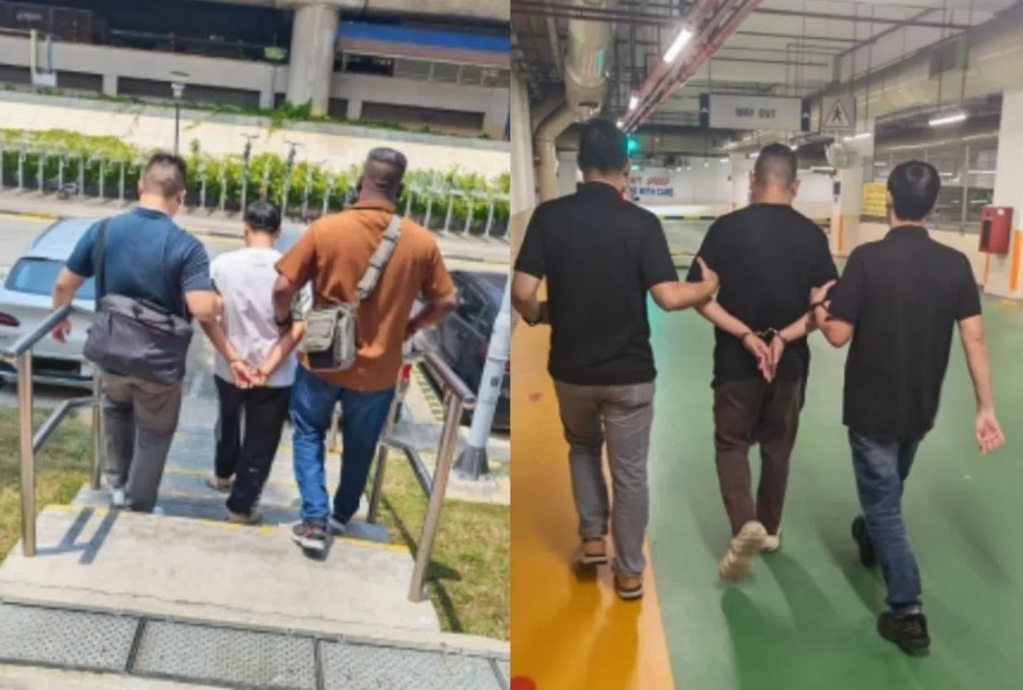
Two Malaysian men employed at mobile phone retailers have been apprehended in Singapore on suspicion of running a sophisticated identity fraud operation that compromised the Singpass accounts of more than 170 individuals to establish counterfeit digital wallet accounts. The pair, aged 25 and 47, were detained on Tuesday, August 25, following an investigation that uncovered their suspected role in fraudulently registering LiquidPay e-payment accounts using stolen login credentials belonging to both Singapore citizens and foreign workers.
The scheme operated by exploiting the trust customers placed in retail staff during routine service transactions. In at least one documented case, one of the suspects seized the opportunity while assisting a customer with SIM card purchases to request Singpass authentication details under the pretence of updating account information. Armed with these credentials, the men gained unauthorised access to victim accounts and established linked LiquidPay wallets—digital payment platforms operated by Singapore-based fintech company Liquid Group—without the account holders' consent or knowledge.
The scale of the operation became evident through subsequent police investigations, which revealed that fraudulently obtained Singpass credentials had been leveraged to create more than 160 additional LiquidPay accounts across the victim cohort. This infrastructure of compromised accounts and illicit wallets served as a conduit for channelling proceeds from various scams, insulating the actual perpetrators from direct financial exposure while providing plausible deniability through the names and identities of unwitting victims.
Between March 2026 and the time of arrest, at least twenty individuals holding Singapore citizenship or valid work permits came under police investigation for their involvement in registering these fraudulent LiquidPay accounts. Those accounts had collectively received approximately $110,063 in scam proceeds—a figure that underscores both the profitability of the scheme and the volume of fraud transactions it facilitated. The monetary trail also provided crucial evidence linking the two Malaysian suspects to the broader criminal enterprise.
The operation that led to the arrests involved coordination between Singapore's Cyber Command officers and the Singpass Trust & Safety division at the Government Technology Agency, highlighting the sophistication required to unravel transnational digital fraud. Authorities moved methodically to trace account compromises back to the retail touchpoints where victims had unwittingly surrendered their security credentials. This detection methodology is particularly significant for Southeast Asia, where cross-border digital commerce and payment systems are increasingly vulnerable to insider threats operating within customer-facing service environments.
The two arrested men now face serious criminal charges that carry substantial penalties. They are scheduled for court appearance on August 27 to answer allegations of assisting another person to retain benefits from criminal conduct—an offence under Singapore law that imposes up to ten years' imprisonment, fines reaching $500,000, or both. The severity of these potential sentences reflects official determination to prosecute not merely the direct perpetrators of underlying scams, but also those who provide critical infrastructure and services enabling such offences to proceed.
Parallel investigations have also focused on the role of Singpass account holders who either negligently or willingly surrendered their login credentials to the suspects. These individuals face separate liability under legislation concerning the voluntary relinquishment of account security information, which carries maximum penalties of three years' imprisonment and fines of $10,000. This prosecutorial approach targets both sides of the compromise chain, creating deterrents against the casual sharing of authentication details even with trusted-seeming service providers.
For Malaysian readers and Southeast Asian observers, this case illustrates emerging vulnerabilities in the region's digital payment ecosystem and the risks that arise when retail staff gain access to customer identity credentials in the course of routine transactions. The incident raises important questions about workforce vetting, training protocols, and transaction monitoring within telecommunications and financial services retail environments across the region. Mobile phone shops remain significant points of interface between consumers and identity systems, yet security procedures at these locations often lag considerably behind those at banks or dedicated government service centres.
The transnational dimension of this scheme—with Malaysian perpetrators operating within Singapore's regulatory framework to compromise Singaporean victims' accounts—reflects the borderless nature of digital fraud. As payment systems and digital wallets become increasingly interconnected across Southeast Asia, the risk that compromise in one jurisdiction will enable fraud across multiple territories grows correspondingly. Authorities in Malaysia and Singapore now face complementary investigative challenges in determining whether similar schemes have targeted Malaysian Singpass equivalents or whether this operation represents part of a broader criminal network extending beyond the two arrested individuals.
The involvement of Liquid Group's LiquidPay platform raises broader industry considerations about how fintech companies operating across the region implement know-your-customer verification procedures and monitor for signs of account creation through compromised credentials. While authorities have successfully traced these fraudulent accounts, the incident underscores the need for stronger authentication mechanisms and real-time anomaly detection within digital wallet services, particularly when account opening requests originate from unusual geographic locations or devices inconsistent with account holder behaviour patterns.
Beyond the immediate criminal proceedings, this case serves as a cautionary reminder for Malaysian workers abroad and regional consumers engaged in digital commerce. Surrendering Singpass or equivalent national identity credentials to service providers—even those appearing legitimate and trustworthy—creates exposure to sophisticated fraud schemes that can compromise personal finances and legal status. Government agencies across Southeast Asia will likely escalate public awareness campaigns emphasising the inviolable nature of login credentials and the criminal liability attached to their compromise.

