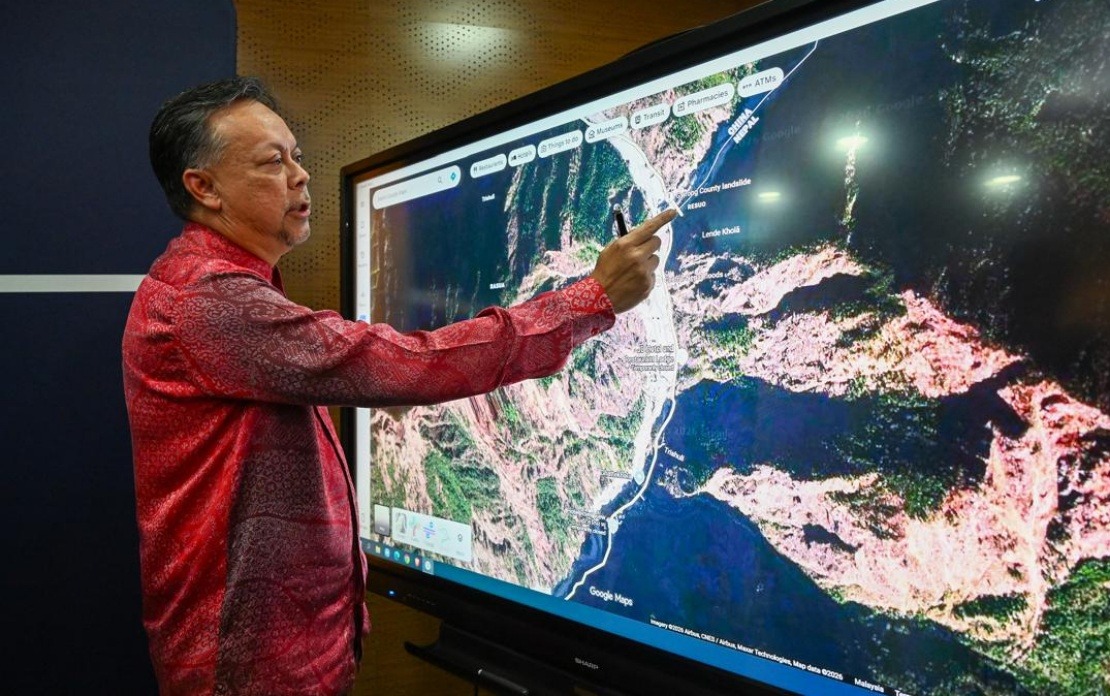
The Malaysian Foreign Ministry has made modest progress in accounting for nationals caught in Nepal's recent natural disaster, locating two of the 57 Malaysians previously reported as untraceable. However, the overwhelming majority—55 individuals—remain out of contact as of Wednesday afternoon, prompting heightened diplomatic efforts to identify and assist those stranded in the affected regions.
Datuk Syed Mohamad Hasrin Tengku Hussin, the Foreign Ministry's Deputy Secretary-General for Bilateral Affairs, confirmed the two discoveries but stressed that their identities and circumstances were still undergoing verification protocols. The ministry's cautious approach reflects the challenging conditions hampering rescue coordination, with officials prioritising accuracy over speed to avoid duplicating information or misidentifying individuals. This methodical verification process, while time-consuming, aims to prevent confusion and ensure that family notifications are conducted responsibly.
The catastrophic event unfolded when the Bote Koshi River overflowed on August 26 in the Rasua district, triggering devastating flash floods and landslides that claimed lives and displaced communities. The disaster destroyed critical infrastructure including roads and bridges, while simultaneously severing electricity and communication networks across the affected zones. These cascading failures have transformed the humanitarian response into a logistical nightmare, with rescue teams unable to reach many areas and families unable to contact loved ones. The geographic isolation has made information gathering extraordinarily difficult, compelling authorities to rely on fragmented reports from various sources rather than systematic, on-the-ground verification.
Foreign Minister Datuk Seri Mohamad Hasan has instructed the ministry to intensify its search and coordination efforts, recognising the urgency of the situation. In response, Malaysia deployed additional diplomatic resources, dispatching a senior official from the Malaysian High Commission in Dhaka to Kathmandu to reinforce the embassy's stretched operations. This official is now coordinating information exchange, maintaining contact with Nepalese authorities, and liaising with the emergency response structures that Nepal's government has activated. The deployment underscores Malaysia's determination to leverage its diplomatic network across South Asia to assist distressed nationals.
The Malaysian Embassy in Kathmandu has established a collaborative framework involving Nepalese government agencies, the Nepal Tourism Board, and local tour operators—many of whom have direct knowledge of Malaysian tourists present in the country. This multi-agency coordination recognises that the 55 unaccounted Malaysians are dispersed across different locations and contexts; some may be tourists on holiday, others potentially migrant workers, and information about their whereabouts scattered among various informal networks. The ministry's approach acknowledges that comprehensive accounting requires tapping into these diverse sources while maintaining rigorous cross-verification to avoid false leads.
Nepalese rescue authorities have reported extracting 528 people to safety, comprising 490 Nepalese nationals and 38 foreign citizens, yet notably no Malaysians have been identified among the rescued. This absence provides neither reassurance nor alarm—it simply reflects the incomplete information available and the possibility that Malaysian nationals may be among the injured, sheltered in unregistered locations, or still unreachable due to geographic barriers. The lack of confirmed Malaysian casualties, conversely, offers grounds for cautious optimism that most may have weathered the disaster, though precise determination remains elusive pending improved communication channels.
The physical devastation complicates every aspect of the rescue response and information gathering. Damaged bridges sever access routes into mountain communities where tourists and workers may be sheltering. Collapsed communication infrastructure means that even unharmed individuals cannot contact authorities or family members to confirm their safety. Weather conditions continue to pose obstacles, with ongoing meteorological threats potentially triggering secondary disasters and further hampering rescue operations. Nepal's authorities, simultaneously managing their own national emergency and vast civilian casualties, are stretched thin in their capacity to systematically track and assist foreign nationals.
The Malaysian Foreign Ministry has activated a 24-hour operations room in Putrajaya, functioning as the central coordination hub for all information flows, family inquiries, and diplomatic communications. Within the first hours of activation, the operations room fielded between 12 and 15 calls from anxious family members and friends seeking confirmation of their relatives' status. Every inquiry must be systematically cross-referenced against lists compiled from Nepalese authorities, Tourism Malaysia's tourism booking records, tour operator manifests, and other sources to establish coherence and eliminate duplicates. This labour-intensive verification process, while unglamorous, remains essential for preventing false hope and confusion.
The numerical tally of 55 unreachable Malaysians itself remains provisional, contingent upon further verification as more information becomes available from Nepalese sources. Some individuals initially listed as missing may subsequently make contact as communication networks are restored. Others may be located by rescue teams or identified in shelters. Conversely, additional Malaysians may be identified as being in affected areas through Tourism Malaysia's records or family notifications. For Malaysian readers with relatives or friends in Nepal, the Foreign Ministry is actively requesting detailed information including full names, passport numbers, travel itineraries, last confirmed locations, and contact numbers. These specifics enable the ministry to cross-reference against various databases and narrow the search efforts.
The situation highlights the particular vulnerability of Malaysian citizens travelling abroad to countries vulnerable to natural disasters, especially during the monsoon and tectonic seasons in South Asia. The 57 Malaysians reported missing represent a small fraction of the estimated Malaysian tourist and expatriate population in Nepal, many of whom successfully sheltered in place or departed before conditions deteriorated. However, the incident has prompted the ministry to strengthen its crisis communication infrastructure and relationships with regional partners, recognising that future emergencies may require similarly rapid mobilisation.
Family members wishing to provide information or inquire about specific individuals can contact the Putrajaya Operations Room at +603 8887 4570 or submit inquiries via email to [email protected]. The ministry emphasises that even fragmentary information—such as a partial name, a hotel booking, or a last known travel plan—can assist in narrowing search parameters and potentially connecting rescuers with isolated individuals. As rescue operations continue and Nepalese infrastructure gradually recovers, the probability of locating additional Malaysians increases, though the difficult terrain and ongoing environmental hazards mean that efforts will remain challenging in coming days.

