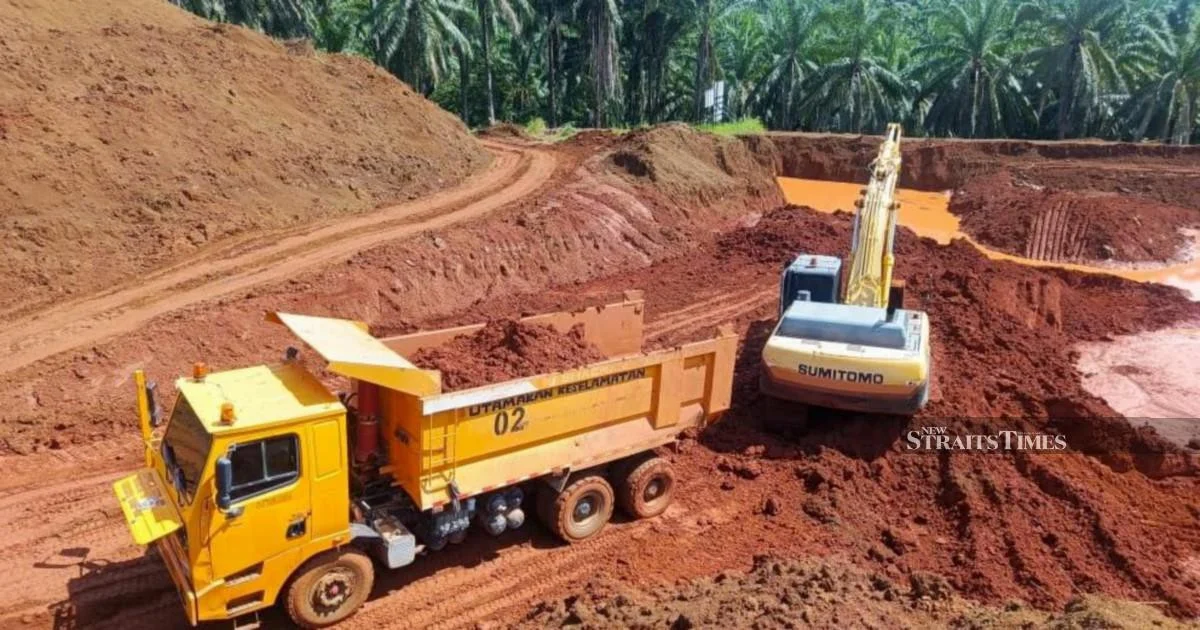
Law enforcement authorities in Terengganu have made significant progress in combating illegal mining operations following the arrest of two men implicated in an unauthorised silica sand transfer scheme in Marang. The operation, conducted yesterday, resulted in the seizure of heavy machinery and equipment estimated to be worth RM1.8 million, marking a substantial blow to what investigators believe is a coordinated smuggling network in the state.
The timing of this intervention reflects growing concerns among Malaysian authorities regarding the proliferation of illicit sand mining and processing activities across peninsular Malaysia. Silica sand, a critical raw material for construction, glass manufacturing, and industrial applications, has become an increasingly targeted commodity for illegal extraction and informal trade channels. The high market value of processed silica sand relative to enforcement resources has created opportunities for organised operations to circumvent regulatory oversight and established licensing requirements.
The arrested individuals are suspected of orchestrating the clandestine movement of extracted sand from mining sites through informal networks, bypassing the official channels administered by state-level regulatory bodies and the Ministry of Natural Resources, Environment and Climate Change. This type of operation typically involves multiple layers of participants—from extractors at source sites to transporters, processors, and middlemen facilitating distribution to end-buyers who may be operating without proper knowledge of the materials' provenance.
The seizure of RM1.8 million in equipment provides investigators with tangible evidence of the operation's scale and sophistication. Heavy machinery used in silica sand extraction and processing—including excavators, sand washers, and screening equipment—represents substantial capital investment, suggesting the suspects were operating a structurally complex enterprise rather than engaging in opportunistic petty theft. Such infrastructure investments typically indicate multiple seasons of operating activity before detection, raising questions about how regulatory surveillance mechanisms in Marang and surrounding areas may have failed to identify the operation earlier.
For Malaysian readers, this development carries particular significance given the dependence of the construction and manufacturing sectors on reliable silica sand supplies. When illicit operations extract and process sand outside formal regulations, they typically operate without environmental impact assessments, proper waste management, or adherence to extraction limits designed to prevent land degradation and ecosystem damage. The Marang district, situated along Terengganu's coastal plains with valuable agricultural and aquaculture zones, faces particular vulnerability to the ecological consequences of unregulated mining activities.
The investigation's details remain limited, though law enforcement agencies typically pursue charges under the relevant mining and environmental legislation in force within Terengganu. Depending on the evidence gathered and the suspects' role in the operation, charges could range from illegal mining under state mining ordinances to environmental protection violations and potentially human trafficking offences if migrant workers were involved in extraction or processing without proper documentation and protections.
This enforcement action aligns with broader regional trends across Southeast Asia, where countries including Vietnam, Thailand, and Indonesia have intensified crackdowns on sand mining operations driven by construction booms and infrastructure development throughout the region. The three-country market for sand has expanded exponentially over the past two decades, creating demand pressures that incentivise illegal extraction in jurisdictions with weaker enforcement capacity. Malaysia's relative stability and economic development make it an attractive market for diverted supplies, while its maritime borders and porous provincial boundaries facilitate smuggling networks connecting extraction sites to urban processing and distribution centres.
Authorities across Malaysia have progressively tightened monitoring frameworks in response to documented cases of illegal mining causing environmental degradation, including topsoil loss, water table disruption, and riverbed damage. The Marang operation appears to have drawn direct enforcement attention, suggesting either improved intelligence-gathering capabilities within state law enforcement or community reporting that triggered investigation and intervention.
Moving forward, the investigation's trajectory will likely influence enforcement strategies throughout Terengganu and adjacent states. Successful prosecution of the arrested suspects, coupled with tracing networks that distributed their products, could disrupt broader smuggling channels and deter potential operators from establishing similar operations. However, sustained progress requires coordinated action between state and federal agencies, strengthened monitoring capacity at extraction and processing sites, and enhanced cooperation with transport and logistics monitoring to intercept illegal materials before reaching end-consumers who might unknowingly purchase contaminated or environmentally-sourced sand.
The case also underscores persistent challenges in regulating extractive industries where marginal detection costs and substantial profit margins create persistent incentives for illicit operation. Until enforcement becomes sufficiently consistent and penalties sufficiently punitive to eliminate profit margins, illegal mining and materials smuggling will likely continue occurring across Southeast Asia's resource-rich territories.

