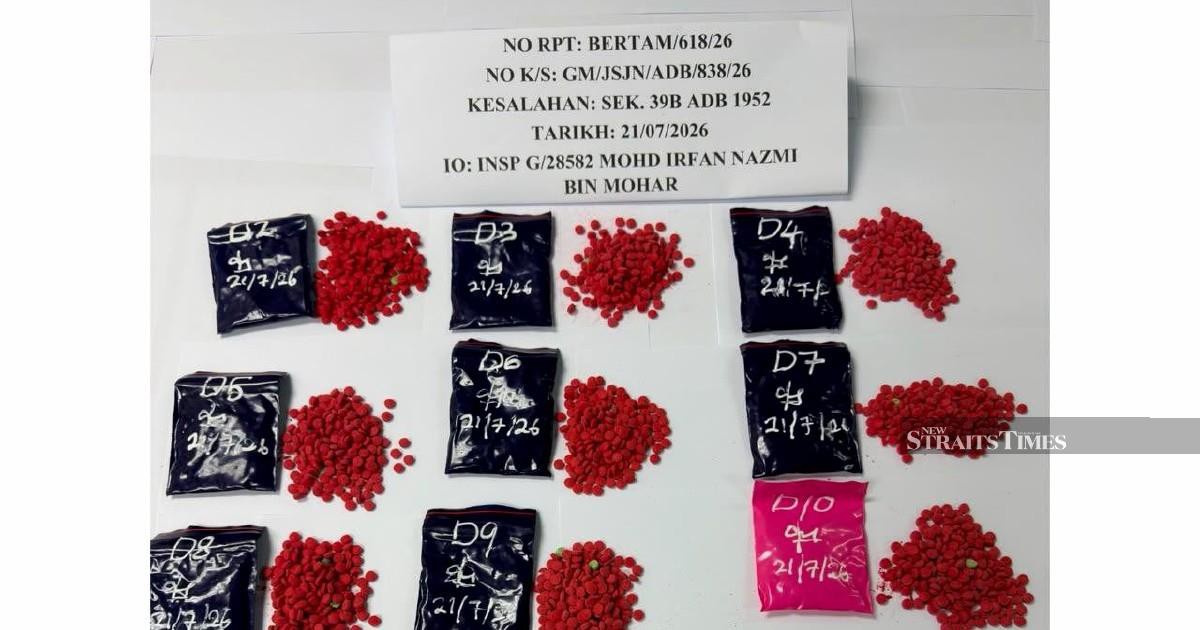
Authorities in Kelantan have made significant progress in their ongoing campaign against methamphetamine trafficking following the apprehension of two Myanmar nationals in Gua Musang yesterday. The pair was detained after police executed a vehicle pursuit that culminated in their capture, bringing to light one of the region's most visible drug trafficking networks operating across the Thailand-Malaysia border corridor.
The confiscated narcotics consisted of 6,000 yaba tablets, a stimulant drug widely manufactured in clandestine laboratories across Myanmar and distributed throughout Southeast Asia via established smuggling routes. Street value assessments placed the seized consignment at approximately RM60,000, reflecting both the volume and potency of the tablets. Yaba, commonly known as "crazy medicine" among users, represents one of the most problematic synthetic drugs circulating in the region, with consumption patterns showing alarming growth in urban centres including the Klang Valley and northern states bordering Thailand.
The nature of the arrest—preceded by a pursuit—suggests the suspects attempted to evade apprehension upon police approach, a behaviour pattern increasingly documented among high-level drug couriers operating these transnational supply chains. Intelligence agencies across the region have identified Myanmar-based production syndicates as primary manufacturers supplying demand across Malaysia, Thailand, and Cambodia. The geographic proximity of Gua Musang to the Thai border makes the area a critical interception point for trafficking operations moving contraband southward.
The profile of the arrestees as Myanmar nationals aligns with established law enforcement assessments regarding the composition of cross-border smuggling networks. Rather than sophisticated criminal organisations, these operations typically rely on individual mules—often economically motivated individuals from Myanmar, Cambodia, or Laos—who transport consignments across porous borders, frequently using secondary roads and unmonitored crossings. The relatively modest size of this particular seizure suggests these individuals likely functioned as mid-level couriers rather than major traffickers, though their capture may disrupt planned distributions to retail-level dealers across northern Malaysia.
Kota Baru authorities have intensified enforcement activities in response to escalating synthetic drug trafficking in Kelantan and surrounding districts. The state has witnessed sharp increases in yaba-related arrests over recent years, with rehabilitation facilities reporting growing admissions among users aged 18 to 35. This demographic concentration reflects the drug's particular appeal to younger populations, often marketed as an affordable energy enhancer despite its severe neuropsychiatric consequences and addiction potential.
The seizure occurs within a broader regional context of heightened drug trafficking activity along the northern corridor. Narcotics agencies across Thailand and Malaysia have documented seasonal fluctuations in smuggling attempts, with increased movement patterns typically observed during months when weather conditions favour overland transit. The Myanmar-Thailand border region remains one of Asia's most prolific drug production zones, with law enforcement estimates suggesting annual yaba output exceeds hundreds of millions of tablets annually.
Police statements regarding this specific case remain limited, though the rapid apprehension suggests coordinated intelligence operations or perhaps routine checkpoint procedures that identified the suspects. The brevity of the chase and subsequent capture indicate the suspects possessed limited means or motivation for extended evasion, possibly indicating they were operating under time pressure to complete a scheduled delivery.
From a Malaysian law enforcement perspective, this arrest underscores the persistent challenge posed by synthetic drug trafficking despite enhanced border security measures and bilateral cooperation agreements with Thailand and Myanmar. The continued arrival of significant yaba consignments demonstrates that supply-side interventions, while important, remain insufficient without complementary demand-reduction strategies and rehabilitation infrastructure capable of addressing addiction prevalence among vulnerable populations.
The two Myanmar nationals will face charges under the Dangerous Drugs Act, with sentencing guidelines providing for substantial prison terms and potential capital punishment depending on trafficking categorisation. Malaysian courts have consistently applied strict liability principles in drug trafficking prosecutions, placing evidentiary burdens heavily upon the accused to demonstrate lack of knowledge or intent—a legal framework that effectively ensures conviction in possession cases involving commercial quantities.
Regional cooperation mechanisms, including the ASEAN Regional Forum's drug control initiatives and bilateral intelligence sharing arrangements, have generated increased information flow between enforcement agencies. Nevertheless, the underlying economic incentives driving cross-border trafficking—significant price differentials between production and retail markets, alongside sustained demand in consuming regions—continue to motivate replacement couriers willing to undertake considerable personal risk for modest financial compensation.
The Kelantan arrest forms part of a consistent pattern of interceptions occurring across Malaysia's northern border zones. Maintaining effective enforcement presence in remote areas like Gua Musang requires sustained resource allocation and inter-agency coordination, particularly given the geographic challenges and limited infrastructure characterising these frontier regions. Future trafficking disruption likely depends upon complementary efforts addressing both supply reduction through manufacturing site identification in Myanmar and demand management through expanded treatment and prevention programmes across Malaysian communities.

