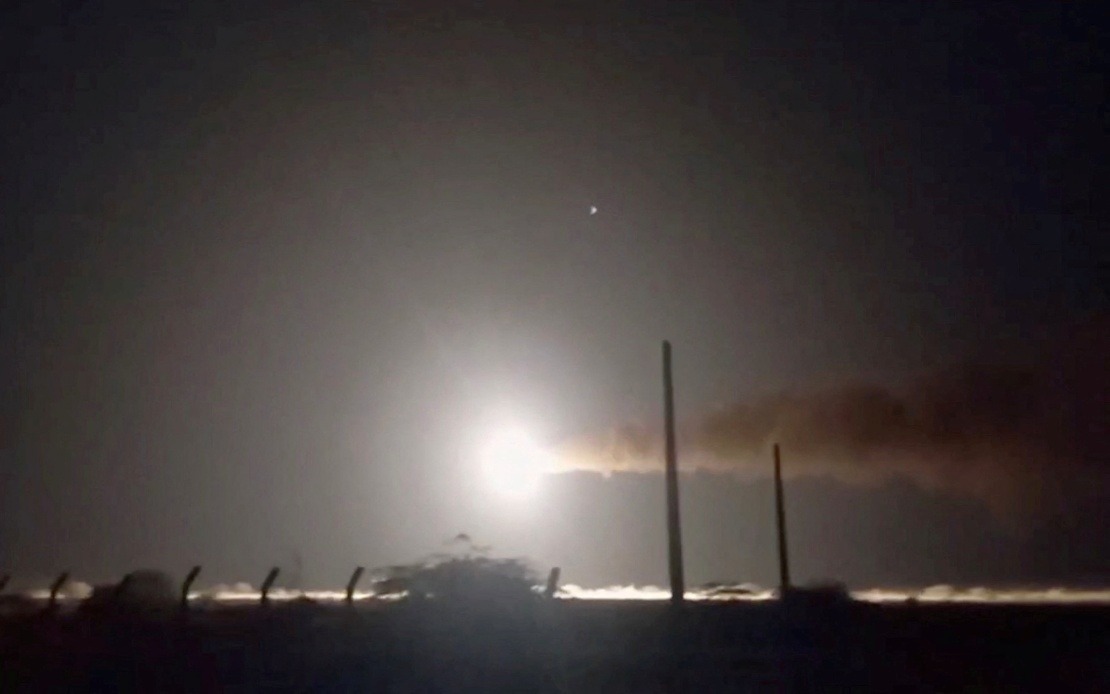
The United States Central Command has confirmed that an Iranian assault on a military installation in Jordan on July 17 resulted in the deaths of two American service members, with a third unaccounted for. The announcement came on Saturday as CENTCOM detailed the scope of the strike, which involved both ballistic missiles and unmanned aerial systems targeting the location where US forces and allied personnel were positioned.
The attack represents an escalation in regional tensions that have simmered for months across the Middle East. Iran's decision to employ multiple weapons systems simultaneously underscores the sophistication and scale of its military capabilities in the area. The combination of ballistic missiles with drone operations indicates a coordinated assault rather than an isolated incident, raising concerns among analysts about the potential for further confrontations.
In addition to the fatal casualties, four American personnel required medical evacuation to hospitals within Jordan itself. However, officials reported that these four individuals have now been discharged following treatment, suggesting their injuries were sufficiently serious to warrant hospitalisation but not life-threatening in the longer term. Other military personnel who sustained minor injuries have returned to their regular duties, reflecting the resilience of the affected unit.
CENTCOM stated that its forces, working alongside partner military units, mounted an active defence against the incoming barrage. The success of these defensive measures likely prevented a higher casualty toll, though the loss of two service members and the missing third represent significant human costs. The command's emphasis on the defensive nature of the response underscores Washington's position that American forces were responding to aggression rather than initiating it.
The military has withheld the identities of the fallen service members pending notification of their next of kin, a standard protocol designed to ensure families hear of their loved ones' deaths through official channels rather than public announcements. This information management reflects deep respect for military tradition and family privacy. CENTCOM indicated that a full release of details, including names and additional circumstances, would follow no earlier than 24 hours after all families have been formally notified.
For Malaysia and Southeast Asia, this incident carries significant implications. The region maintains delicate balances in its relationships with both the United States and Iran, with several nations maintaining diplomatic and trade relations with both powers. Any escalation in US-Iran tensions ripples across global markets and can affect shipping lanes and energy prices, matters of direct concern to Malaysian importers and traders. The presence of American military personnel in forward positions across the Middle East underpins broader security architecture that indirectly affects regional stability.
The strike on Jordan is particularly significant because that country hosts a substantial American military contingent, making it a key hub for US operations across the Levant and broader Middle East. Jordan's strategic location between Israel and Iraq makes it critically important to American strategic interests. An attack on this installation signals that Iran is willing to directly confront American forces, a position it has largely avoided in recent years despite severe tensions.
The incident also highlights the ongoing challenge of managing proxy conflicts and direct military confrontations in a region where multiple powers operate with competing interests. While the exact triggers for Iran's decision to launch this particular attack remain unclear from the available statements, it likely reflects accumulated grievances and escalatory cycles that have characterised US-Iran relations since the Trump administration withdrew from the nuclear agreement.
For observers in Malaysia and the broader Indo-Pacific region, the event underscores how Middle Eastern instability can have far-reaching consequences. Energy security, maritime safety, and the broader framework of international stability depend on preventing these regional tensions from spiralling into wider conflict. The fact that allied forces suffered casualties demonstrates that coalition operations in the region carry real costs.
CENTCOM's statement was notably measured in tone, avoiding inflammatory language despite the serious nature of the attack. This approach suggests American military leadership is attempting to prevent further escalation while still acknowledging the gravity of the incident. However, the loss of life will inevitably influence political calculations within the United States regarding its military posture in the region.
The situation remains fluid, with the status of the missing service member still unresolved. Efforts to locate this individual continue, adding urgency to ongoing operations. The incident serves as a reminder that despite diplomatic discussions and international agreements, military confrontations in the Middle East remain an ever-present danger, with consequences that extend well beyond the immediate theatre of conflict.

