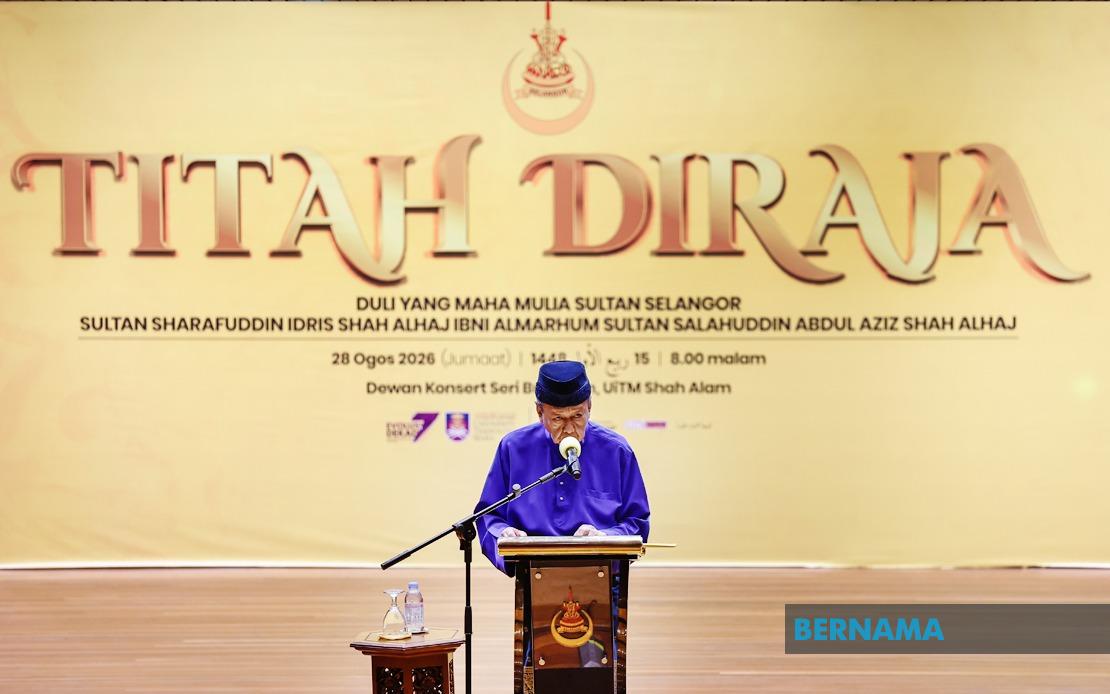
The Sultan of Selangor has emphasised that Universiti Teknologi MARA must continue serving as a transformative pathway for disadvantaged Malay and Bumiputera youth, warning against allowing institutional growth to overshadow its foundational purpose of expanding educational access to those from modest circumstances. Sultan Sharafuddin Idris Shah articulated this vision during the UiTM 2026 Royal Address in Shah Alam, stressing that as Malaysia's premier indigenous institution evolves, it should never lose sight of students from farming families, fishing communities, and manual labour backgrounds who form the bedrock of its mission.
The institution's trajectory since its establishment has been remarkable by any measure. Beginning in 1965 with just 219 students and 11 lecturers, UiTM expanded rapidly through the subsequent decade, with enrolment climbing to nearly 7,000 and academic staff reaching approximately 1,000 members. The university progressively broadened its curricular offerings to encompass roughly 60 programmes whilst establishing satellite campuses across multiple states, laying groundwork for what would become one of Southeast Asia's largest tertiary education providers.
Today, UiTM stands as an educational juggernaut producing over 40,000 graduates annually, with its alumni base exceeding one million individuals scattered across virtually every professional field and economic sector. This extensive network represents a significant national asset that Sultan Sharafuddin believes remains underutilised in addressing the institution's ongoing financial pressures and scholarship needs. The Sultan's observation that UiTM alumni occupy senior positions in major corporations, government agencies, and professional bodies underscores the economic and social influence wielded by institutional graduates.
Recognising this potential, Sultan Sharafuddin proposed an innovative financing mechanism whereby each alumnus contribute a modest monthly amount to create a dedicated support fund. The suggested contribution of RM10 monthly—equivalent to RM100 annually—represents a deliberately accessible threshold, designed to be affordable across income levels whilst generating substantial aggregate resources. Conservative projections indicate such a scheme could accumulate approximately RM100 million annually, a figure that would meaningfully expand UiTM's capacity to provide financial assistance to struggling current students and prospective enrollees facing economic barriers.
This proposal carries particular significance for Malaysian higher education policy, as it addresses a persistent tension between institutional aspiration and financial sustainability. Public universities across the region increasingly face budget constraints that threaten scholarship availability precisely when economic pressures on families intensify. By channelling alumni goodwill into a systematic support structure, UiTM could simultaneously strengthen financial aid whilst cultivating deeper institutional loyalty and community engagement among graduates who benefited from subsidised access to quality tertiary education.
The Sultan characterised the proposed contribution scheme as an authentic expression of the institution's longstanding motto, "UiTM Dihatiku," which translates as "UiTM in My Heart." Rather than remaining merely aspirational rhetoric chanted by students and staff, he suggested this slogan should manifest through tangible financial sacrifice from those who have already reaped the institution's benefits. This framing recontextualises alumni giving from charitable obligation into reciprocal responsibility, acknowledging that graduates' professional success derives substantially from opportunities that UiTM provided during formative years.
The presence of Selangor's Tengku Permaisuri and Higher Education Minister Datuk Seri Dr Zambry Abd Kadir at the address signals government receptivity to the proposal's underlying concerns about maintaining equitable access. For Malaysian policymakers grappling with questions about whether public universities should prioritise mass expansion or targeted support for economically vulnerable cohorts, Sultan Sharafuddin's intervention represents influential institutional validation for the access-centred model. His emphasis on measuring UiTM's success not through enrolment statistics but through transformative impact on individual lives offers a philosophical counterweight to metrics-driven higher education policy that sometimes neglects qualitative outcomes.
UiTM's historical role in facilitating social mobility for Bumiputera communities cannot be overstated within Malaysia's development narrative. For generations, the institution has functioned as the primary tertiary gateway for indigenous students lacking family wealth or urban educational advantages, enabling their transition into professional middle-class occupations and contributing substantially to the expansion of indigenous representation in knowledge-intensive sectors. That function remains vital at present, particularly given persistent socioeconomic disparities within Bumiputera communities that create stark educational access gaps between privileged and marginalised segments.
The Sultan's invocation of specific professional categories—engineers, accountants, physicians, legal practitioners, architects—illustrates the economic significance of UiTM's graduate base to national development trajectories. Many such professionals occupy roles influencing infrastructure decisions, financial resource allocation, and institutional governance across both public and private domains. Their presence in these positions reflects decades of inclusive admissions policies that prioritised potential over privilege, generating economic returns that benefit broader society whilst demonstrating that merit-based advancement remains achievable within systems explicitly designed to address historical disadvantage.
Implementing the proposed alumni contribution scheme presents operational complexities that would require careful institutional design and administrative coordination. Establishing secure payment mechanisms, maintaining accurate alumni contact information, and ensuring transparent allocation of collected funds would necessitate investment in technological infrastructure and human resources. Additionally, different alumni cohorts possess varying financial capacities depending on graduation timing and career trajectories, suggesting that contribution structures might benefit from graduated scaling based on income levels rather than flat-rate approaches.
The timing of this initiative coincides with broader regional discussions about higher education's role in addressing economic inequality and social fragmentation. Across Southeast Asia, universities face pressure to demonstrate relevance to disadvantaged communities whilst remaining globally competitive, creating tensions between accessibility and excellence that institutional leaders must navigate carefully. Sultan Sharafuddin's proposal sidesteps this false dichotomy by suggesting that UiTM's competitive strength derives precisely from its capacity to identify and develop talent from unconventional backgrounds, generating graduates with diverse perspectives and resilience forged through personal adversity.
For Malaysian stakeholders invested in educational equity and social mobility, the Sultan's address provides both reassurance and cautionary reminder. The reassurance lies in his articulate commitment to ensuring that UiTM remains accessible to poor rural students and underprivileged Bumiputera families despite the institution's transformation into a sophisticated research-oriented university. The caution emerges from implicit acknowledgement that maintaining this commitment requires deliberate, continuous effort rather than automatic outcome of institutional good intentions. Without sustained policy focus and adequate resourcing, even institutions with exemplary missions can gradually drift toward serving increasingly advantaged constituencies, inadvertently replicating broader societal inequalities.

