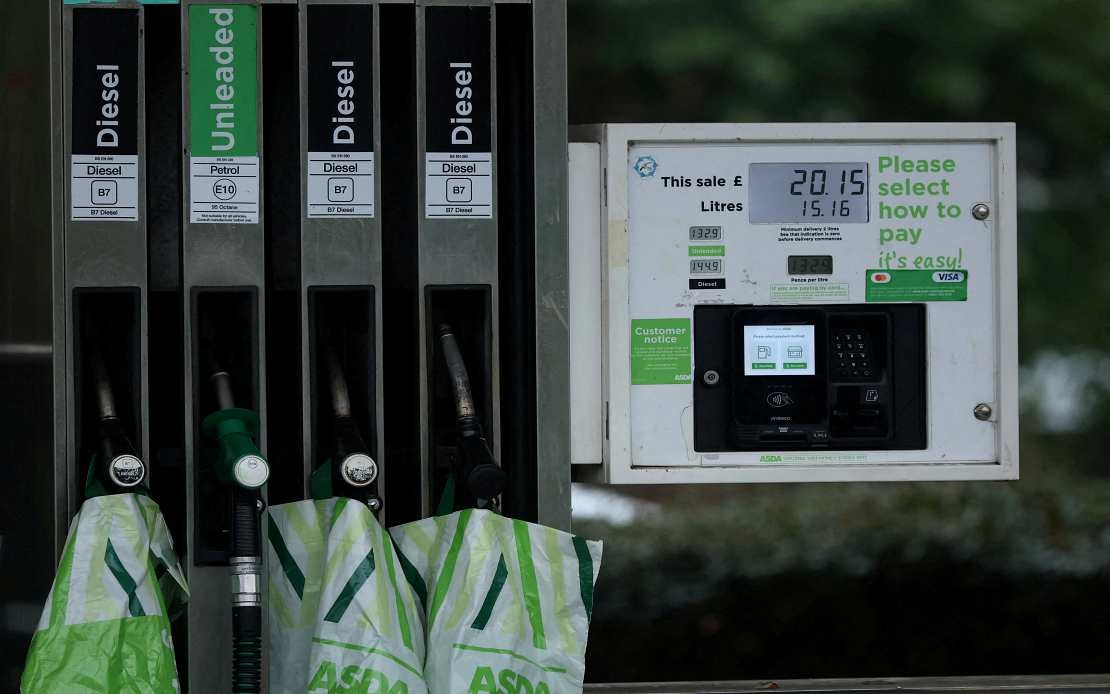
Fuel theft has emerged as a growing crisis across British petrol stations, with thieves now taking an estimated £194,000 worth of fuel without payment every single day since mid-2024. Data compiled by Forecourt Eye, a company specializing in fuel theft prevention, reveals that the five-month period following the onset of the Iran conflict on February 28 witnessed a 20 per cent spike in theft incidents compared with the preceding five months. Whilst the raw number of incidents climbed, the financial impact grew even more dramatically, with the value of stolen fuel increasing by 48 per cent—a disparity driven entirely by the sharp rise in pump prices triggered by geopolitical tensions in the Middle East.
For Malaysian and Southeast Asian readers, this phenomenon carries particular resonance. The region's economies remain heavily dependent on global oil markets, and the mechanics of fuel price transmission visible in the UK offer cautionary lessons about how external shocks cascade through consumer behaviour. The UK case demonstrates how supply-chain disruptions can catalyse not only inflation but also social friction and petty crime. In Malaysia's context, where fuel subsidies and price controls have historically cushioned consumers from such volatility, any future liberalisation of energy pricing could trigger similar patterns of desperation-driven theft and public order challenges.
The analysis draws on transaction data from a representative sample of 550 fuel station installations across the UK's 8,359 total petrol pumps. These establishments recorded two distinct categories of theft: outright drive-offs, in which motorists make no pretence of payment, and the euphemistically termed "no means of payment" incidents, where customers fill their tanks and subsequently claim an inability to settle the bill. First-time offenders accounted for a disproportionate share of the increase, with a 23 per cent rise in incidents and a 26 per cent increase in volume stolen. Repeat offenders, whilst still contributing to the overall problem, showed more modest growth rates of 17 per cent in incident frequency and 20 per cent in total volume.
Petrol prices in the UK have reached levels not seen in three and a half years, with unleaded fuel averaging 160 pence per litre by early August—approximately 27 pence above pre-conflict levels. Diesel has climbed even more steeply, now trading at 179 pence per litre, a 37 pence premium compared with February. These nominal figures deserve contextualisation for regional readers. The UK's pump prices, whilst high in historical terms, remain substantially lower than those routinely experienced in parts of Southeast Asia; nonetheless, the rate of change and the psychological impact of rapid cost escalation appear sufficient to trigger widespread evasion of payment.
What distinguishes this wave of fuel theft from historical patterns is its demographic composition and social character. Ben Lawrence, director of Lawrences Garages, which operates five service stations in Norfolk and Hampshire, observed that fuel theft was traditionally concentrated among individuals already engaged in criminal activity. However, the current cost-of-living crisis has fundamentally altered this profile. Motorists from ostensibly respectable backgrounds are now resorting to theft out of genuine financial strain rather than opportunism or hardened criminality. This shift carries implications for how policymakers and industry stakeholders approach the problem—it suggests that enforcement and surveillance alone cannot address the root cause, which is the intersection of high fuel prices and household income constraints.
Lawrence also highlighted a critical misperception that distorts consumer attitudes toward fuel theft. Many drivers observe that petrol stations bear the branding of multinational energy corporations such as BP and Shell, leading them to assume that those companies directly operate the forecourts. In reality, the vast majority of independent petrol stations are small businesses with no corporate parent. When a motorist drives away without paying for £80 to £90 worth of fuel, the loss falls squarely on the independent operator, not on the oil majors. This cognitive disconnect between brand perception and actual business ownership may be encouraging theft among drivers who believe that depriving a faceless multinational corporation is victimless. Correcting this misunderstanding requires public education campaigns that emphasise the human cost of fuel theft to small business owners and their employees.
The retail industry has responded to escalating theft by embracing technological solutions. Forecourt Eye has partnered with Facewatch, a crime-tracking technology provider, to offer participating petrol stations free access to incident reporting and documentation systems. These platforms enable rapid logging of fuel thefts, shop crimes, and related offences. More significantly, Facewatch operates a live facial recognition network designed to flag known offenders when they approach a forecourt, providing real-time alerts to staff. Michelle Henchoz, managing director of Forecourt Eye, framed this technological layering as essential in an environment where offending has become "more organized and more sophisticated." The implication is that casual, opportunistic theft has been superseded by coordinated criminal activity targeting multiple sites systematically.
Front-line workers at petrol stations report an additional troubling development: rising levels of verbal and physical abuse directed at staff members. Gordon Balmer, executive director of the Petrol Retailers Association representing independent station operators, stated that his members are experiencing increased aggression from customers frustrated by high fuel prices. These staff members, of course, exercise no control over the prices displayed on pump screens—they are merely employees performing their duties. The phenomenon reflects a broader pattern of consumer rage against perceived injustice in pricing, with frustration ultimately redirected toward the nearest available human target rather than toward distant policymakers or energy companies.
For Southeast Asian policymakers and business leaders, the UK experience offers several cautionary takeaways. First, rapid energy price inflation can trigger unanticipated social responses, including widespread petty crime that strains law enforcement and damages small business viability. Second, consumer perceptions of corporate versus independent ownership significantly influence compliance with payment obligations; public communication efforts must emphasise the reality of ownership structures. Third, technological solutions such as facial recognition networks can supplement traditional enforcement, but they address symptoms rather than root causes. Finally, the welfare and security of frontline retail workers deserve explicit policy attention during periods of economic stress, as these employees become lightning rods for consumer frustration they did not create.
The escalation of fuel theft in the UK ultimately reflects a deeper crisis of household financial resilience in advanced economies facing energy shocks. Malaysia, as an energy-producing nation with historically subsidised fuel prices, has been partially insulated from such pressures. However, any future shift toward market-based fuel pricing—whether driven by fiscal necessity or policy reform—could expose Malaysian consumers to similar dynamics. Understanding how British motorists and retailers have responded to rapid price escalation provides valuable intelligence for anticipating and mitigating the social and economic fallout of any comparable transition in the region.

