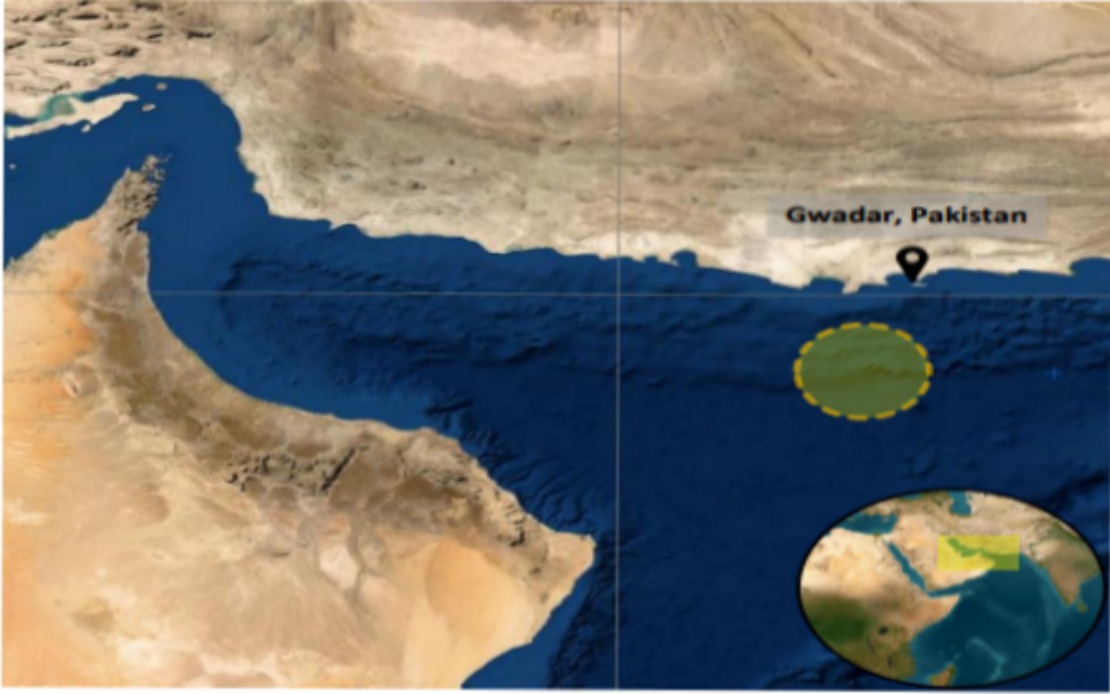
The UK Maritime Trade Operations agency has alerted shipping companies to a reported incident involving a commercial tanker and military forces in the Gulf of Oman near Gwadar, located on Pakistan's southwestern coastal region. The advisory, issued on Tuesday, prompted the international maritime authority to recommend that all vessel operators stay informed about the latest security intelligence circulating through the corridor and maintain heightened awareness given the unpredictable nature of the operational landscape in the area.
The incident underscores growing anxiety about freedom of navigation through one of the world's most critical shipping lanes. The Gulf of Oman serves as a vital passage for energy shipments heading toward global markets, making any disruption an issue of international concern. The UKMTO's cautionary stance reflects a broader industry apprehension that has been steadily building as geopolitical tensions in the region show few signs of abating.
Authorities across multiple jurisdictions have indicated they are monitoring the situation closely, with investigations into the full circumstances of the reported encounter still underway. The maritime authority did not disclose identifying details about the vessel involved, nor did it clarify the specific nature of the military forces present at the scene. Critically, no immediate information emerged regarding whether the incident resulted in casualties, injuries, or material damage to any vessel or equipment.
For Malaysian shipping companies and maritime operators, the development carries particular significance given the strategic importance of Middle Eastern waters to regional trade networks. Malaysia's position as a major maritime nation with extensive commercial interests across global shipping routes means that incidents affecting vessel safety in the Gulf of Oman have direct implications for domestic maritime industries and supply chain resilience.
The timing of the incident coincides with a period of elevated strategic competition between the United States and Iran, particularly around the Strait of Hormuz, which lies adjacent to the Gulf of Oman. Recent military confrontations and provocative actions between Washington and Tehran have created an unstable security environment that continues to pose risks to commercial shipping transiting through the region. The proximity of these two waterways means that tensions in one area readily spill over into the other, compounding risks for international maritime traffic.
International shipping companies have grown increasingly cautious about routing vessels through these waters, with some operators choosing longer alternative routes to avoid the heightened security risks. This decision calculus has real economic consequences, inflating transportation costs and delivery timelines for goods destined for markets across Asia, Europe, and Africa. The financial impact radiates through global supply chains, affecting consumer prices and business competitiveness across multiple sectors.
The UKMTO's measured language in its advisory reflects the delicate balance maritime authorities must maintain between providing genuine security warnings and avoiding panic that could unnecessarily disrupt legitimate commerce. By urging operators to "consider the latest maritime security information," the agency acknowledges real dangers while stopping short of imposing formal restrictions or closure declarations. This approach underscores how difficult contemporary maritime security has become, as authorities attempt to manage risks that are simultaneously fluid, multifaceted, and politically sensitive.
Regional powers, including those with stakes in Middle Eastern stability, have generally responded to such incidents with diplomatic caution, recognizing that escalatory rhetoric can quickly compound security challenges. Malaysia, as a regional voice and member of various international maritime governance forums, maintains an interest in ensuring stable conditions that support predictable shipping patterns and economic activity throughout Asian waters and beyond.
The incident also highlights how non-traditional security actors and military personnel operating in international waters create unpredictability for commercial operators who depend on stable, rules-based maritime conduct. Whether the encounter involved state military forces, irregular forces, or other actors remains unclear from available information, but the UKMTO's public acknowledgement suggests a level of seriousness warranting industry-wide notification.
Going forward, the maritime sector will likely remain on elevated alert, particularly during peak shipping seasons when traffic volumes increase and the risk of unintended encounters escalates. Shipping companies are investing in enhanced tracking systems, communication protocols, and insurance arrangements to manage exposure to regional volatility. The underlying challenge remains geopolitical: without a fundamental de-escalation between major powers competing for influence in the Middle East, maritime security will almost certainly remain precarious.
For Southeast Asian nations with expanding maritime economies, these recurring incidents underscore the strategic value of investing in regional security cooperation frameworks and promoting dialogue mechanisms that can help prevent escalation. The incident near Gwadar serves as another reminder that distant conflicts and tensions have ripple effects across interconnected global shipping networks, affecting prosperity and stability thousands of kilometres away from the immediate zone of concern.

