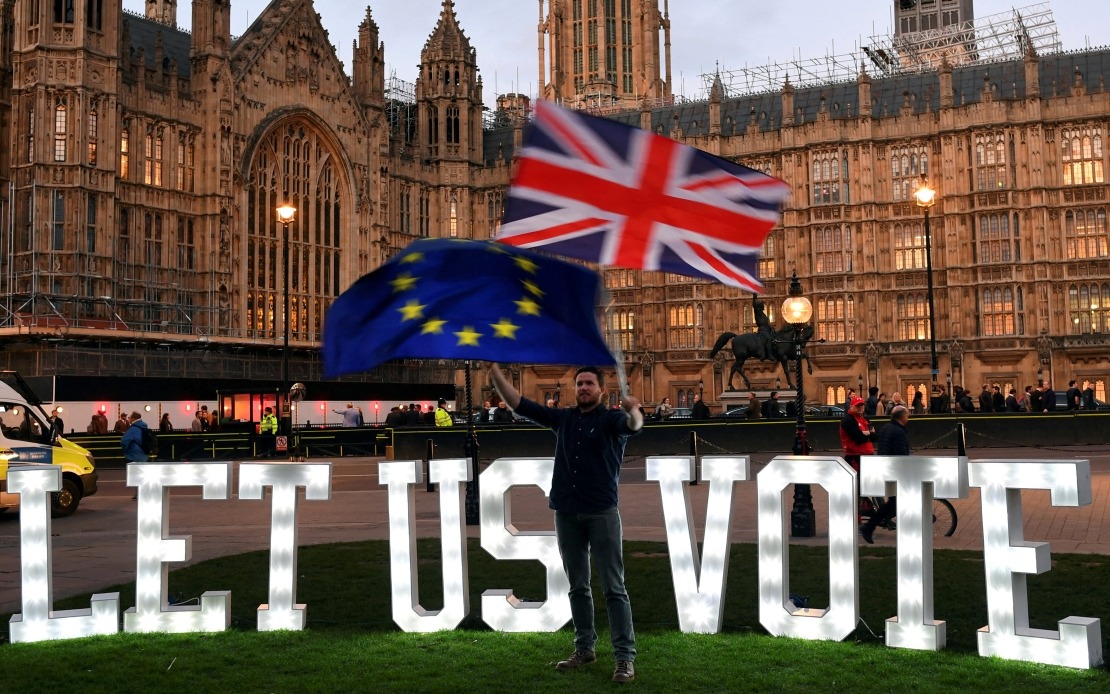
The prospect of the United Kingdom reversing its European Union departure appears increasingly remote, according to Richard Balfe, a veteran Conservative legislator in the House of Lords. His assessment carries weight amid broader uncertainty about Britain's post-Brexit direction and fresh political leadership at Westminster.
Balfe's outlook stands in marked contrast to speculation that a change in government might prompt recalibration of Britain's relationship with Brussels. When posed the question of whether London could undo its exit from the bloc under new administration, the Tory peer responded with measured scepticism, indicating that whilst attempts might materialise, they would ultimately prove unsuccessful. He characterised such efforts as inherently "halfhearted," suggesting neither the political will nor practical conditions exist to facilitate renewed EU membership.
The lawmaker's prognosis extends beyond mere scepticism about EU relations. He posits that the incoming government will adopt a "muddling" approach to governance generally, tacitly suggesting Britain lacks a coherent strategic vision. More provocatively, Balfe contends that Westminster will ultimately defer to American leadership and priorities rather than chart an independent course. This assessment reflects deeper anxieties within UK political circles about Britain's diminished standing and constrained policy autonomy in the post-Brexit landscape.
Balfe's remarks arrive at a pivotal juncture for British politics. Prime Minister Keir Starmer, leading the Labour Party's return to government, announced his resignation as party leader on Monday, though he committed to remaining in the premiership until his successor assumes control. The Labour Party has scheduled the election for his replacement to commence on July 9, with a conclusion targeted before Parliament reconvenes in September. This extended transition period introduces considerable uncertainty about policy direction and strategic priorities.
The timing of Balfe's commentary resonates particularly given the calendar. June 23 marked the tenth anniversary of the 2016 referendum that fundamentally altered Britain's political trajectory. That fateful vote saw 52 per cent of the British electorate endorse departure from the European Union, a decision that rippled through the economy, society, and international relations ever since. The formal separation materialised on January 31, 2020, concluding nearly five decades of EU membership that had shaped British law, commerce, and governance.
The transition arrangements that followed the initial departure proved temporary in character. Throughout 2020, existing EU regulations, norms, and procedures remained operative whilst negotiators finalised the framework for long-term relations. This interim period afforded businesses and institutions runway to adapt. However, once the transition expired on December 31, 2020, the arrangements fundamentally changed. The Trade and Cooperation Agreement entered force on January 1, 2021, establishing the current framework governing British-EU commerce, movement, and governance.
The economic consequences have proven substantial and measurable. Analysis from the Financial Times and other authoritative sources documented a significant deterioration in Britain's position as a global trade and investment hub. The departure from European trading arrangements fundamentally disrupted supply chains, increased transaction costs, and rendered British assets less attractive to international investors relative to the pre-Brexit environment. Companies recalibrated operations, relocated functions to continental Europe, and restructured investment strategies around the altered regulatory landscape.
These economic headwinds carry profound implications for Malaysian and Southeast Asian perspectives on British affairs. The United Kingdom remains a significant trading partner and investment source for the region, whilst also serving as a cultural and diplomatic anchor within the Commonwealth framework. Brexit-induced economic contraction has compressed British capacity for regional engagement and strategic investment. Malaysian exporters and investors must navigate evolving tariff arrangements and regulatory frameworks that complicate bilateral commerce.
Moreover, Balfe's assessment of Britain's likely subordination to American strategic direction carries salience for regional powers assessing the post-multipolar global order. If accurate, his prognosis suggests Britain will increasingly align with Washington's geopolitical priorities rather than pursue genuinely independent diplomacy. For Malaysia and other ASEAN members cultivating strategic autonomy through non-aligned positioning, this development underscores the challenges smaller powers face in maintaining genuine policy independence amid great-power competition.
The political difficulty of reversing Brexit extends beyond economic and diplomatic considerations. Any attempt to rejoin the EU would require resolving accumulated grievances and implementing institutional changes from the preceding decade. The political capital required for such an undertaking would be enormous, consuming bandwidth urgently needed for domestic economic reconstruction and social cohesion. Subsequent British governments have prioritized integration with non-EU trading blocs and strategic partnerships rather than rehabilitation of European relations.
Balfe's scepticism thus reflects practical realities beyond mere political preference. The institutional momentum established by departure proves difficult to reverse. Trade arrangements with Canada, Australia, and other Commonwealth partners have proceeded apace. British negotiators have pivoted toward Asia and the Indo-Pacific, positioning the nation as a counterbalance to Chinese influence through technological partnership and security cooperation. These trajectories suggest the Tory peer's assessment correctly identifies the authentic direction of British statecraft.
For Malaysian observers, the enduring lesson concerns the permanence of structural economic breaks. Brexit fundamentally reorganised Britain's trading relationships, supply chains, and investment patterns in ways that resemble tectonic shifts rather than policy adjustments amenable to reversal. The decade that has elapsed since the referendum has entrenched these new arrangements through countless commercial, regulatory, and institutional decisions. Political transitions, however significant domestically, operate within these structural constraints rather than against them.