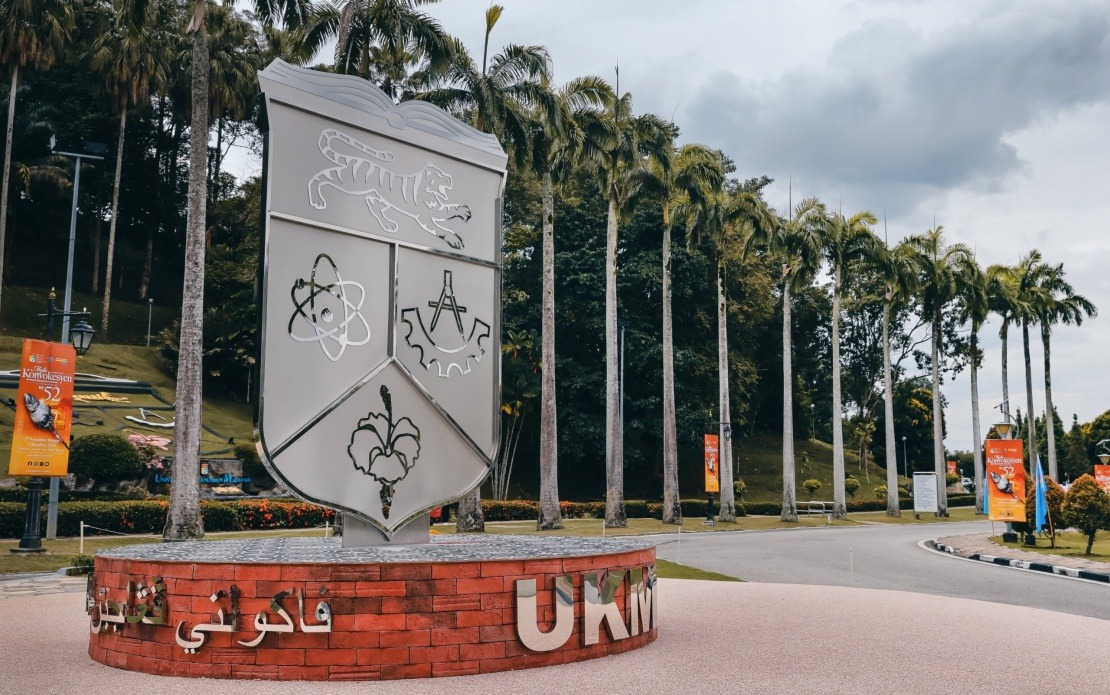
Universiti Kebangsaan Malaysia (UKM) has moved swiftly to counter misinformation circulating on social media platforms regarding the composition of its student body, denying allegations that the institution maintains a 5:1 ratio of international to local students. The university issued a formal rebuttal on July 4, characterising the claim as entirely unfounded and a distortion of the actual demographic breakdown of its enrolment figures.
According to UKM's official records maintained by its Academic Management Centre and Centre for Continuing Education and Professional Studies, the university currently enrolls 46,151 students across all programmes and levels. Of this total population, merely 3,917 are classified as international undergraduates, a figure that stands in stark contrast to the inflated numbers being circulated online. This disparity underscores how misinformation can spread rapidly through social networks, particularly when presented without supporting data or verifiable sources.
When calculated against the total student population, international undergraduates represent approximately eight per cent of UKM's enrolment, translating to an actual ratio of roughly one international student for every twelve students. This finding reveals the substantial gap between the viral claim and documented reality, raising questions about the motivation behind and methodology used to generate the false assertion. Such disparities often emerge when complex institutional data is misrepresented or deliberately distorted for particular agendas.
UKM's response carries a warning element, with the institution explicitly stating it will pursue legal remedies against individuals or entities that continue distributing defamatory or demonstrably inaccurate information about the university. This stance reflects growing institutional concern about reputational damage caused by unverified claims spreading through digital channels, particularly when such claims can influence public perception and potentially affect recruitment and policy decisions.
The university has stressed its foundational commitment to advancing educational opportunities primarily for Malaysian citizens, positioning the carefully controlled admission of international students as complementary rather than competitive with domestic student opportunities. This clarification addresses a common underlying anxiety in public discourse about international student programmes, namely that expanding enrolment of overseas students might diminish access for qualified Malaysian applicants seeking higher education pathways.
UKM characterised its international student recruitment as operating within a framework aligned with the Ministry of Higher Education's strategic objective to internationalise Malaysia's higher education sector. This positioning contextualises international enrolment as part of a deliberate policy initiative rather than an autonomous institutional decision disconnected from national educational goals. Many Malaysian universities have adopted similar strategic approaches to internationalisation, recognising the potential for enhanced academic outcomes, financial sustainability, and regional standing that international collaboration can generate.
The misinformation episode illustrates broader challenges facing Malaysian public institutions in the digital era, where unverified claims can rapidly gain traction and influence opinion formation before institutions can effectively respond with factual information. The speed at which false narratives propagate through social media often outpaces institutional communication mechanisms, creating windows of vulnerability during which reputational damage accumulates.
UKM has called upon the public to rely exclusively on official university communication channels for accurate information, effectively discouraging reliance on unverified social media content as a credible information source. This appeal reflects a wider institutional effort across Malaysia's higher education sector to establish clearer boundaries between verified institutional communications and user-generated content of questionable provenance.
The incident carries implications extending beyond UKM itself, serving as a cautionary example for other Malaysian universities navigating similar pressures around international student admissions. Public institutions across Southeast Asia increasingly face scrutiny regarding their internationalisation strategies, with community stakeholders frequently questioning the balance between domestic and international student recruitment. The UKM case demonstrates how such questions, when unmoored from factual evidence, can rapidly metastasise into reputational crises requiring forceful institutional responses.
The false ratio claim also reflects underlying tensions within Malaysian society regarding globalisation, cultural integration, and the prioritisation of domestic needs over international engagement. While international student programmes offer tangible benefits including revenue generation, academic diversity, and enhanced global standing, they can simultaneously trigger concerns about cultural dilution or perceived preference for foreign students. Educational institutions must therefore navigate these sentiments thoughtfully whilst maintaining commitment to internationalisation objectives.
Moving forward, the episode highlights the importance of proactive institutional communication strategies that regularly disseminate accurate enrolment and demographic data, potentially reducing the information vacuum that misinformation exploits. Universities that maintain transparent, accessible public databases regarding student composition, admission criteria, and international policies may better insulate themselves against similar false claims in future.

