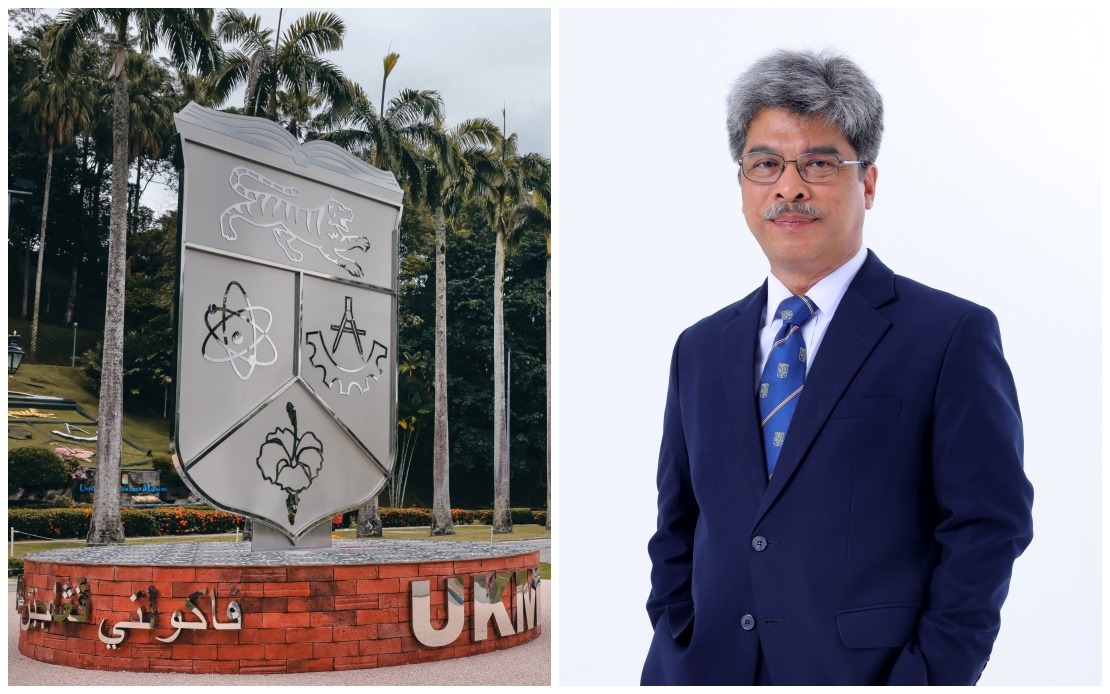
Universiti Kebangsaan Malaysia has thrown its weight behind the government's plan to overhaul the nation's higher education legislative framework, offering substantial academic and legal resources to help shape the new One Higher Education Act that will supersede the Universities and University Colleges Act 1971. The commitment came through UKM's vice-chancellor, Prof Datuk Dr Sufian Jusoh, who expressed the institution's readiness to play a central role in the consultation process that will ultimately replace the half-century-old legislation.
The move reflects the broader government direction initiated by Prime Minister Datuk Seri Anwar Ibrahim, who has signalled the administration's determination to abolish the existing framework to create greater institutional freedom and democratic space for student movements across Malaysian campuses. This legislative reform has already received formal endorsement and was reportedly set to be tabled before the Cabinet in the near term, indicating the seriousness with which the administration is pursuing this transformational agenda.
UKM's positioning as a potential principal facilitator in these discussions carries particular weight given its status as one of the nation's premier research institutions. The university envisions a consultative process that draws in diverse stakeholders—university leadership, academic staff, industrial partners, and most significantly, the student body—recognising that the legitimacy and effectiveness of any new legal framework depends on inclusive dialogue rather than top-down imposition. This stakeholder-centric approach addresses a longstanding criticism of the 1971 Act: that it was designed for an era with vastly different institutional structures and social expectations.
The alignment with UKM's own TEKAD 57 Strategic Plan 2026-2030 suggests that the university views this legislative reform not as a separate initiative but as an integral component of its institutional vision for the next decade and beyond. The strategic plan itself serves as UKM's roadmap toward Malaysia's centennial independence in 2057, placing the institution's development within a longer historical arc. Within this context, the legislative modernisation becomes a mechanism for strengthening institutional autonomy while simultaneously upholding robust governance standards and accountability mechanisms.
A critical dimension of UKM's engagement centres on preserving and empowering academic freedom within an ethical framework. The institution emphasises that greater autonomy need not come at the expense of oversight or responsibility. Rather, the new legislation should enable universities to make substantive decisions about research directions, curriculum design, and institutional priorities whilst remaining answerable to both their communities and national development imperatives. This balance reflects growing international recognition that universities function most effectively when they possess both freedom and accountability.
The involvement of student leadership in the university ecosystem represents another key area where the new legislative framework is expected to depart from the restrictive provisions of the existing Act. The 1971 legislation had become increasingly criticised for limiting student political and civic engagement, with many observers arguing that these restrictions contradicted the democratic principles the nation purports to champion. By incorporating meaningful student participation in governance and decision-making processes, the new Act could transform the campus environment and better prepare graduates for engaged citizenship.
Minister of Higher Education Datuk Seri Dr Zambry Abd Kadir has already outlined the aspirational contours of replacement legislation, anchored to the Malaysia Higher Education Plan 2026-2035. This strategic document provides the policy architecture upon which the new Act will be constructed, signalling that the legislative overhaul forms part of a comprehensive, long-term vision rather than a reactive response to particular pressures. The coordination between ministerial planning and institutional buy-in from major universities like UKM substantially increases the likelihood of producing legislation that achieves both symbolic reform and practical governance improvement.
The emphasis on competitive global research excellence within the new framework addresses Malaysia's position in an increasingly knowledge-intensive global economy. Universities that operate under outdated legislation struggle to attract and retain top-tier research talent and international collaborators. By modernising the legal structure, Malaysia signals to the global academic community that it remains committed to supporting high-impact research that contributes to international scholarly conversation whilst addressing local and regional challenges. UKM's explicit reference to research excellence being competitive on a global scale underscores this international dimension.
For Malaysian higher education more broadly, this legislative reform could serve as a watershed moment. The 1971 Act reflected a development paradigm appropriate to that era but increasingly constrains institutional innovation in areas ranging from academic freedom to financial management to governance structures. Universities in regional competitors like Singapore, Thailand, and Indonesia have experienced greater legislative flexibility, enabling them to adapt more nimbly to changing circumstances. A modernised Malaysian framework could help level this competitive playing field.
The timing of this initiative also reflects shifts in domestic political economy and student expectations. Contemporary Malaysian students expect university experiences aligned with international standards and possess unprecedented access to information about how peer institutions elsewhere operate. The current Act's restrictive provisions feel anachronistic to many in the campus community. By moving toward a framework that trusts institutions and their communities more substantially, the government can address legitimate grievances whilst simultaneously demonstrating confidence in the maturity and judgment of Malaysian academics and students.
UKM's leadership in this consultation process positions the institution as a bridge between government intentions and institutional realities. Rather than simply receiving legislation drafted remotely, universities gain agency in shaping frameworks within which they will operate. This collaborative approach has become increasingly common in comparative higher education governance, recognising that statutes work more effectively when institutions understand and endorse their underlying logic.
The intellectual labour involved in drafting new legislation should not be underestimated. Drawing on both local experience and international best practice, crafting provisions that enhance autonomy whilst maintaining accountability, and creating mechanisms for student participation that are meaningful rather than merely symbolic—all require sustained engagement. UKM's offer of expertise addresses this demand.
Ultimately, the One Higher Education Act represents an opportunity to position Malaysian universities for success in the knowledge economy of the coming decades. By modernising legal frameworks, creating space for institutional experimentation, and enabling more robust engagement with students and communities, the legislation can help unlock potential that existing restrictions have constrained. UKM's proactive engagement in this process suggests that Malaysia's academic institutions are prepared to meet this transformational moment with seriousness and sophistication.

