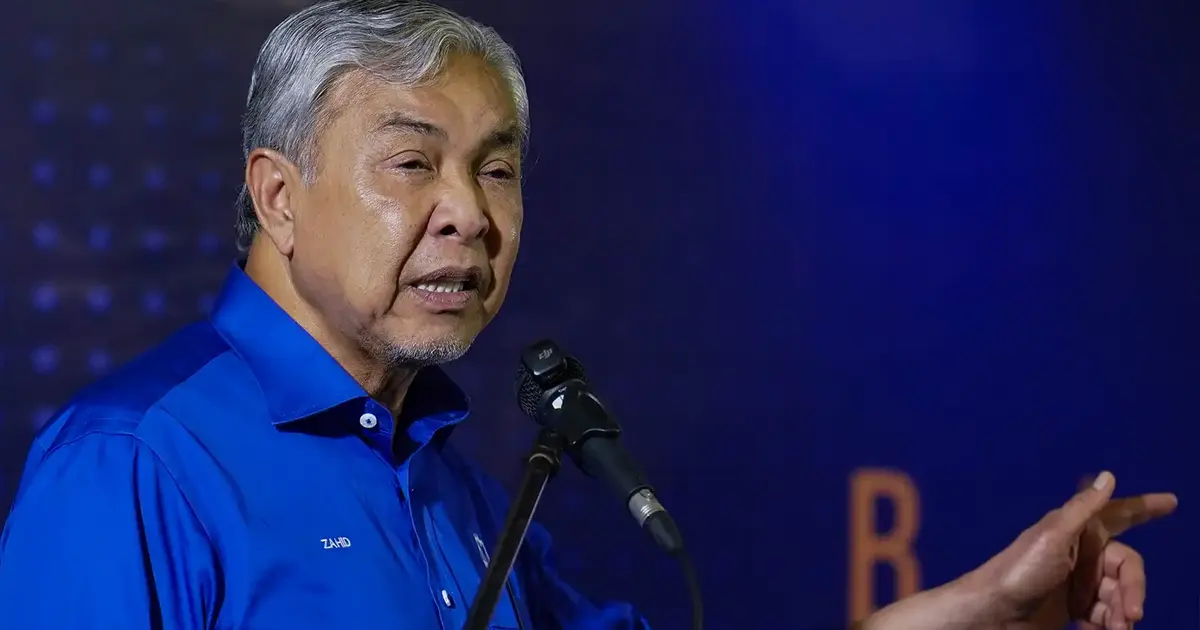
Umno and PAS could forge a working political partnership once again despite the collapse of their earlier collaboration, according to Umno deputy president Puad Zarkashi, who suggests that Umno party president Zahid Hamzah's ambitions for the prime minister's office and PAS's desire to return to governmental power represent aligned near-term interests capable of bridging their historical differences.
The prospect of renewed cooperation between these two Malay-Muslim heavyweights signals a potentially significant shift in Malaysia's fractious political landscape. The two parties were foundational to Barisan Nasional's dominance for decades before their contested separation in the late 1980s and early 1990s, a split that fundamentally reshaped the country's electoral map and handed power to opposition coalitions at various junctures. Understanding the mechanics of how such estranged partners might reunite requires examining the specific motivations driving contemporary party leadership.
Puad's assessment highlights a critical dimension of Malaysian politics often obscured by ideological rhetoric: the centrality of immediate, tangible objectives in determining coalition mathematics. Rather than emphasising shared principles or long-standing historical bonds, his analysis focuses on the convergence of pressing institutional needs—Zahid's personal elevation to the highest executive office and PAS's institutional hunger to occupy cabinet positions and government influence following periods in opposition. This pragmatic framing suggests that the pathway to reconciliation rests not on emotional reconciliation or programmatic alignment, but on cold calculation of mutual benefit.
Zahid Hamzah's position as Umno president carries inherent ambition toward the premiership, a natural culmination of leading Malaysia's largest registered political party and one that aligns with historical precedent: Umno presidents have traditionally occupied the PM office. However, achieving this goal in the current multi-party environment where no single party commands parliamentary dominance requires coalition partners, and Zahid must carefully weigh which potential allies offer the most stable and ideologically compatible arrangements. PAS, despite theological differences with some Umno factions, commands significant parliamentary representation and grassroots mobilisation capacity in rural constituencies, making it strategically valuable.
PAS's situation reflects the opposite challenge: the party holds substantial parliamentary seats but has found itself alternating between government and opposition depending on coalition fortunes. The party leadership, particularly its recent electoral victories and consolidation of power, evidently views a return to government participation as essential for expanding its influence, implementing faith-based policies, and securing resources for party machinery and member patronage. Government participation brings tangible benefits in terms of ministerial appointments, budget allocations, and policy influence that opposition status cannot replicate.
The previous Umno-PAS breakdown occurred amid complex factional disputes, ideological tensions, and personality clashes that reflected broader transformations within both organisations. The rise of conservative Islamic movements within PAS, combined with Umno's attempts to consolidate Malay-Muslim support, created competing visions for how Islam should feature in governance and party identity. These schisms appeared fundamental and perhaps irreversible at their peak. Yet Puad's comments suggest that such doctrinal and organisational divisions may prove less durable than immediate political imperatives when circumstances shift.
For Malaysian observers, the prospect of Umno-PAS realignment carries substantial implications for governance and policy direction. Such a coalition would command overwhelming Malay-Muslim representation in parliament and could pursue policies on religious matters, economic distribution, and federalism with considerably less constraint from non-Malay and secular-oriented coalition partners. The balance of power within such an arrangement matters enormously: whether Zahid and Umno could restrain PAS's more ambitious institutional-Islamic agenda, or whether PAS would leverage its coalition necessity to expand religious governance mechanisms, remains uncertain and politically consequential.
Regionally, renewed Umno-PAS cooperation could influence Southeast Asian politics more broadly. Malaysia's internal coalition configurations affect the country's foreign policy orientation, economic priorities, and regional engagement patterns. A strengthened Malay-Muslim coalition might emphasise different regional partnerships or policy priorities compared to broader multi-ethnic coalitions that have sometimes governed previously. Neighbouring countries and major trading partners monitor such shifts carefully given Malaysia's significance as a regional economic and strategic anchor.
Puad's characterisation of shared short-term goals as the basis for alliance formation reflects a sophisticated understanding of Malaysian coalition dynamics. Unlike federations where ideological consistency supposedly determines party alignment, Malaysian politics permits and encourages pragmatic temporary partnerships where yesterday's enemies become tomorrow's cabinet colleagues when circumstances align. This flexibility frustrates those seeking consistent principle-based politics but reflects the realities of a diverse, multi-ethnic democracy where no single worldview commands majority support.
The timeline for such a realignment remains unclear. Puad's comments appear anticipatory rather than announcing imminent formal negotiations, suggesting that party leadership recognises the possibility without yet committing to concrete steps. Political circumstances—electoral outcomes, economic conditions, scandals, and leadership changes—will determine whether this potential partnership materialises or remains merely theoretical speculation by ambitious politicians. For now, Puad has placed the concept on the political agenda, signalling that Umno strategists are seriously entertaining configurations once thought permanently closed.

