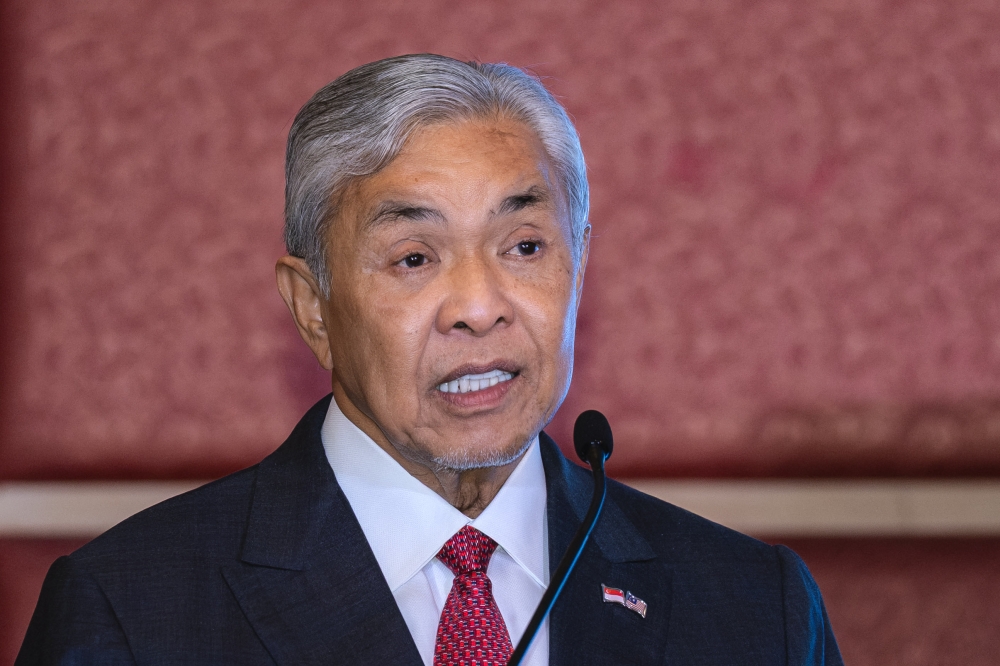
Umno president Datuk Seri Dr Ahmad Zahid Hamidi has pushed back against suggestions that his party operates under a fixed electoral arrangement with PAS in Negeri Sembilan, emphasising instead that Umno retains strategic flexibility in how it structures political coalitions at the state level. Speaking with journalists in Kuala Lumpur, Zahid underscored that no formal memorandum of understanding exists between the two Malay-Muslim parties concerning seat allocations or campaign strategies in the state, a clarification that reflects the fluid nature of Malaysian coalition politics in the post-2018 era.
The denial carries particular weight given the evolving relationship between Umno and PAS, which have oscillated between collaboration and competition across multiple electoral cycles. When Zahid describes the political terrain as one where "goalposts can change anytime," he is acknowledging a reality that Malaysian voters and analysts have come to expect: pre-election alliances in Malaysia often prove provisional, contingent on developments at both national and state levels that can dramatically shift party calculations within weeks or even days. This unpredictability has become a defining feature of Malaysian democracy, particularly since the 2018 general election shattered the long-standing Barisan Nasional dominance and forced Umno into a position of constant tactical reassessment.
Negeri Sembilan occupies a strategically important position in Malaysian electoral mathematics. As a swing state with both rural and semi-urban constituencies, it has historically been contested ground where different coalition combinations have proven viable. The state's eleven state assembly seats remain competitive, and the composition of the state government fundamentally shapes not only local governance but also the broader balance of power within Umno and its allies. Zahid's insistence that no binding arrangement constrains Umno's hand in the state signals that the party may be preserving the option to pursue different partnerships depending on how broader political conditions evolve or what terms other potential partners might offer.
The comments acquire additional significance when viewed against Umno's broader political positioning. Having spent several years in opposition following the 2018 electoral collapse, Umno has gradually repositioned itself as a central player in Malaysian governance through its role in the Perikatan Nasional administration and its participation in the unity government framework that emerged following the 2022 general election. This recovery has been accompanied by a reassertion of Umno's traditional claim to primacy within Malay-Muslim political representation, a claim that inevitably creates friction with PAS, which has similarly positioned itself as a defender of Islamic interests and Malay communal concerns.
The relationship between Umno and PAS encapsulates one of the most consequential tensions in contemporary Malaysian politics: two parties that share overlapping constituencies and ideological commitments to Malay-Muslim advancement, yet harbour deep organisational rivalries and divergent strategic preferences. In some contexts, they cooperate; in others, they contest fiercely. Negeri Sembilan has been a theatre where both dynamics have played out, and Zahid's current statements suggest Umno is unwilling to lock itself into arrangements that might limit its competitive options should the political environment shift. This stance also reflects lessons Umno learned from the 2018 election, when rigid coalition structures sometimes prevented the party from responding nimbly to changing voter sentiment.
The reference to changeable circumstances carries implications that extend beyond the state level. Zahid's assertion that "goalposts can change anytime" implicitly acknowledges that larger configurations at the federal level—including the composition and durability of the current unity government—remain unsettled. Should national coalition arrangements deteriorate or be renegotiated, the implications for state-level alignments could be profound. Parties might feel released from existing commitments or might discover new incentives to forge different partnerships. By declining to commit to a fixed pact with PAS now, Zahid ensures Umno retains maximum strategic autonomy should such transformations occur.
For voters and analysts attempting to gauge Umno's likely positioning in upcoming elections at state or federal level, such statements underscore the centrality of contingency and tactical calculation in Malaysian electoral politics. Traditional party allegiances matter less than they once did; instead, coalitions form and dissolve based on constantly evolving assessments of electoral advantage, factional dynamics within parties, and shifts in public opinion. The clarity that formal agreements might provide is sacrificed in exchange for the flexibility to pursue whichever combination appears most advantageous at any given moment.
The commentary also illuminates deeper questions about the sustainability of Malaysia's current political architecture. The unity government that has governed since 2022 has brought together parties with substantial programmatic and ideological differences, united primarily by the shared interest in preventing Perikatan Nasional from consolidating power. Yet this coalition of convenience faces constant pressure, as individual component parties calculate whether their interests are better served by remaining within the alliance or by pursuing independent or alternative arrangements. Zahid's refusal to be bound by long-term pacts with PAS reflects this fundamental instability.
Looking ahead, Negeri Sembilan will likely remain a pivotal testing ground for different coalition models. Whether Umno and PAS ultimately contest the state together, separately, or in some hybrid arrangement will depend on political circumstances that cannot yet be fully foreseen. Zahid's statement amounts to a declaration that Umno intends to keep its options open, maintaining the flexibility to respond to developments that may or may not materialise. In Malaysian politics, such flexibility has repeatedly proven invaluable.

