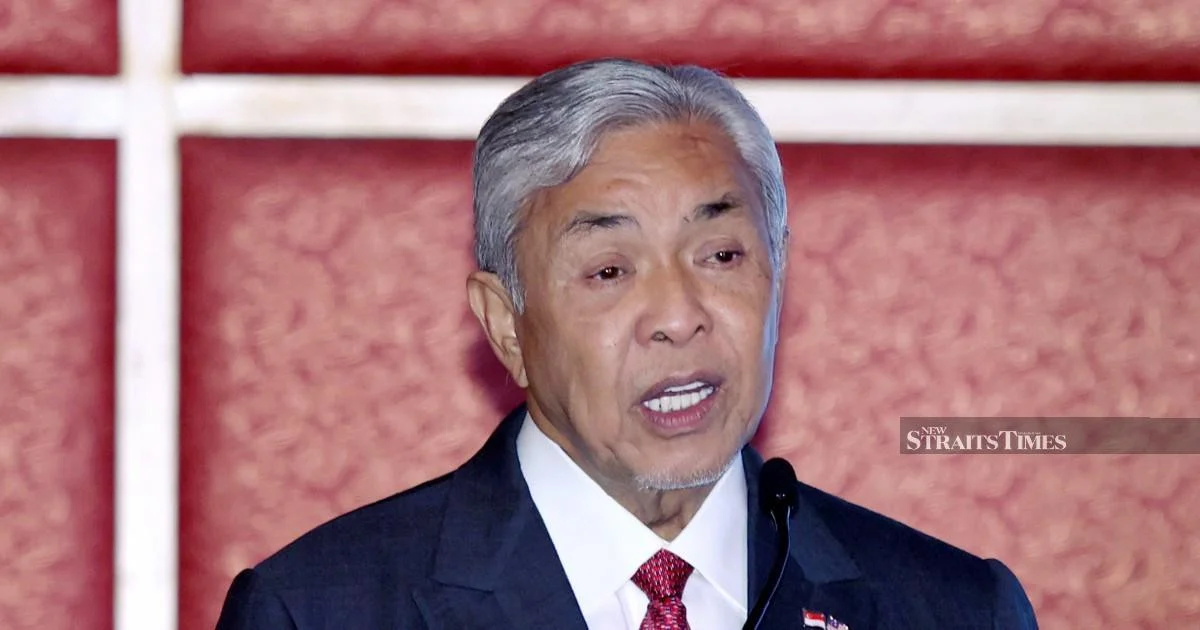
Umno president Datuk Seri Dr Ahmad Zahid Hamidi has firmly dismissed suggestions that his party has struck a seat-sharing arrangement with Pas ahead of the Negri Sembilan state election, moving to quash speculation about backroom dealings between the two political heavyweights. The denial comes as intense scrutiny surrounds coalition negotiations and candidate selection processes across multiple state contests in the coming months.
The emphatic statement from Zahid represents a significant clarification regarding Umno's electoral strategy in one of Malaysia's more politically competitive states. Negri Sembilan has historically served as a crucial testing ground for both government and opposition coalitions, with results often foreshadowing broader electoral trends. The state's mixed demographic profile, spanning urban centres like Seremban and Nilai with more rural constituencies, requires careful calculation by parties vying for dominant positions.
Pas and Umno, despite their shared Islamic-based political roots and occasional cooperation at the federal level, have often competed fiercely in state-level contests. This inherent tension reflects the reality that both parties operate within the same electoral space and appeal to overlapping voter demographics, particularly in rural constituencies where religious considerations carry significant weight. For Umno, which remains the dominant force in most state governments within the federal coalition, maintaining independence in seat allocation decisions is crucial to preserving its core support base.
Zahid's dismissal of alleged negotiations suggests that Umno intends to contest the Negri Sembilan election primarily as an autonomous force, relying on its own machinery and grassroots network. This approach underscores the party's confidence in its organisational capabilities and appeal among Malay-Muslim voters in the state. The party has long positioned itself as the natural custodian of Malay-Muslim interests, and contesting broadly across available seats reinforces this narrative.
The timing of such clarifications carries weight in Malaysia's political calendar. With multiple state elections potentially looming and federal representation at stake, declarations about electoral partnerships—or the absence thereof—signal leadership positions on coalition building. Umno's role as the anchor party of the Barisan Nasional coalition means its stance influences calculations across the entire alliance structure, affecting how partner parties from the Malaysian Chinese Association and Sarawak-based partners approach their own seat selection strategies.
For Pas, the denial complicates its own electoral positioning. The party has been investing heavily in efforts to expand beyond traditional strongholds in the Peninsular heartland, viewing states like Negri Sembilan as opportunities to broaden its reach. Without a formal arrangement that guarantees clear pathways to contested seats, Pas faces the more challenging prospect of direct competition with Umno in constituencies where both maintain organisational presence and voter appeal.
Negri Sembilan's electoral dynamics present particular complexity because the state remains politically balanced between competing forces. Unlike some neighbouring states where one coalition dominates overwhelmingly, Negri Sembilan continues to generate genuine competitive contests across multiple constituencies. This competitive environment means parties cannot afford complacency in candidate selection or campaign execution, and must carefully calculate where they can realistically win against both coalition and opposition rivals.
The state's economic profile—combining established tin mining heritage with modern industrial development and growing service sectors—creates a diverse electorate spanning traditional rural constituencies and increasingly prosperous suburban areas. This diversity means successful candidates require broad appeal rather than narrow factional support, placing emphasis on individual candidate quality and local connections alongside party machinery. Umno's assertion of electoral autonomy in Negri Sembilan likely reflects confidence in its ability to field competitive candidates across these varied constituencies.
Such declarations also carry implications for PAS's broader political trajectory. As Malaysia's largest Islamic party by membership, Pas continues charting a course that balances its ideological commitments with electoral pragmatism. Where formal cooperation agreements with Umno exist, Pas has secured predictable platforms for expansion. The absence of such arrangements forces the party to demonstrate voter appeal through individual candidate campaigns and localised political work, a more labour-intensive but potentially more durable foundation for long-term growth.
Umno's position reflects institutional strength and confidence in its ability to compete across multiple fronts simultaneously. The party's dominant position in federal government and its continued strength in most Peninsular states provide resources and visibility advantages that translate into electoral asset. Nevertheless, such confidence requires backing through effective ground operations, disciplined candidate selection, and messaging that resonates with contemporary voter concerns around economic management and social stability.
For Malaysian voters in Negri Sembilan, Zahid's statement signals that the upcoming state election will present genuine choices across multiple constituencies rather than predetermined outcomes shaped by behind-the-scenes power-sharing. This dynamic encourages both major parties to invest in constituency-level campaigns and candidate quality, potentially generating more engaged electoral contests. The state's pivotal position within Malaysia's broader political geography ensures that its electoral outcome carries weight well beyond state boundaries.

