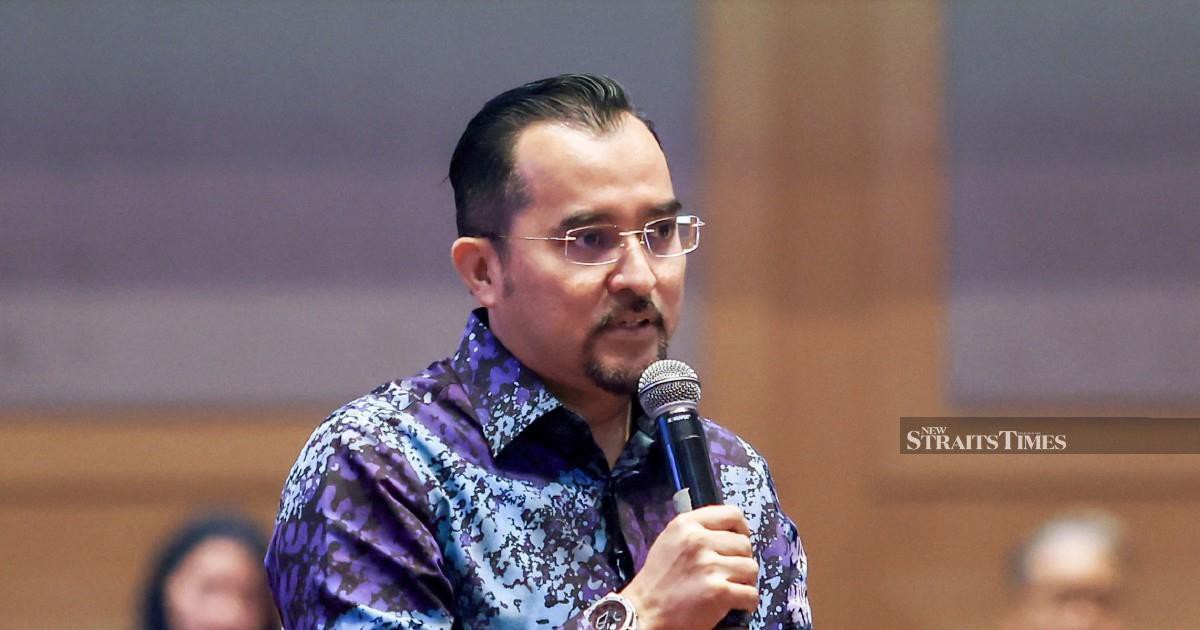
The Umno party hierarchy has firmly rejected contentions that it deliberately manufactured a façade intended to conceal responsibility for the widespread financial troubles that have engulfed Lembaga Tabung Haji. Datuk Dr Asyraf Wajdi Dusuki, serving as the party's secretary-general, moved to categorically deny the allegations, addressing what has become an increasingly heated debate over institutional accountability and political protection within Malaysia's governance structures.
The Lembaga Tabung Haji scandal represents one of Malaysia's most significant corporate governance failures in recent memory, with investigations revealing substantial financial losses and questionable investments made by the Islamic pilgrimage fund management. The institution, which serves as a mandatory savings mechanism for Malaysian Muslims preparing for the Hajj pilgrimage, held approximately RM81 billion in assets before its troubles became public. Questions have persistently emerged regarding whether political interference played a role in shielding senior management figures from prosecution or public scrutiny, particularly given the institution's close historical ties to Umno-led governments.
Dr Asyraf Wajdi's denial comes amid a broader pattern of accusations levelled at Umno regarding potential obstruction of accountability mechanisms. Opposition politicians and civil society groups have suggested that the ruling coalition's handling of the scandal demonstrates a reluctance to pursue charges against individuals with close connections to the party. The secretary-general's statement represents a direct counter-narrative to these assertions, though it does not elaborate on specific measures the party contends it took to ensure genuine accountability rather than strategic damage control.
The dynamics of Malaysian political culture have made the Tabung Haji matter particularly sensitive, as the institution carries significant symbolic weight within the Muslim community. Any perception that its governance failures have been inadequately addressed or that perpetrators enjoy immunity from consequences risks deepening public mistrust in both political and financial institutions. This explains why Umno has felt compelled to issue formal denials rather than allowing the accusations to pass without response.
Critiques of the government's approach have focused on the apparent absence of criminal prosecutions against top-tier executives despite investigations uncovering evidence of misconduct. While some officials have faced administrative consequences or civil suits, the threshold of criminal accountability appears not to have been crossed for individuals occupying the highest positions within the institution's former management structure. These disparities between administrative discipline and criminal prosecution have fuelled speculation about political considerations influencing investigative and prosecutorial decisions.
The broader context of institutional failures at Tabung Haji extends beyond individual accountability to systemic oversight mechanisms. The fund had invested in ventures considered speculative or misaligned with its core mission of facilitating Hajj savings, including ventures in aviation and real estate that subsequently deteriorated in value. Questions persist about whether supervisory bodies, including government ministries and parliamentary committees with oversight responsibilities, adequately monitored these investment decisions before losses became irreversible.
For Malaysian citizens, particularly the millions who contribute to Tabung Haji throughout their working lives, the scandal has prompted deeper reckonings about institutional trust. The narrative of a political cover-up, whether substantiated or not, strikes at the heart of anxieties about whether ordinary people's financial security receives protection proportional to that afforded to politically connected individuals. This psychological dimension extends beyond forensic accounting to fundamental questions about fairness within Malaysia's systems.
The timing of Dr Asyraf Wajdi's statement reflects ongoing political competition over the scandal's narrative. Opposition coalitions have sought to weaponise the issue as evidence of governance failures under Umno leadership, while Umno attempts to compartmentalise the scandal as a technical or administrative matter rather than a political one. These competing framings have prevented the public discourse from settling into a clear consensus about what happened and why accountability mechanisms functioned as they did.
Regional observers have noted that the Tabung Haji scandal mirrors patterns of institutional vulnerability observed elsewhere in Southeast Asia, where overlapping governance responsibilities and political influence can obscure accountability boundaries. Malaysia's experience provides cautionary lessons regarding the importance of structural independence for oversight bodies and the risks posed when financial institutions become venues for political patronage networks. The manner in which the scandal unfolds will likely influence how subsequent institutional failures are managed and investigated.
Moving forward, the resolution of public scepticism regarding political interference depends not merely on denials but on demonstrable transparency in any remaining investigations and prosecutorial decisions. Rebuilding confidence in Tabung Haji itself requires parallel reforms addressing investment governance and board composition to ensure that future decisions reflect fiduciary obligations rather than broader political considerations. Without such structural changes, the institution's troubled history will continue to cast shadows over Malaysia's financial integrity.

