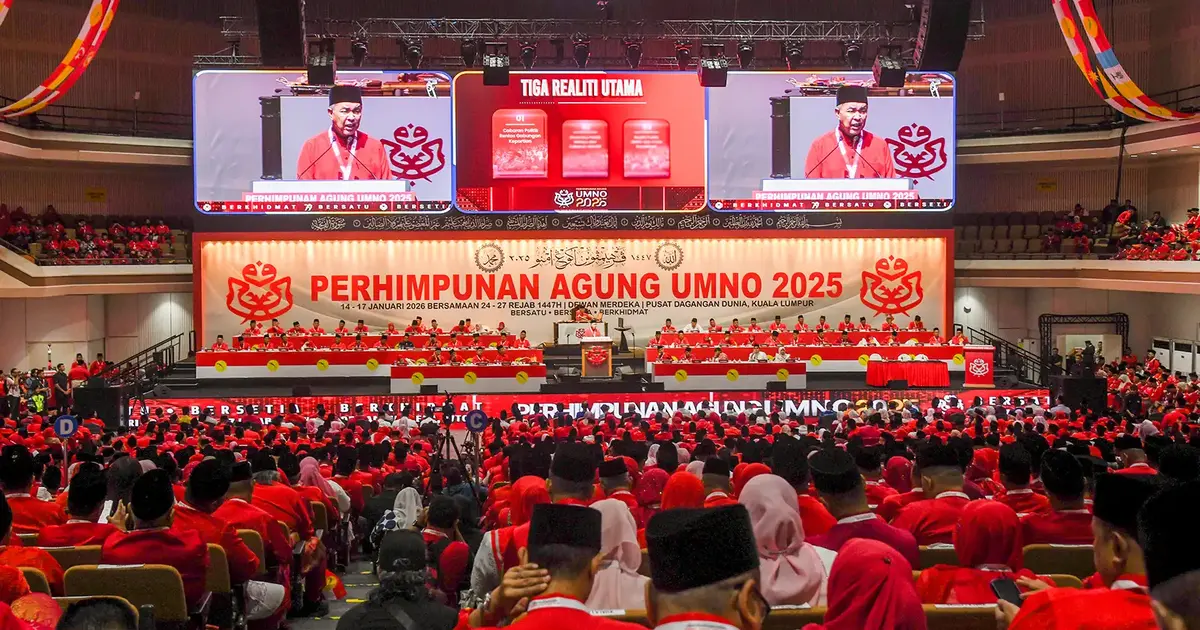
Friction within Umno's grassroots ranks in Negeri Sembilan has surfaced following the decision to allocate 11 state assembly seats to Perikatan Nasional in the electoral coalition framework, according to reports from divisional leadership. The discontent reflects broader tensions within the Barisan Nasional machinery as it navigates coalition politics with its newer ally, with ground-level party operatives questioning the mathematics behind seat distribution in a state where Umno has historically maintained significant organisational reach.
The core of the grievance centres on what division leaders perceive as an inequitable settlement, particularly regarding Wawasan's positioning within the allocation framework. The relative newcomer to Malaysian politics has been granted four seats despite this representing its inaugural participation in electoral contests, a factor that has amplified frustration among seasoned Umno cadres who view the arrangement as disproportionate to the party's demonstrated track record and grassroots mobilisation capacity. This tension illuminates the delicate balancing act required when established political machines accommodate emerging players within formal coalition structures.
Negeri Sembilan occupies a strategically important position within Malaysian electoral geography, and the composition of its state assembly carries implications for both Barisan Nasional's governance stability and the broader federal coalition's cohesion. With 36 total seats in the state legislature, the allocation of 11 to Perikatan Nasional represents nearly one-third of contested positions, a substantial share that Umno leaders contend should have been distributed differently given their party's organisational superiority in the state.
The emergence of such discontent among divisional leadership is significant because these officials function as the crucial link between high-level party strategy and grassroots party members. Their unhappiness can translate into recruitment difficulties, reduced volunteer enthusiasm during campaign periods, and potential complications in candidate endorsement processes. When divisional heads lack confidence in seat allocation fairness, the ripple effects extend throughout the party's entire operational structure in affected constituencies.
Wawasan's circumstances present a particularly instructive case study in coalition mathematics. As a relative newcomer that contested elections previously and is now being given four assembly seats, the party has achieved rapid integration into Malaysia's major political coalitions. The speed of this ascent raises questions among traditional coalition members about the criteria governing seat distribution and whether longevity and established strength remain relevant considerations in contemporary coalition negotiations.
The Umno frustration in Negeri Sembilan reflects broader challenges facing Barisan Nasional as it attempts to maintain internal cohesion while accommodating Perikatan Nasional parties as coalition partners. Each seat allocation decision contains implicit messaging about which parties are considered reliable, which are considered growth prospects, and how the federation's political leadership calculates coalition value. When those calculations appear opaque or inconsistent to party members, credibility suffers.
From a Malaysian political perspective, the incident demonstrates how coalition arrangements, though often presented as united fronts at the national level, frequently generate tension at state and divisional levels where competition for electoral tickets remains intense and immediate. The Negeri Sembilan situation is unlikely to be unique; similar frustrations probably exist in other states where Umno and Perikatan Nasional parties share the electoral canvas.
Understanding the depth of this discontent requires recognising that state assembly seats represent not merely electoral platforms but pathways to political advancement, resource allocation, and constituency-level influence. For divisional leaders invested in particular constituencies, seat assignments directly affect their own political trajectories and the opportunities available to their preferred candidates. When those assignments appear arbitrary or disproportionate, resistance becomes inevitable.
The timing of such reports also carries significance. Whether divisional leaders are expressing grievances through media channels to signal dissatisfaction to higher party leadership or whether these concerns have already been raised through formal party channels remains unclear. Either interpretation suggests that the seat allocation process did not achieve consensus buy-in from Umno's internal structure, potentially creating vulnerabilities during future campaign periods.
Looking ahead, whether Umno's national leadership addresses these concerns through revised allocation frameworks or alternative compensation mechanisms will largely determine whether such grievances fester or dissipate. The party's ability to manage coalition arrangements while maintaining internal morale increasingly defines its relevance in an era of shifting political alliances. For Southeast Asian observers and Malaysia's broader political community, the Negeri Sembilan situation encapsulates the ongoing tension between coalition necessity and intra-party satisfaction that characterises contemporary Malaysian politics, where multiple parties must cooperate nationally while competing intensely locally.
The unresolved nature of these concerns suggests that coalition management remains a work in progress for Barisan Nasional, and that achieving equilibrium between different coalition partners while satisfying longstanding party members presents challenges that merit continued attention and deliberate resolution strategies.

