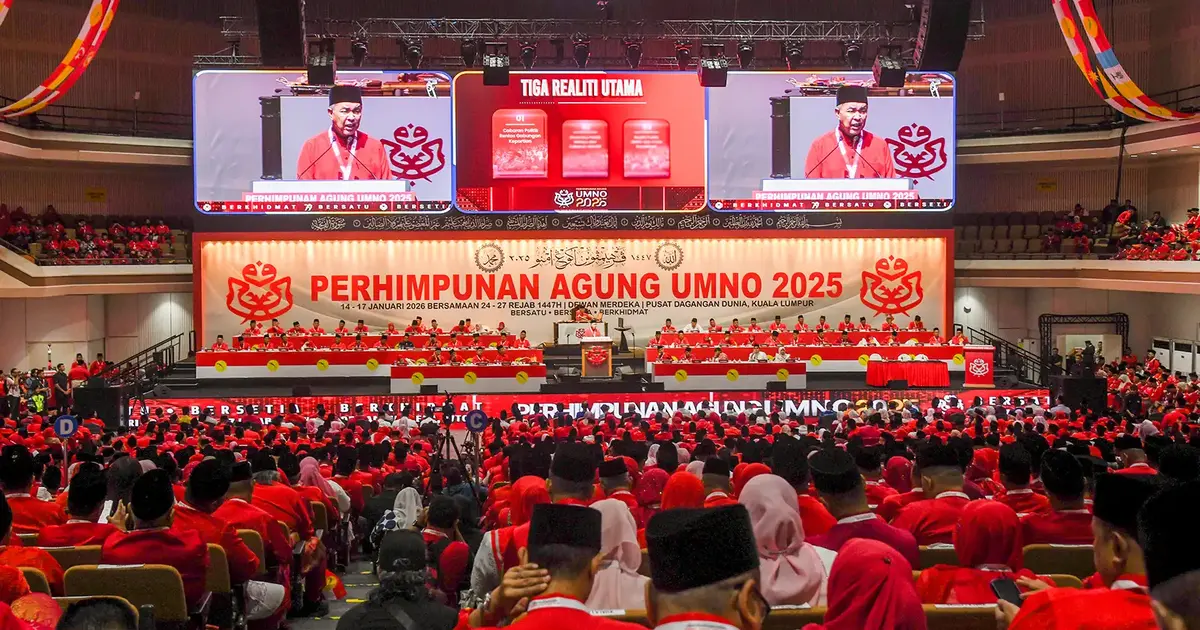
Discontent is brewing within UMNO's grassroots organisational structure after the coalition leadership distributed eleven parliamentary seats to Perikatan Nasional partners, according to reports emerging from party sources. The allocation has triggered significant unhappiness among division-level leaders who view the decision as disadvantageous to their own party's electoral prospects and organisational morale.
The core of the grievance centres on how seats were parcelled out among coalition members, with particular ire directed at the decision to grant Wawasan four constituencies despite the newly-formed political entity contesting in a general election for the very first time. This allocation has struck many UMNO grassroots figures as disproportionate, especially considering the established party's extensive electoral machinery, membership base, and track record of campaigning success across multiple election cycles.
Wawasan's entry into electoral politics represents a significant strategic shift within the broader coalition framework. The party, which emerged from political reorganisation and realignments within Malaysia's opposition-aligned movement, has attracted prominent political figures but lacks the entrenched organisational networks and constituency-level presence that UMNO has cultivated over decades. For division leaders accustomed to fielding candidates across broad swaths of their respective states and regions, the generous allocation to an untested political entity appears contradictory to principles of merit-based seat distribution.
The tension reflects deeper fault lines within coalition politics that extend beyond simple arithmetic disputes over parliamentary representation. UMNO's extensive field organisation, particularly in rural and semi-urban areas, has traditionally formed the backbone of the coalition's electoral machinery. Division leaders oversee grassroots mobilisation efforts, local candidate selection, and community engagement activities that prove decisive during campaign periods. Their dissatisfaction signals potential complications in executing coordinated campaign strategies when lower-ranking party structures feel their contributions are undervalued during seat negotiations.
This discontent also carries implications for coalition cohesion during the implementation phase of campaign activities. When constituency-level organisers feel they have been treated unfairly in seat allocation negotiations, their enthusiasm and commitment to helping coalition partners succeed in adjacent constituencies may diminish. The cross-constituency support mechanisms that often determine victory margins in marginal seats depend substantially on goodwill and cooperative spirit among neighbouring division structures.
For Perikatan Nasional, the generous seat allocation was presumably intended to acknowledge the coalition's electoral partnership and demonstrate substantive power-sharing commitments. However, the calculation appears to have overlooked the organisational dynamics within UMNO itself, where leaders at every tier expect transparent rationales for strategic decisions affecting their political futures and local influence. The lack of apparent justification for Wawasan's allocation, beyond coalition-building logic, has created a credibility problem among those tasked with executing ground-level campaign operations.
The Malaysian political context adds further complexity to this situation. Coalition politics have increasingly become transactional arrangements where parties jostle for maximum seat allocation while simultaneously managing internal expectations about their rightful share. UMNO's decades-long dominance of Malaysian politics has conditioned its membership to expect preferential treatment in seat distribution discussions. Competing against newly-emerged parties for constituencies therefore produces acute frustration, particularly when traditional rivals appear advantaged by coalition mechanics.
Division leaders occupy critical positions within UMNO's hierarchical structure. They serve as intermediaries between national decision-makers and rank-and-file party workers, translating strategic choices into actionable campaign plans. When these intermediaries feel sidelined or undervalued, implementation of national party directives often suffers. Their complaints, if they intensify and spread across multiple state divisions, could complicate the coalition's ability to project unified messaging and mobilise voters effectively during campaign periods.
The Wawasan allocation specifically raises questions about seat viability. New parties typically face steeper organisational challenges in unfamiliar constituencies. Allocating four seats to an entity without established ground presence in those areas carries obvious electoral risks. UMNO division leaders may reasonably wonder whether those constituencies might have been more effectively contested by their own experienced candidates and campaign machinery, potentially yielding larger coalition victory margins overall.
Moving forward, managing these internal coalition tensions will require careful communication from party leadership. Simple restatement of coalition agreements will likely prove insufficient to mollify grassroots discontent. Instead, UMNO's national leadership must articulate clear strategic rationales for the allocation decisions, explain how Wawasan's inclusion strengthens overall coalition competitiveness, and provide credible assurances that future seat distribution will reward party contributions more transparently. Without addressing these underlying grievances, the coalition risks fielding candidates who encounter foot-dragging from neighbouring party structures or reduced voluntary mobilisation efforts during critical campaign phases.

