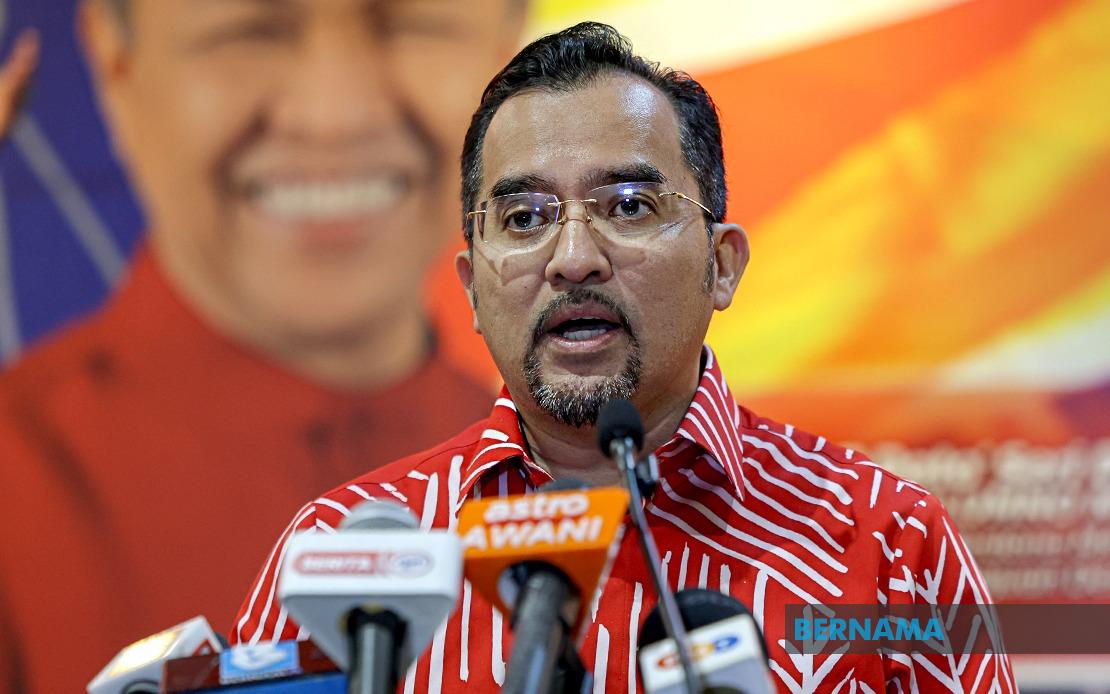
UMNO has taken a significant step in preparing for the next general election by granting its state leadership the authority to explore political cooperation with interested parties. The decision emerged from a Supreme Council meeting held late on Aug 28 at Menara Dato' Onn in Kuala Lumpur, chaired by UMNO president Datuk Seri Dr Ahmad Zahid Hamidi and attended by deputy president Datuk Seri Mohamad Hasan and other senior party members. According to UMNO secretary-general Datuk Dr Asyraf Wajdi Dusuki, this mandate represents a strategic shift that decentralizes coalition-building decisions to the regional level, potentially allowing for more flexible and locally-tailored political arrangements across Malaysia's various states.
The authorization comes with clear parameters that emphasize the foundation upon which such negotiations must proceed. Asyraf Wajdi stressed that any future cooperation agreements between UMNO and potential allies must be rooted in genuine sincerity and mutual trust, explicitly rejecting coercive tactics or intimidation as negotiating tools. This stipulation reflects growing concern within Malaysian political circles about the use of pressure or threats in coalition discussions, a practice that has occasionally undermined inter-party relationships in recent years. By establishing these ethical boundaries at the Supreme Council level, UMNO appears intent on building alliances that rest on stable, principled foundations rather than temporary political expedients.
For Malaysian political observers, this development carries substantial implications for how the nation's electoral landscape may evolve. The grant of negotiating authority to state-level structures suggests that UMNO recognizes the diversity of political interests and circumstances across different regions of the country. What works as a political arrangement in Peninsular Malaysia may require different configurations in Sabah or Sarawak, where local dynamics and historical voting patterns differ markedly. By empowering state branches to pursue their own negotiations while operating within Supreme Council-endorsed parameters, UMNO can potentially maximize its electoral positioning without imposing one-size-fits-all coalition strategies from the center.
The party's move also carries strategic undertones regarding its relationship with PAS, the Islamist party with whom UMNO has maintained a complex political partnership. The Supreme Council's decision to extend an official invitation to PAS leaders to attend UMNO's 2026 General Assembly, scheduled for Sept 9 to 12, signals continued engagement with this key coalition partner. This gesture holds particular weight given that the general assembly will serve as a platform for UMNO to articulate its vision and mobilize its grassroots support ahead of the next election cycle. The participation of PAS leaders would underscore the durability of their working relationship and provide an opportunity for public reaffirmation of shared objectives.
Augmenting this political engagement, UMNO has organized a series of specialized programmes scheduled for Sept 8, the day before the general assembly opens. These initiatives include the 2026 Malay Education Convention, the Malaysian Islamic Scholars Convention, and Laman Wanita Kreatif, a creative women's forum. These thematic events reveal UMNO's strategic priorities: education policy, Islamic thought and community values, and women's participation in party and national life. By clustering these programmes immediately before the general assembly, UMNO ensures that discussions and resolutions on these matters can feed directly into the assembly's proceedings, creating coherence between specialized working groups and the broader party deliberations.
In a significant statement on governance and accountability, UMNO also reaffirmed its commitment to the rule of law during the Supreme Council meeting. Asyraf Wajdi articulated the party's principle that no individual should be presumed guilty unless formally charged, tried, and convicted through proper legal channels. This stance appears designed to address ongoing concerns about judicial processes and to distinguish UMNO's position from any perception of politicizing legal matters. The party explicitly stated that it will not shield any member, regardless of seniority, from facing justice through established legal procedures, and that it does not tolerate wrongdoing or misconduct within its ranks.
This emphasis on legal rectitude carries particular resonance in Malaysia's current political context, where questions about accountability and governance have remained prominent in public discourse. UMNO's formal articulation of these principles at the Supreme Council level suggests an attempt to rebuild institutional credibility and demonstrate that the party stands for principled governance rather than factional protection. By separating questions of political cooperation from questions of legal accountability, UMNO seeks to present itself as both a pragmatic political actor capable of forming coalitions and a responsible institutional guardian committed to constitutional governance.
The authorization granted to state leadership also reflects organizational evolution within UMNO itself. Historically, major coalition decisions have been centralized, with the party hierarchy determining the broad strategic framework within which state branches operate. This new approach represents a modest but meaningful shift toward federalized decision-making that acknowledges regional variations and allows for more responsive political positioning. State branches, which typically have deeper knowledge of local political dynamics and voter preferences than the central apparatus, can now translate this knowledge into negotiating positions with potential partners.
Looking at the broader Malaysian political landscape, UMNO's moves suggest that major political realignments may be in play as the nation approaches its next electoral cycle. The party's simultaneous emphasis on both openness to cooperation and adherence to legal principles indicates a delicate balancing act between maintaining coalition flexibility and managing internal and external expectations about governance standards. For voters and analysts observing Malaysian politics, these developments underscore the ongoing fluidity of electoral coalitions and the continuing negotiations that shape the country's political architecture between formal election cycles.
The implications of UMNO's decisions will likely become clearer in the months ahead as state branches begin acting on their new mandate. The extent to which different states pursue divergent coalition strategies, the degree to which PAS and other parties engage with UMNO's overtures, and the concrete outcomes of these negotiations will collectively determine whether this empowerment of state leadership strengthens UMNO's electoral position or creates internal coordination challenges. Meanwhile, the party's reaffirmation of rule-of-law principles signals that Malaysian politics continues to grapple with balancing pragmatic coalition-building with institutional integrity and democratic governance.

