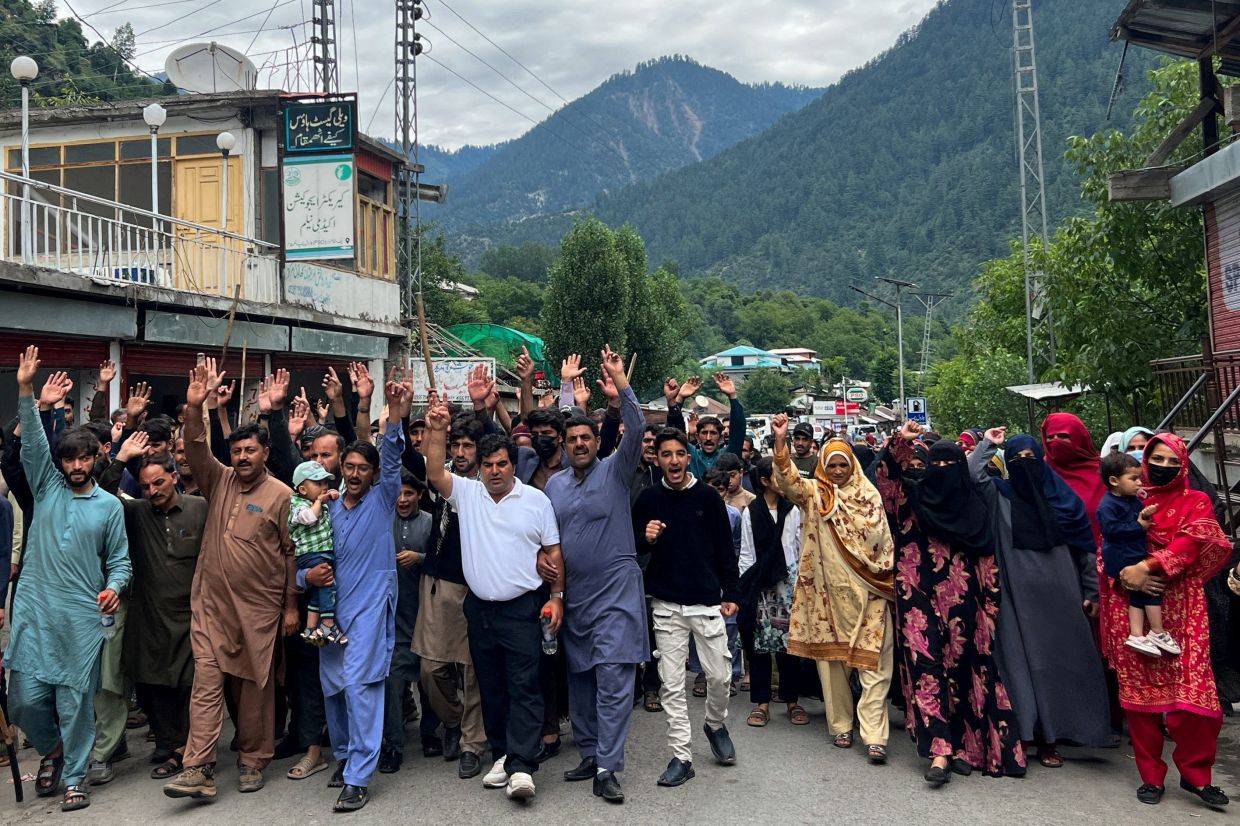
The United Nations has intensified pressure on Pakistan to launch credible inquiries into a series of fatal incidents unfolding across the disputed Kashmir territory, where mounting pre-election tensions have claimed numerous lives. Speaking through his spokesperson Jeremy Laurence in Geneva on Friday, UN High Commissioner for Human Rights Volker Turk voiced alarm at the scale of casualties documented since June, when demonstrations began escalating ahead of regional assembly polls scheduled for July 27. The international body's intervention reflects deepening worry about both the immediate humanitarian toll and the broader trajectory of political freedoms in the volatile region.
Authorities in Islamabad face mounting criticism over what the UN characterizes as a disproportionate security response to civic unrest. Since mid-June, reports indicate that dozens have perished in clashes between demonstrators and law enforcement personnel, though precise casualty figures remain contested. The violence has engulfed Pakistan-administered Kashmir at a particularly sensitive moment, with the electorate set to vote for their regional legislature within days. This convergence of electoral politics and street-level confrontation mirrors historical patterns in the territory, where governance transitions have repeatedly triggered upheaval among segments of the population demanding substantive economic and institutional reform.
The epicentre of discontent centres on the Joint Awami Action Committee, an anti-establishment coalition mobilizing citizens around grievances concerning economic stagnation and administrative accountability. Despite operating as a recognized civil society forum, Pakistani authorities formally proscribed the JAAC last month under counter-terrorism legislation, justifying the move through claims that the organization posed threats to public order. This designation has profound legal consequences: it effectively criminalizes membership, fundraising, and organizational activities, whilst simultaneously empowering enforcement agencies to detain affiliated individuals without the procedural safeguards normally applicable to ordinary protest organizers. The ban itself has become contentious internationally, with human rights monitors questioning whether security justifications mask an effort to suppress legitimate dissent during an electorally consequential period.
The UN's human rights office has drawn explicit parallels between Pakistan's current approach and established international standards governing freedom of assembly and expression. Officials serving under Turk have characterized the detention of JAAC leadership figures as inconsistent with obligations undertaken through Pakistan's ratification of major human rights treaties. They emphasize that whilst governments retain authority to maintain public order, such measures must remain proportionate, transparent, and subject to judicial oversight. The organization's formal statement warns that blanket criminalisation of civil society groups carries profound chilling effects, deterring ordinary citizens from engaging in lawful advocacy for fear of legal jeopardy or association with proscribed entities.
Access to legal representation constitutes a critical flashpoint within the UN's broader critique. Families and legal advocates have reported difficulty contacting detained JAAC members, whilst some prisoners apparently lack meaningful opportunity to prepare defences or contest the factual foundations underpinning their detention. Turk's office insists that due process requirements—including timely access to counsel, transparent charges, and fair trial procedures—represent non-negotiable minimums, not discretionary amenities that authorities may withdraw during periods of heightened tension. This emphasis reflects international jurisprudence establishing that security emergencies do not suspend fundamental legal protections; rather, they demand more rigorous judicial scrutiny to prevent governmental overreach.
Internet shutdowns represent a second dimension of the UN's complaint, one with particular resonance across Southeast Asia where digital access remains contested political terrain. Authorities in Pakistani-administered Kashmir have progressively restricted connectivity, ostensibly to prevent coordination of further demonstrations and limit circulation of inflammatory content. The UN characterizes these measures as blunt instruments incompatible with rights to information and expression. When populations face simultaneous curbs on physical assembly, organizational freedom, and digital communication, the cumulative effect effectively silences dissenting voices during periods when public discourse matters most. For Malaysian observers, these dynamics offer cautionary lessons about governance approaches that prioritize security imperatives over institutional checks on executive authority.
The historical backdrop illuminates why Kashmir occupies such exceptional sensitivity within Pakistani strategic calculus. Contested between Islamabad and New Delhi since the subcontinent's partition in 1947, the territory has witnessed multiple wars and countless smaller skirmishes across seven decades. The Pakistani military establishment views stability in the region as integral to national security, making civilian demands for economic reform vulnerable to reinterpretation as separatist agitation or foreign-influenced subversion. This securitized framing of internal politics complicates efforts by international actors to engage Islamabad on governance matters, since officials often perceive external advocacy for political freedoms as implicit support for territorial fragmentation or Indian interests.
Last September's violence offers relevant precedent for the current trajectory. Days of intense clashes between police and JAAC-led protesters left nine confirmed dead, yet investigations into those fatalities reportedly stalled without yielding accountability. That pattern—cycles of escalation, followed by official inquiries that produce neither transparent findings nor institutional reforms—has fostered profound distrust amongst Kashmir's civilian population toward state mechanisms for redress. Communities consequently approach new pledges of transparent investigation with skepticism, viewing such commitments as rhetorical gestures unlikely to yield meaningful consequences for security personnel involved in alleged excessive force.
Turk's office emphasizes that resolving underlying tensions requires more than security responses, however professionally executed. The UN stress-tests the capacity of electoral processes themselves to serve as legitimate channels for expressing grievances when fundamental rights frameworks remain compromised. Meaningful and inclusive political dialogue must address material concerns—economic opportunity, employment prospects, governance accountability—that motivate mobilization in the first place. Without such engagement, elections risk becoming formalistic exercises that process votes whilst leaving substantive grievances unaddressed, thereby sowing conditions for future cycles of discontent.
For the broader Southeast Asian context, this episode underscores the interconnection between civil liberties protection and long-term political stability. Malaysia and other regional states navigating their own tensions between security imperatives and democratic freedoms would do well to note the international consequences of sustained restrictions on assembly rights and organizational freedom. Governments that rely excessively on proscription and detention to manage dissent risk triggering UN scrutiny and reputational damage that extends far beyond immediate political dividends. The challenge, then, involves designing security responses calibrated to genuine threats whilst preserving institutional space for legitimate grievance-airing, a balance that Pakistan's current approach appears to have substantially tilted toward enforcement at the expense of institutional pluralism.

