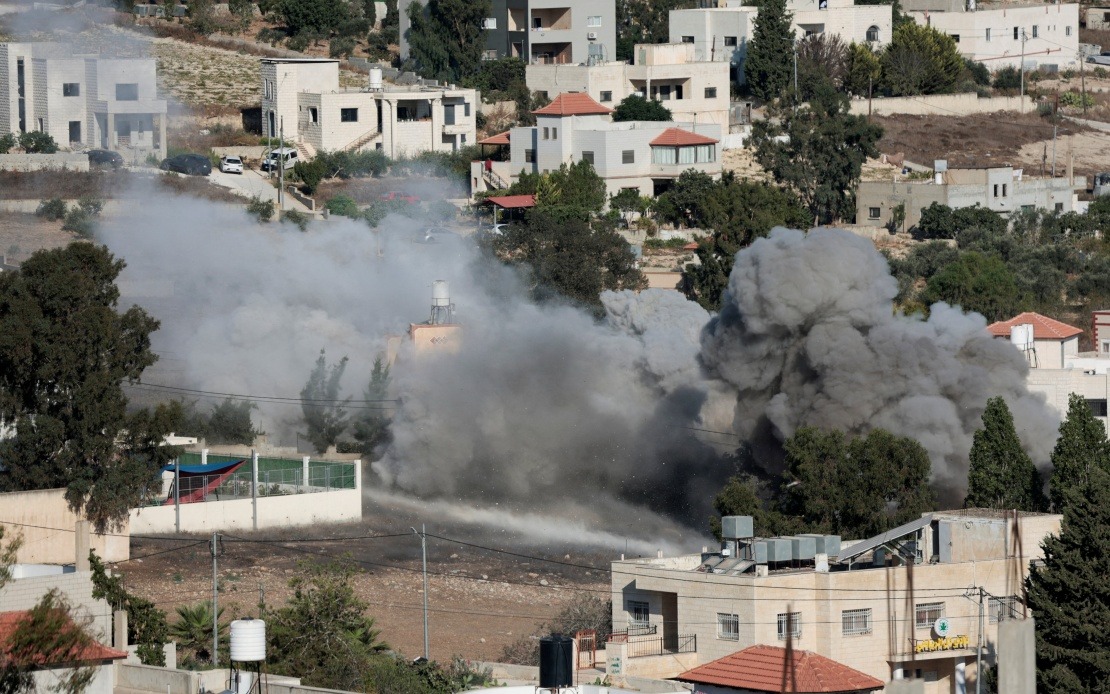
The United Nations Human Rights Office operating in the Occupied Palestinian Territory has issued a stark warning about the escalating frequency and severity of violent incidents perpetrated by Israeli settlers against Palestinian communities, describing the situation as having crossed a critical threshold. In a formal statement released on Thursday, the office documented a pattern of systematic attacks that it argues demonstrate a coordinated effort to displace Palestinian families from their homes and ancestral lands, raising alarm bells among international observers monitoring the humanitarian crisis unfolding across the West Bank.
The UN body has explicitly urged the Israeli government to take decisive action by removing settlers engaged in violent campaigns, halting the unlawful confiscation of Palestinian property, and ceasing the expansion of Israeli settlements. These demands represent a fundamental challenge to Israeli policy in the territories and underscore the growing frustration within the international community at what it perceives as inadequate Israeli enforcement of law and order in settler-dominated areas.
Among the specific incidents documented, the establishment of a new Israeli colonial outpost adjacent to Qusra, located south of Nablus, in November 2025 precipitated an immediate deterioration in security conditions for nearby Palestinians. Following the outpost's creation, settlers extended their control over territory west of the village while concurrently intensifying their hostile actions, which have encompassed forced entries into homes, physical beatings, property destruction, theft, and deliberate fires, including a particularly troubling incident targeting the village mosque.
One particularly egregious case highlighted by the UN involved settlers from the Ras al-Ain outpost in the Qusra region who, in July, orchestrated a siege against three Palestinian residences by cutting off water and electricity supplies. The situation deteriorated dramatically in the week leading up to August 9, when the same group of settlers sealed off all pathways to the homes, installed a barrier structure between the dwellings, and physically prevented residents from any movement in or out of the area.
This siege left approximately fifteen Palestinians trapped within their homes, including at least two minors, unable to access clean drinking water, electrical power for basic necessities, or medical care. When Palestinian residents appealed to nearby Israeli military personnel to intervene and restore their basic rights, the troops remained inactive. Furthermore, the Israeli forces reportedly obstructed efforts by medical professionals, humanitarian workers, and international journalists to reach the confined families, effectively isolating them from outside assistance.
Although Israeli military personnel removed the physical barrier erected by settlers on August 12, the underlying crisis persisted as the settlers themselves remained positioned around the homes, maintaining their stranglehold on the Palestinians' freedom of movement and access to utilities. This partial intervention by authorities did little to relieve the distress of families who continue to face threats and deprivation.
The UN Human Rights Office has characterized these actions as criminal conduct that, whether directly authorized or tacitly enabled by Israel as the occupying power, functions as a deliberate campaign to render life unsustainable for targeted Palestinian families. The office contends that the explicit objective is to compel residents to abandon their properties voluntarily, thereby achieving forcible displacement through intimidation and denial of basic services rather than through explicit legal mechanisms.
The situation carries particular urgency given the immediate risk of permanent displacement facing the three families in Qusra. The UN has warned that the window for protective intervention is rapidly closing, and without swift action by international actors and Israeli authorities, these Palestinians face an imminent loss of their homes and livelihoods.
The UN's statement also invoked a recent International Court of Justice determination affirming that all Israeli settlements lack legal validity under international law. Building on this legal foundation, the UN called upon Israel to suspend all settlement expansion activities, withdraw all settlers from occupied territories—particularly those engaged in violent persecution in locations such as Qusra and Jalud—and terminate its overall military occupation of the West Bank in accordance with applicable international legal standards.
Pending any broader political resolution, the UN emphasized that Israel retains binding obligations to protect the Palestinian civilian population from harm. These responsibilities encompass actively preventing and thoroughly investigating acts of violence perpetrated by unlawfully present settlers, establishing clear accountability mechanisms, and imposing consequences that correspond proportionately to the severity of documented violations. The office's statement underscores the critical gap between legal obligations and on-the-ground implementation, a gap that has enabled the escalation witnessed in recent months.
For regional observers and international stakeholders, including those in Southeast Asia engaged with Middle Eastern affairs, this UN assessment reflects a broader pattern of concern about the deteriorating humanitarian landscape in Palestinian territories and the apparent inability or unwillingness of occupying authorities to enforce uniform standards of law and security protections. The case of Qusra exemplifies how localized incidents can accumulate into systematic patterns of persecution, with implications for regional stability and international credibility.
The statement represents mounting pressure on Israel from multilateral institutions to reverse course, though historical precedent suggests such appeals often encounter resistance from government officials who view settlements as integral to national security strategy. For Palestinian civil society and international advocates, the UN's language of urgency and crisis serves as documentation that may inform future accountability proceedings, even as immediate relief remains elusive for families like those confined in Qusra.

