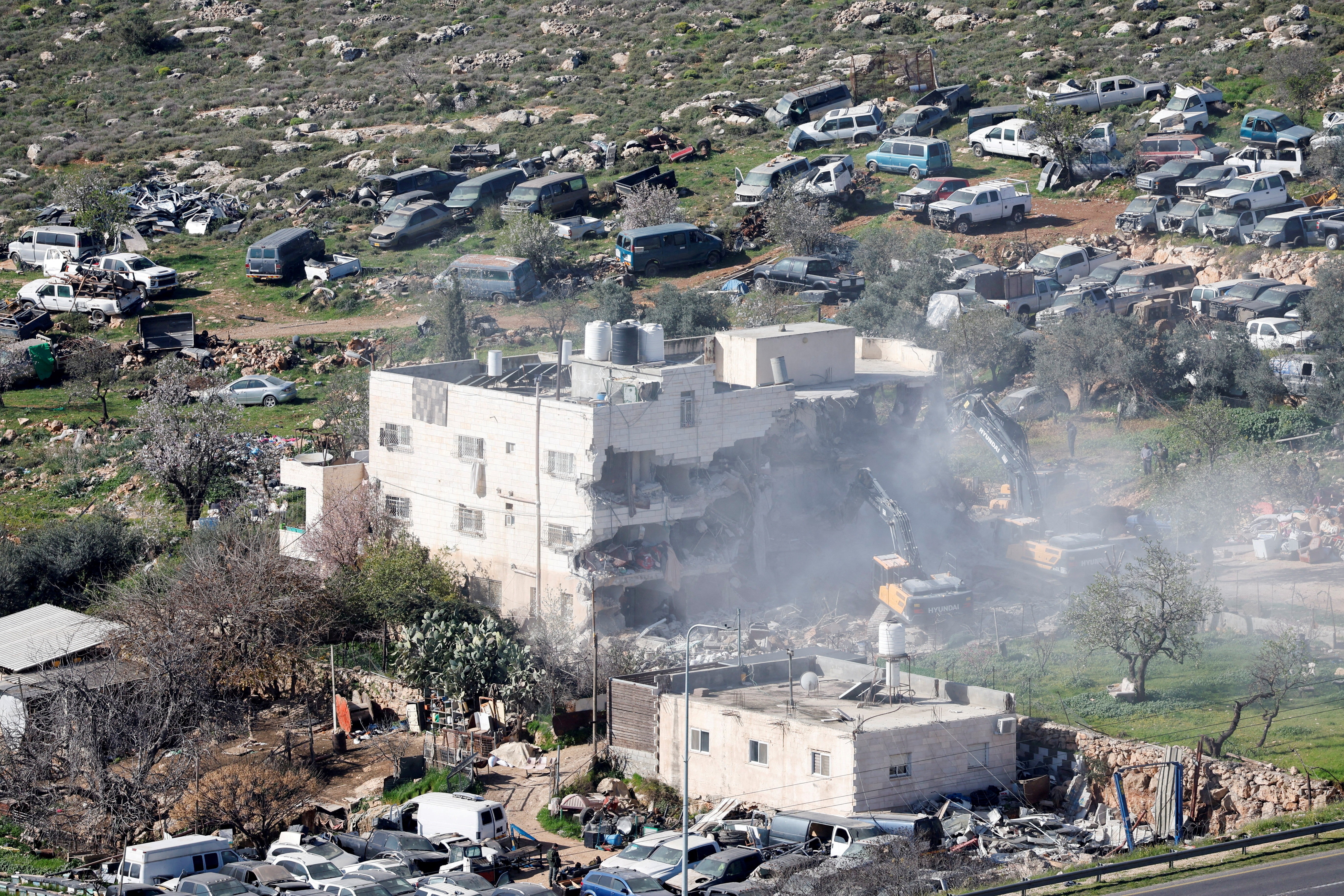
United Nations Secretary-General Antonio Guterres has expressed deep alarm over the emergence of new illegal Israeli settlement outposts in the occupied West Bank, urging Tel Aviv to immediately cease any further construction and expansion in these territories. Speaking through his official spokesperson Stephane Dujarric during a press briefing at UN headquarters in New York, the global body's chief reiterated longstanding international concerns about the expansion of Israeli settlements, which remain widely regarded as obstacles to achieving durable peace in the region.
The UN's particular concern centres on developments involving the E1 settlement area, which occupies a strategically critical position between the northern and southern sections of the West Bank. According to Dujarric, the advancement of settlement projects in this zone would effectively partition the Palestinian territory by severing crucial geographical and administrative connections between its two main population centres. This fragmentation would fundamentally alter the territorial landscape and render governance, movement, and economic integration increasingly difficult for Palestinian communities already constrained by existing barriers and checkpoints.
Guterres stressed that the consequences of allowing E1 settlement expansion would extend far beyond immediate territorial concerns. The UN leadership views such developments as posing a direct and existential threat to the viability of the two-state solution, the internationally endorsed framework that envisions independent Israeli and Palestinian states coexisting side by side. By physically dividing Palestinian territory, new settlements would make it progressively harder to establish a contiguous Palestinian state with meaningful sovereignty and territorial integrity, undermining the foundational assumptions upon which peace negotiations have traditionally been built.
The UN Secretary-General's warnings are anchored in recent international legal pronouncements that carry significant weight in diplomatic discourse. On July 19, 2024, the International Court of Justice issued a landmark advisory opinion examining the legality of Israel's continued presence and settlement activities in occupied Palestinian territories. The court's judgment declared that Israel's ongoing occupation constitutes an unlawful situation under international law, establishing a clear legal framework for assessing subsequent actions in the region.
Based on the ICJ's advisory opinion, Guterres has called upon the Israeli government to align its actions with relevant United Nations resolutions and comply with the court's findings. The ICJ ruling stipulated that Israel must terminate its presence in the occupied Palestinian territory with the utmost urgency and without further delay. Additionally, the court mandated that Israel immediately suspend all new settlement activities, which have been a persistent source of international controversy and Palestinian grievance for decades.
Further requirements outlined in the July 2024 advisory opinion include the removal of all Israeli settlers currently residing in occupied Palestinian territories and the provision of comprehensive reparations to compensate Palestinians for damages resulting from Israeli actions and the occupation itself. These provisions represent the international court's most forceful statement to date regarding the legal obligations incumbent upon Israel in relation to occupied Palestinian land, though enforcement mechanisms remain subject to the discretionary actions of the UN Security Council and individual state actors.
For Malaysia and other Southeast Asian nations with significant Palestinian diaspora communities and long-standing solidarity with Palestinian causes, the UN Secretary-General's remarks carry particular resonance. These countries have historically maintained consistent voting positions at the United Nations supporting Palestinian rights and opposing settlement expansion. The emergence of new outposts and the apparent acceleration of settlement activities despite international pressure have prompted renewed diplomatic attention from nations invested in resolving the Israeli-Palestinian conflict through negotiations based on international law and UN resolutions.
The broader regional implications of unabated settlement expansion also merit consideration. Continued Palestinian territorial fragmentation and diminished prospects for a viable two-state solution risk destabilizing the entire Middle East region, potentially escalating tensions and attracting external powers into a complex geopolitical landscape. Southeast Asian nations, which rely on regional stability for economic growth and security, have vested interests in promoting peaceful conflict resolution and preventing further deterioration of conditions that could trigger wider conflagrations.
Guterres's call for Israel to refrain from additional settlement expansion actions represents a reinforcement of long-standing UN positions on this issue, but the lack of enforceable mechanisms for compelling compliance remains a persistent challenge. The UN can articulate clear legal and moral positions through its Secretary-General and various organs, yet ultimately depends upon the political will of powerful member states and the cooperation of parties directly involved in the dispute to translate declarations into concrete outcomes on the ground.
The strategic timing of the UN Secretary-General's intervention, occurring in the context of ongoing regional tensions and the recent ICJ advisory opinion, underscores the international community's continued concern about the trajectory of Israeli-Palestinian relations. Whether these diplomatic entreaties will influence Israeli policy decisions or result in meaningful changes in settlement patterns remains uncertain, particularly given the historical pattern of Israeli governments proceeding with settlement expansion despite international criticism and legal objections.
For Palestinian communities already enduring the consequences of occupation and territorial fragmentation, the expansion of E1 settlements and other outposts represents a tangible threat to their future political autonomy and economic viability. The potential severing of territorial connections between northern and southern West Bank areas would intensify existing challenges related to freedom of movement, resource access, and administrative coherence that Palestinian authorities currently struggle to manage under restrictive security arrangements.

