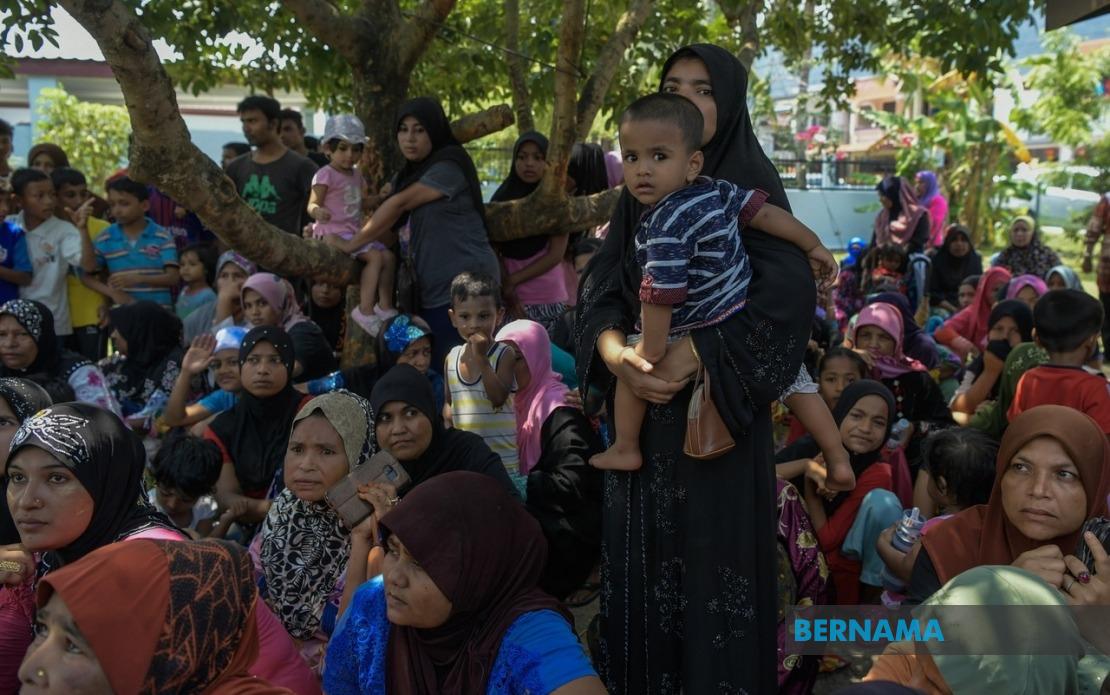
Malaysia's Economy Minister Datuk Akmal Nasrullah Mohd Nasir has issued a significant clarification regarding the status of UNHCR documentation in the country, emphasising that refugee identification cards confer no legal exemption from Malaysian legislation or law enforcement procedures. The statement, delivered during the Global Supply Crisis Briefing on July 13, seeks to address growing public concerns about refugee management and the potential security implications of humanitarian documentation being misunderstood as providing special legal status.
The clarification carries particular weight given the backdrop of recent national discourse surrounding refugee populations in Malaysia. Akmal Nasrullah explicitly stated that individuals holding UNHCR cards remain fully subject to Malaysian criminal and civil law, with no carve-outs or immunities whatsoever. Should any refugee or documented non-citizen commit an offence—whether immigration-related, criminal, or otherwise—they will be investigated and prosecuted according to the same legal frameworks applied to all persons within Malaysian jurisdiction. This pronouncement appears designed to reassure the public that humanitarian documentation does not create parallel legal regimes or safe harbours for unlawful conduct.
The Home Ministry presented the broader refugee management framework to the National Economic Action Council (MTEN) during the meeting chaired by Prime Minister Datuk Seri Anwar Ibrahim at Parliament. The discussion reflected mounting government focus on reconciling Malaysia's international humanitarian obligations with domestic security and public order concerns. The presentation highlighted systemic vulnerabilities that have attracted public anxiety, particularly around documentation fraud, trafficking networks, and the integration of refugee populations with criminal enterprises operating within Malaysian territory.
Central to the government's response is the rollout of the Refugee Registration Document (DPP) Programme, overseen by the Immigration Department under KDN authority. This initiative represents a substantive shift toward biometric-based identification and verification, moving beyond traditional paper documentation. The programme encompasses comprehensive biometric registration—collecting fingerprints, facial recognition data, and other identifiers—coupled with multi-stage screening protocols designed to flag individuals with criminal histories, security concerns, or connections to trafficking syndicates. This technological upgrade aims to create a transparent, traceable system for refugee populations that prevents document abuse and identity fraud.
Enforcement capabilities have become equally prioritised in the government's strategic response. Akmal Nasrullah announced that integrated operations targeting smuggling operations, human trafficking networks, document falsification, and illegal border crossings would be intensified across multiple agencies. The coordination between the Immigration Department, police, military, and specialised task forces signals a whole-of-government approach to refugee management that goes beyond passive registration. The utilisation of data analytics and monitoring technology will enable authorities to identify patterns of risk, flag suspicious movements or associations, and deploy enforcement resources proactively rather than reactively.
The financial commitment underpinning these initiatives is substantial. The government has allocated RM1.2 billion across several agencies for projects specifically targeting border control and security enhancements. This funding reflects the seriousness with which the administration views the refugee management challenge and its determination to prevent security lapses, human trafficking, and irregular migration. The scale of investment suggests that current capabilities were perceived as inadequate to meet the dual challenge of managing a refugee population estimated in the hundreds of thousands while maintaining border integrity and community safety.
The expansion of the Malaysian Border Control and Protection Agency's operational footprint forms another pillar of the government's strategy. By broadening this agency's scope and resources, authorities aim to establish a more coherent border management architecture that can respond uniformly to challenges across Malaysia's extensive land and maritime boundaries. This expansion is being expedited, indicating that the government views current border control mechanisms as constrained by capacity limitations. Streamlining enforcement procedures and consolidating oversight should reduce gaps that have historically been exploited by smuggling networks and irregular migrants.
For Malaysia, which hosts one of the world's largest refugee populations relative to its size, the policy clarification and operational expansion address long-standing tensions between humanitarian commitments and domestic political pressures. The country has hosted hundreds of thousands of Rohingya refugees from Myanmar, alongside populations from Afghanistan, Syria, and other conflict zones. Public anxiety about refugee populations has periodically spiked following incidents involving crimes allegedly committed by refugees or undocumented migrants, creating political pressure for stricter enforcement and tighter documentation controls.
The clarification that UNHCR cards confer no immunity signals a recalibration of how Malaysia intends to manage this tension moving forward. Rather than abandoning refugee protection entirely—which would contradict international obligations and Malaysia's self-image as a responsible global actor—the government is pursuing a middle path: maintaining documentation systems that enable humanitarian organisations to identify and assist vulnerable populations, whilst simultaneously ensuring that refugee status does not translate into legal exemptions or enforcement blind spots. This approach acknowledges that many refugees pose no security threat whilst creating accountability mechanisms for those who do.
The broader context of the MTEN meeting, which also addressed food security and manufacturing sector resilience amid global supply chain disruptions, underscores how refugee management now intersects with Malaysia's economic and security planning. The prioritisation of refugee issues alongside supply chain concerns reflects recognition that migration flows, border security, and economic performance are interconnected policy domains requiring integrated solutions. Irregular migration can disrupt labour markets, depress wages in certain sectors, and complicate supply chain management—all factors relevant to Malaysia's post-pandemic economic recovery.
For Malaysia's regional standing, these policy developments will be closely monitored by ASEAN neighbours facing similar refugee pressures, particularly countries bordering Myanmar and Afghanistan. The Balance between security-focused enforcement and humanitarian accommodation that Malaysia is attempting to strike may offer lessons—or cautionary tales—for other Southeast Asian nations grappling with refugee populations. The success or failure of the DPP Programme and expanded border controls will influence broader regional approaches to refugee management and could shape bilateral discussions on burden-sharing among ASEAN members.
The government's emphasis on technological solutions and data-driven enforcement reflects contemporary approaches to migration management globally. However, implementation challenges remain significant. Biometric systems are only as effective as the screening databases they reference; if Interpol databases or Myanmar government records are incomplete or unreliable, gaps will persist. Moreover, trafficking networks and smugglers are adaptive, and enforcement operations can impose substantial costs on refugee populations seeking livelihoods and integration. The true test of this policy framework will be whether it achieves its dual objectives: preventing security threats and document abuse whilst avoiding excessive restriction of legitimate refugee movement and economic participation.

