Malaysia's push to become a global semiconductor powerhouse is gaining institutional momentum, with Universiti Malaysia Perlis taking a central role in preparing the skilled workforce essential to this ambition. The northern university is now graduating nearly 2,000 students annually in fields directly supporting the electrical and electronics (E&E) and semiconductor industries—a significant contribution to the country's talent pipeline that addresses one of the most pressing challenges facing domestic technology manufacturers. This output reflects a strategic alignment between higher education and the nation's broader industrial objectives, particularly as global demand for semiconductors continues to reshape competitive advantages across Asia.
The university's commitment sits squarely within Malaysia's National Semiconductor Strategy (NSS), an ambitious policy framework targeting the development of 60,000 skilled workers and engineers by 2030. According to Universiti Malaysia Perlis Vice-Chancellor Datuk Prof Dr Zaliman Sauli, the institution is deliberately structuring its programmes and curricula to address this target. Graduate employment data for 2024 and 2025 demonstrates the effectiveness of this approach, with over 30 per cent of UniMAP graduates securing positions directly within the E&E sector immediately after completing their qualifications. This employment trajectory suggests that the university's offerings are closely calibrated to industry demand, avoiding the mismatch between academic training and workplace requirements that often plagues higher education systems in developing economies.
Semiconductors have evolved from niche manufacturing concerns to foundational infrastructure underpinning the digital economy. Today's semiconductor applications span consumer electronics, artificial intelligence systems, electric vehicle powertrains, and the data centre infrastructure supporting cloud computing and digital services. Malaysia's position within this global value chain has strengthened considerably in recent decades. The country now ranks as the world's sixth-largest semiconductor exporter, controlling approximately seven per cent of global chip trade while commanding a 13 per cent share of the critical Assembly, Testing and Packaging (ATP) market segment. This substantial footprint makes the semiconductor sector not merely a technology concern but a cornerstone of Malaysia's economic resilience and export competitiveness.
Universiti Malaysia Perlis is pursuing a multi-faceted strategy to deepen its contribution to semiconductor sector development. The university has established an Industry-on-Campus programme that embeds company operations and expertise directly within the academic environment, allowing students to gain practical experience alongside traditional coursework. Industry Advisory Panels ensure that curriculum design remains responsive to evolving workforce requirements, while International Adjunct Professors bring global perspectives and cutting-edge research insights to classrooms and laboratories. Additionally, the institution has developed industry-recognised professional certification programmes that enhance graduate credentials and demonstrate competency to prospective employers. These initiatives collectively represent a departure from conventional university structures, instead creating hybrid environments where education and industry practice are deliberately integrated.
The semiconductor sector's significance extends beyond immediate economic metrics. For Malaysia specifically, the industry represents a pathway to higher-value manufacturing and technological self-sufficiency at a moment when Southeast Asia confronts intensifying global technological competition. The region's traditional advantages—relatively low labour costs and geographic proximity to supply chain hubs—are increasingly insufficient to sustain competitive positioning. Nations like South Korea, Taiwan, and Singapore have moved upstream into design and advanced manufacturing, capturing substantially higher margins. Malaysia's NSS reflects an understanding that defensive positioning in assembly and testing, while profitable, offers limited long-term growth potential. A more skilled, innovation-oriented workforce capable of developing proprietary technologies and managing complex manufacturing processes is essential to capturing these higher-value activities.
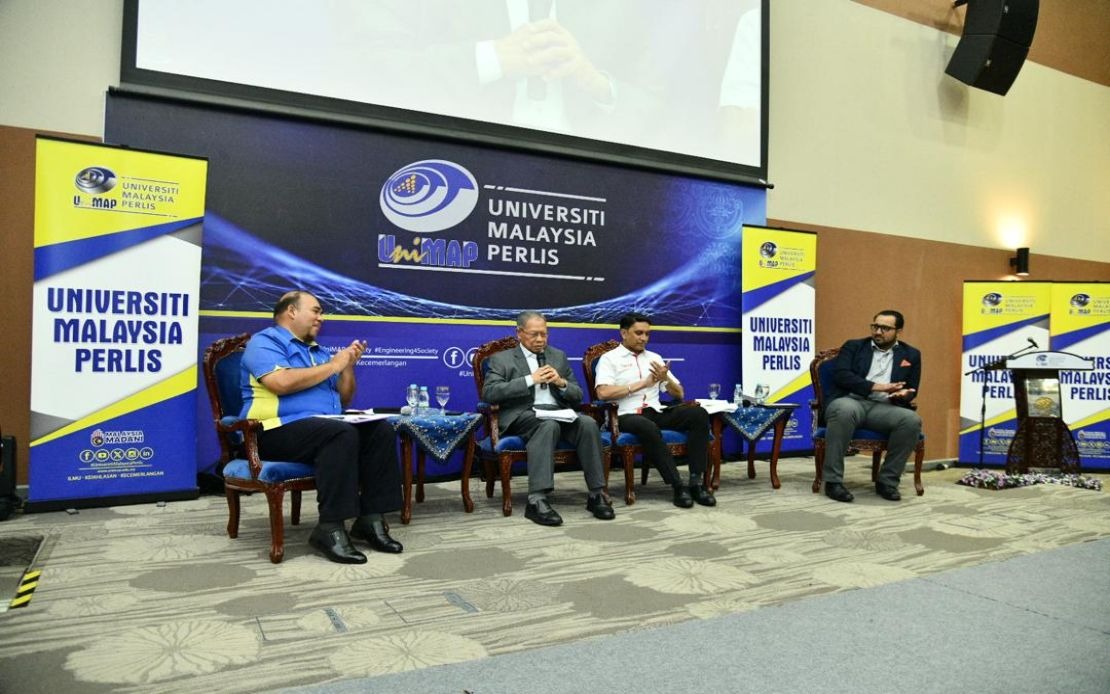
The forum at which Prof Zaliman made these remarks brought together influential figures whose perspectives underscore the coordination required across government, industry, and academia. Former International Trade and Industry Minister Datuk Seri Dr Mustapa Mohamed's participation indicates sustained government attention to semiconductor development as a priority policy area. The Northern Corridor Implementation Authority (NCIA) Chief Executive Datuk Mohamad Haris Kader Sultan's presence reflects the specific importance of Malaysia's northern regions—where UniMAP is located—within the broader semiconductor ecosystem. Perlis and neighbouring states have become established centres for semiconductor manufacturing and assembly operations, benefiting from established supply chains, skilled labour pools, and infrastructure investment. Micron Technology Inc Malaysia's Head of Government and Public Affairs Ahmed Zaki Moten represents the international investors whose confidence in Malaysia's capabilities underpins continued capital inflows and technology transfer.
UniMAP's emphasis on collaboration between government, universities, and industry players addresses a structural challenge endemic to developing economies attempting to climb value chains. Universities often operate in isolation from commercial realities, producing graduates qualified in theoretical knowledge but lacking practical familiarity with industry workflows and expectations. Conversely, manufacturers focused on near-term productivity gains may underinvest in workforce development and training. Government agencies struggle to coordinate these disparate actors effectively without creating bureaucratic friction. The institutional innovations UniMAP is pursuing—particularly through Industry-on-Campus and Industry Advisory Panels—create mechanisms for ongoing dialogue and reciprocal influence that can overcome these traditional silos.
The production of 2,000 E&E and semiconductor graduates annually from a single institution suggests that Malaysia's higher education system more broadly is beginning to respond to sectoral needs. Yet reaching the NSS target of 60,000 skilled workers and engineers by 2030 requires sustained effort across multiple universities and training institutions throughout the country. UniMAP's contribution, while substantial, represents perhaps one-third of total annual graduation requirements. This implies that complementary institutions must simultaneously strengthen their offerings in semiconductor-related disciplines while maintaining quality standards and ensuring graduate employability. The timeline—with just six years remaining to 2030—adds urgency to these developments and necessitates careful coordination between education policy, curriculum development, and labour market forecasting.
Malaysia's semiconductor ambitions also intersect with broader regional and global geopolitical considerations. The United States, China, and the European Union are all actively promoting semiconductor manufacturing and research within their respective spheres, sometimes through subsidies and trade barriers that reshape global supply chains. For Malaysia, positioned as a Southeast Asian manufacturing hub with established strengths in assembly and testing, the challenge lies in defending and expanding its market share while avoiding over-reliance on single customers or technologies. A capable domestic workforce, continuously upgraded through effective higher education partnerships with industry, represents one of the most durable competitive advantages available. Unlike subsidies or trade policies that can be reversed, human capital accumulated through education provides lasting resilience.
Looking forward, UniMAP and similar institutions face the challenge of maintaining relevance as semiconductor technologies evolve. Artificial intelligence, advanced packaging techniques, and process innovations emerge rapidly, requiring educational programmes that themselves innovate continually. The International Adjunct Professors initiative and external certification programmes appear designed to address this dynamism, importing expertise while ensuring graduates acquire skills aligned with cutting-edge industry practice. Yet this requires substantial ongoing investment in faculty development, laboratory equipment, and infrastructure—expenditures that may strain institutional budgets even as universities expand enrolments to meet workforce targets.
The emergence of Universiti Malaysia Perlis as a significant contributor to Malaysia's semiconductor workforce development reflects both national strategic thinking and genuine institutional commitment. The university's approach—emphasising close ties to industry, continuous curriculum updating, and integration of practical experience into academic programmes—offers a model potentially applicable to other technical disciplines and other institutions seeking to enhance graduate employability and sectoral relevance. Whether Malaysia successfully meets its 2030 targets will depend partly on UniMAP's continued execution, but equally on the commitment of government agencies, industry partners, and other educational institutions to sustain this collaborative momentum.

