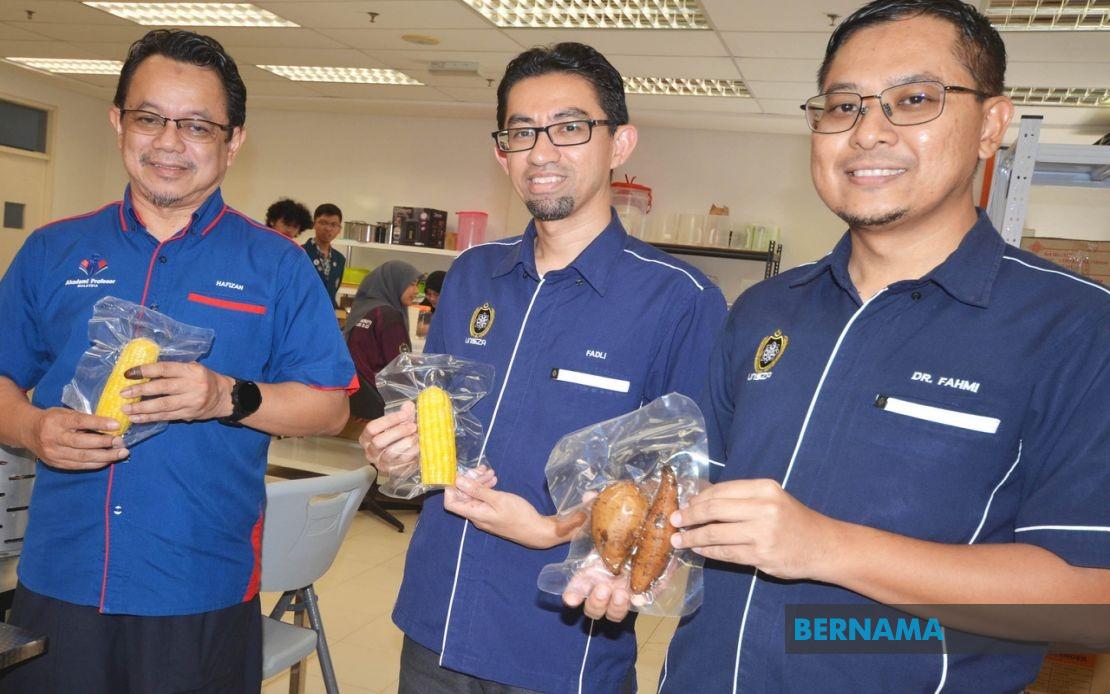
Universiti Sultan Zainal Abidin has launched an ambitious programme to address a persistent challenge facing smallholder farmers across rural Terengganu: the disposal of surplus agricultural produce that cannot reach markets profitably. The Dapur Komuniti, operating in conjunction with the Sustainable Community Farm at the university's Besut campus, represents a strategic attempt to bridge the gap between farm-gate realities and market opportunities, transforming what would otherwise become agricultural waste into commercially viable products.
According to Prof Dr Hafizan Juahir, dean of the faculty spearheading the initiative, the kitchen functions simultaneously as a research and development facility capable of processing agricultural commodities into an array of value-added goods with extended shelf lives exceeding one year. This dual function—combining academic research with practical community service—reflects a growing recognition among Malaysian institutions that the farm-to-table problem requires interventions beyond conventional extension services or price support schemes. By investing in processing technology and training infrastructure, UniSZA is essentially helping farmers capture value that traditionally accrues to intermediaries.
The catalyst for this initiative stems from documented hardship within Besut's farming community. Investigations by the university revealed that local cultivators face formidable structural barriers to profitability, particularly concerning their vulnerability to middleman exploitation. Sweet potato farmers, for instance, historically received less than RM2 per kilogramme at farm gate, even as identical produce commanded substantially higher prices in downstream markets such as Kuantan and major urban centres. This price differential—sometimes amounting to several hundred percent—reflects not agricultural failure but rather systemic disadvantages: limited logistics infrastructure, weak digital marketing capabilities, and insufficient market information access. These constraints conspire to leave farmers with unsold inventory, mounting losses, and diminishing incentives to continue cultivation.
The Dapur Komuniti's operational model targets precisely these pain points. Rather than attempting to overcome marketing barriers head-on, the facility redirects unmarketable produce toward value-chain extension. A particularly innovative example involves processing lower-grade Terengganu sweet melons—produce that would otherwise represent total loss—into pickled products with commercial appeal. By transforming aesthetic or quality defects into irrelevance through pickling processes, the initiative simultaneously achieves multiple objectives: reducing food waste, creating additional revenue streams for farming households, and maintaining farmer incentive to continue producing. This circular approach proves especially valuable in tropical climates where post-harvest losses frequently exceed 30 percent even for handled produce.
Beyond production, the facility operates as a training and skills development centre for local residents, with particular emphasis on smallholder farmers seeking to diversify income sources. Hands-on instruction in food processing techniques equips participants with capabilities to undertake value-addition independently, potentially enabling them to capture margins currently retained by commercial processors. This knowledge transfer component addresses a critical gap in rural Malaysia, where agricultural extension services traditionally focus on production rather than post-harvest management or food entrepreneurship.
The university is advancing discussions with the Department of Skills Development to establish the kitchen as an accredited training centre for the Malaysian Skills Certificate in food processing. This recognition would permit UniSZA graduates to simultaneously pursue bachelor's degrees and industry-recognised qualifications at SKM Level 3 standard. Such credentialing matters considerably in Southeast Asia's increasingly formalised labour markets, where employers increasingly demand verifiable skills alongside academic credentials. Graduates emerging from this dual-track programme would possess both theoretical knowledge and practitioner capabilities, theoretically more attractive to food processing employers or more capable of establishing independent operations.
The initiative's intended beneficiary base extends beyond conventional farming communities. The university specifically acknowledges Malaysian Armed Forces veterans as a target population for skills training and income-generating opportunities. This consciously inclusive approach recognises that rural employment opportunities remain constrained, particularly for transition populations struggling to identify viable livelihoods post-retirement from military service. By positioning food processing as an accessible entrepreneurial pathway requiring modest capital investment but substantial skills, UniSZA attempts to address underemployment in demographic groups historically neglected by rural development programming.
For Malaysian policymakers observing agricultural challenges across the nation—particularly the recurring cycle of farm-gate price collapses during harvest seasons—the UniSZA model offers a template potentially replicable across other regions. Rather than treating oversupply as a crisis requiring emergency intervention or price supports, the approach reframes surplus production as an opportunity for value-chain development. Similar initiatives could theoretically be established in regions producing other perishable commodities subject to seasonal oversupply: durian, pineapple, papaya, or aquaculture products. The infrastructure requirements remain modest—essentially industrial-grade kitchen equipment, cold storage, and trained personnel—compared to cost of perpetual price stabilisation schemes.
The broader economic implications deserve consideration. Malaysia's agricultural sector faces persistent structural challenges limiting rural incomes and contributing to youth outmigration from farming communities. Initiatives that demonstrably increase farm household revenues whilst simultaneously reducing environmental burden from food waste address multiple policy objectives simultaneously. Moreover, by positioning rural communities as processors rather than merely primary commodity producers, such programmes potentially increase agricultural sector value-addition, traditionally concentrated in urban-based industries. This geographic distribution of processing opportunities could contribute toward more balanced rural-urban economic development.
Implementation challenges remain evident. Training programme uptake depends on farmer willingness to invest time in skill acquisition whilst maintaining current production. Market development for novel products requires consumer education and distribution logistics. Institutional sustainability requires ongoing university commitment beyond initial enthusiasm. Yet the foundational insight—that farm oversupply reflects not production failure but market failure—represents significant analytical progress. By directly addressing those market failures through processing infrastructure and skills training, UniSZA demonstrates that solutions to agricultural challenges need not always originate from subsidy or price intervention, but rather from institutional innovation enabling farmers to capture greater value from their labour.

