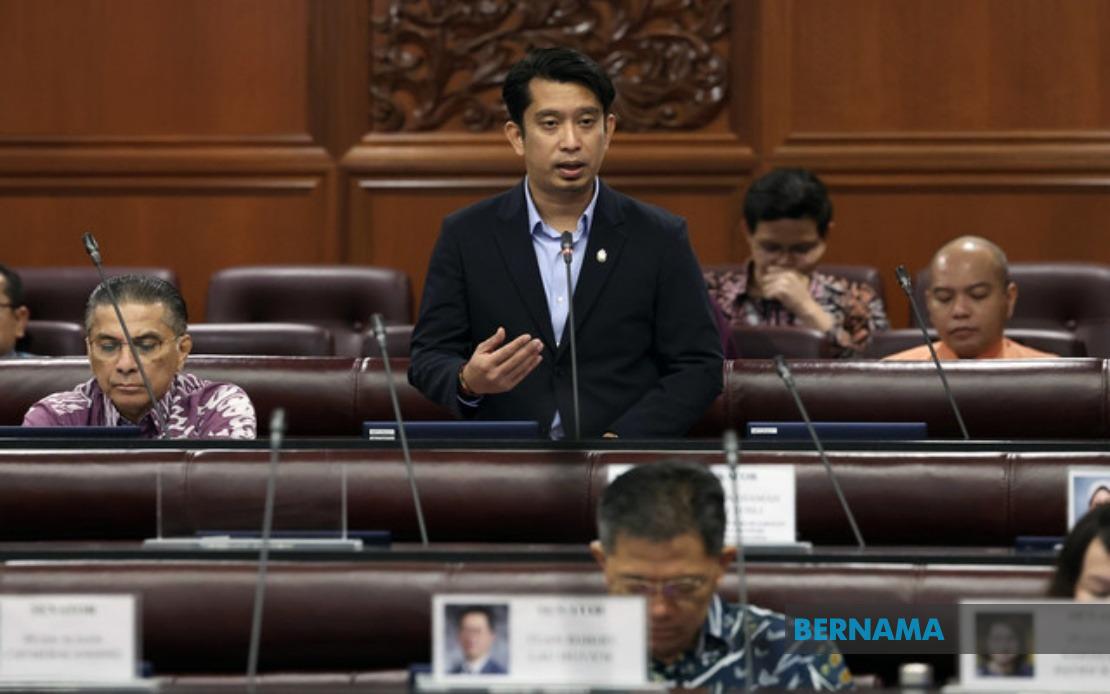
Higher learning institutions across Malaysia have been given explicit authority to terminate student internship placements and bring trainees back to campus whenever safety hazards come to light, according to Deputy Higher Education Minister Adam Adli Abd Halim. Speaking during parliamentary proceedings at the Dewan Negara on August 4, he outlined the framework that grants universities discretion to make such decisions based on their own risk assessments or when students themselves report concerns warranting swift intervention. The policy represents a significant shift in how the ministry approaches the management of industrial training programmes, which have come under heightened scrutiny following workplace fatalities involving student trainees.
The announcement directly responds to the tragic death of a Universiti Putra Malaysia (UPM) student who lost his life while carrying out maintenance duties at the Saujana 1 water tower in Kuala Selangor on June 16. The incident prompted Senator Che Alias Hamid to press the government during parliamentary questions about what safeguards exist to ensure that companies hosting student trainees maintain appropriate safety standards. The case highlighted gaps in oversight mechanisms and raised urgent questions about whether institutions had sufficient tools to protect their charges from hazardous working environments. Rather than leaving such decisions solely to industry partners or waiting for formal investigations after incidents occur, the new framework empowers universities to act proactively when red flags emerge.
Adam Adli emphasised that the ministry takes workplace accidents involving students extremely seriously and has been working to strengthen its monitoring infrastructure and incident reporting channels. He stressed that universities should conduct substantially more rigorous evaluations of organisations before approving them as training hosts, examining their historical safety performance, documented incidents, and overall standing within their sectors. This due diligence process becomes especially critical when placements involve high-risk industries where worker exposure to hazards is inherent to operations. Rather than applying a one-size-fits-all approach, the deputy minister indicated that institutions must calibrate their vetting procedures according to the level of danger present in different sectors and roles.
For placements in inherently hazardous sectors, Adam Adli stated that universities will now restrict student assignments only to organisations that demonstrably meet stringent safety requirements and possess comprehensive safety management systems. This targeted approach recognises that manufacturing, construction, utilities, and similar sectors present fundamentally different risk profiles than office-based or service roles. By concentrating placement opportunities with vetted partners in high-risk fields, universities can ensure that students work alongside employers who have already invested significantly in safety infrastructure and culture. The policy effectively creates a two-tier system where placement approval hinges on sector-specific risk classification and corresponding employer credentials.
Students destined for high-risk workplaces must now complete specialised safety training courses and obtain relevant certifications before commencing their industrial placements. This prerequisite ensures that trainees possess foundational knowledge about hazards they may encounter and understand their rights and responsibilities in potentially dangerous environments. By building safety literacy into the preparation phase, institutions can help students recognise warning signs and respond appropriately if they encounter unsafe conditions. The requirement also signals to employers that these students have received formal instruction and are not unprepared novices unaware of basic workplace hazards.
Before beginning any placement, all students must undergo comprehensive briefings and preparatory sessions covering multiple dimensions of workplace safety and health. These sessions extend beyond generic orientation materials to encompass detailed instruction on risk identification and management, proper use and maintenance of personal protective equipment, emergency response procedures, and the channels through which incidents should be reported. The breadth of this preparation reflects recognition that student trainees may lack the experience to identify subtle hazards or know how to escalate concerns through appropriate channels. By standardising this preparatory curriculum, the ministry ensures consistent baseline knowledge across all participating students regardless of their institution or sector.
During the active training period, students remain under continuous observation through both academic supervisors from their universities and industry supervisors at host companies. Monitoring takes place through scheduled physical visits to worksites, virtual check-ins where appropriate, systematic review of student progress reports, and sustained communication between all stakeholders. This dual-supervisor model creates redundancy and accountability, ensuring that neither academic institutions nor employers can neglect student welfare. The structured monitoring approach also generates documentation trails that can inform safety improvements and help identify patterns of concern across multiple placements within a sector or employer.
The ministry has established protective mechanisms through the University Group Insurance Scheme, which covers all industrial training students against accidents and unexpected incidents occurring during their placement period. This insurance framework provides financial security for students and their families should injuries or fatalities occur despite all precautions, though it cannot replace the imperative to prevent incidents in the first place. The existence of comprehensive coverage also creates incentives for universities to maintain robust safety protocols, as insurers typically impose requirements and may adjust premiums based on incident histories and institutional safety management practices.
For Malaysia's higher education sector and the broader economy, these policy refinements address a critical tension between the educational value of real-world work experience and the institutional responsibility to protect students from harm. Industrial training programmes remain essential for developing graduate competencies and building industry connections, yet the sector has historically lacked sufficient oversight mechanisms. These enhanced protocols attempt to preserve the benefits of experiential learning while significantly raising safety standards. As neighbouring ASEAN nations increasingly formalise their own internship regulations, Malaysia's experience and evolving best practices may offer valuable lessons for regional harmonisation of student placement standards.

