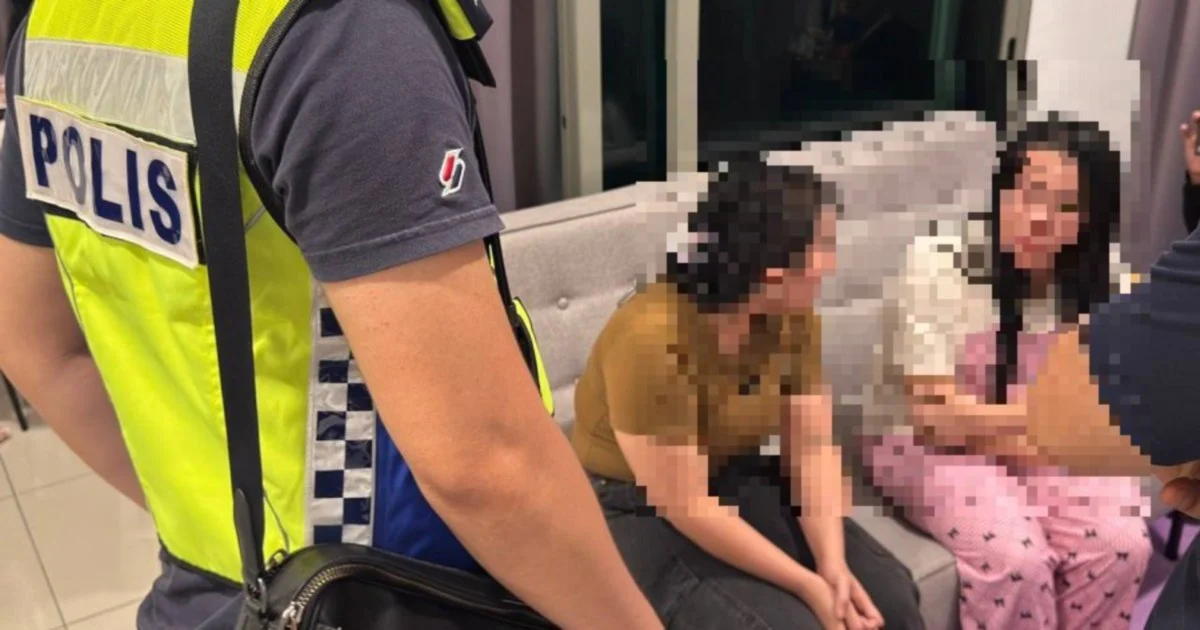
A university student's plan to supplement her income during the semester break took a drastic turn when authorities conducted a raid on an apartment unit in Cyberjaya yesterday, resulting in her arrest on suspicion of involvement in prostitution-related activities. The operation underscores a growing trend among young people in Malaysia, particularly those in higher education, who turn to illicit work to bridge financial gaps during academic breaks—a phenomenon that enforcement authorities have increasingly been monitoring across the country's commercial hubs.
Cyberjaya, as a major business and residential district in the Klang Valley that attracts a transient population of young professionals and students, has periodically featured in police operations targeting vice activities. The location's urban density, anonymous accommodation options, and proximity to various commercial establishments create conditions that can facilitate underground service economies. Yesterday's raid adds to a pattern of enforcement action in the city, reflecting the Royal Malaysia Police's ongoing efforts to combat organised prostitution networks operating within residential areas.
The specifics of how the student came to be involved in such activities remain part of the ongoing investigation. However, the case illustrates a broader socioeconomic challenge facing Malaysian universities and colleges: many students from lower and middle-income families struggle with financial hardship throughout their studies. With tuition fees, accommodation costs, and living expenses mounting, some resort to irregular income sources during breaks when they lack formal employment opportunities. The gap between student financial aid and actual living costs has been a persistent concern raised by student advocacy groups and university administrations alike.
Police operations targeting vice establishments typically involve intelligence gathering and coordination between multiple agencies. The manner in which authorities identified and executed the raid suggests prior surveillance or intelligence sharing, possibly arising from complaints or tip-offs from residents. Such raids frequently yield evidence of payment transactions, communication records, and client lists that help authorities dismantle broader networks rather than targeting individual participants. The arresting of the student indicates she may face charges under relevant federal or state legislation governing prostitution and related offences.
For students caught in such circumstances, the legal and personal consequences extend far beyond any immediate penalty. A criminal record can severely impact future employment prospects, professional licensing in regulated fields, and educational advancement. Many employers conduct background checks, and conviction records become permanent fixtures in judicial databases. This cascading effect often traps individuals in cycles of unemployment and marginalization, making rehabilitation and reintegration into mainstream society considerably more difficult.
The case also raises questions about the adequacy of financial support systems for vulnerable student populations. While Malaysian universities offer various scholarship and bursary schemes, evidence suggests significant gaps remain. Students from rural areas, single-parent households, or low-income families frequently report being unable to access sufficient assistance, pushing them toward informal and risky income-generating activities. Expanding and improving targeted financial aid, coupled with awareness campaigns about the dangers of underground employment, could potentially reduce vulnerability to such situations.
Parental awareness represents another crucial dimension often overlooked in discussions of such cases. Many parents may not be fully informed about their children's financial struggles during studies, either because students are reluctant to burden them with problems or because family communication breaks down during the university years. Open dialogue about financial challenges and available institutional support could prevent young people from seeking dangerous alternatives.
From a law enforcement perspective, while arrests serve an important deterrent function, authorities must balance enforcement with compassion for young people in vulnerable positions. Some police departments and social welfare organizations have developed diversion programs that refer first-time offenders, particularly young women, toward rehabilitation and education rather than purely punitive pathways. Such approaches recognise that many individuals in the sex trade are themselves victims of exploitation or circumstance rather than hardened offenders.
The broader ecosystem supporting vice activities—involving landlords, intermediaries, and clients—remains largely untouched by operations targeting individual sex workers. A comprehensive approach would address the supply-side dynamics that create demand for such services, including education about exploitation and rights, as well as tackling the organized networks that typically control these operations. Without dismantling these networks, arresting individual workers provides only temporary disruption rather than meaningful prevention.
Cyberjaya authorities and federal police will likely investigate whether the apartment was part of a larger syndicate or an isolated operation. Clarifying this distinction matters for understanding the scale and organization of vice activities in major commercial zones. If syndicate involvement is confirmed, the investigation could expand to other locations and individuals further up the distribution chain. The student's cooperation, if offered, might yield valuable intelligence about recruitment methods and operational structures.
Moving forward, this incident should prompt universities to review and enhance their financial counseling services, emergency assistance funds, and awareness programs about the consequences of high-risk income activities. Collaboration between higher education institutions, social welfare agencies, and law enforcement could create more robust early intervention systems identifying students in financial distress before they resort to illicit work. Additionally, advocacy for improved minimum living allowances and expanded scholarship coverage would address root causes that make such scenarios possible in the first place.

