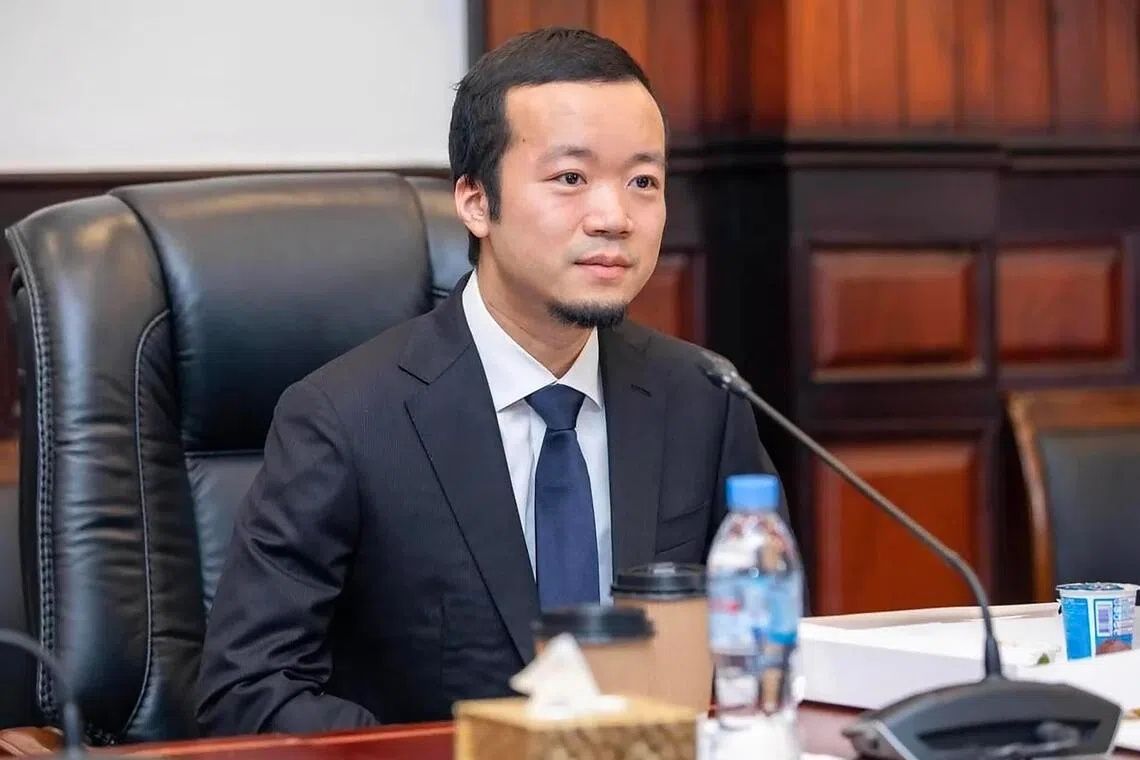
An extensive investigation spanning six months has peeled back the layers of anonymity surrounding Chen Sokly, the second-in-command of scam kingpin Chen Zhi and a key architect of one of the world's largest criminal operations. The Straits Times and the Organised Crime and Corruption Reporting Project uncovered how this figure, identified in a New York criminal indictment filed on October 8, 2025, orchestrated a sophisticated global financial network that funnelled billions of dollars in illicit proceeds through multiple jurisdictions, with Singapore serving as a critical operational base for the Prince Holding Group's money laundering apparatus.
Born in Shanghai in 1986 as Chen Xing, Sokly reinvented himself through a carefully constructed process of identity changes and citizenship acquisitions that illustrates the adaptability of modern transnational crime networks. Around the end of 2017, he obtained Cambodian citizenship and formally changed his name to Chen Sokly, according to records published in the Cambodian government gazette. In Singapore's business circles, he cultivated yet another persona—the wealthy entrepreneur Martin Chen—a name that facilitated his entry into elite social and business networks without drawing suspicion to his underlying activities. The verification of his true identity required painstaking cross-referencing of corporate records across multiple legal jurisdictions, citizenship documentation, and residential histories spanning Singapore, Cambodia, Cyprus, and the United States, a methodology that underscores how criminals exploit the fragmentation of global regulatory systems.
Within the Prince Holding Group's complex organizational structure, Sokly occupied a position of extraordinary trust and operational control. Chen Zhi, the syndicate's leader, entrusted him with overseeing the group's risk control function—a euphemism for managing legal exposure and neutralizing threats from law enforcement worldwide. This role evolved into something far more sinister: Sokly became the principal liaison between the criminal enterprise and corrupt officials across multiple countries. According to prosecutors, he engaged in systematic bribery and extortion, leveraging a network of compromised government officials to protect the group's operations from investigation and prosecution. The confidence placed in Sokly was evident in detailed discussions between him and Chen Zhi about the scale of their official contacts, suggesting a relationship in which operational security hinged on Sokly's intelligence networks and corrupt relationships.
The mechanisms of corruption documented in the indictment reveal a brazen willingness to exploit state apparatus for criminal enrichment. In May 2023, Sokly communicated with a Chinese government official who promised to shield Prince Group associates from legal consequences in exchange for Sokly's personal assistance with the official's son. The arrangement extended beyond passive protection; Sokly allegedly directed Chinese officials to have local police extort businesses on behalf of the syndicate, demonstrating how the boundary between criminal organization and state apparatus became dangerously permeable. A bribe ledger maintained by Chen Zhi and recovered by United States authorities documented Sokly's role in these arrangements, including a transaction in 2019 in which he purchased a yacht worth more than US$3 million as a gift for a foreign government official—a staggering sum that illustrated the scale of resources available to the network for corruption.
Beyond his role in bribery and official corruption, Sokly functioned as the syndicate's enforcer, employing violence and intimidation to maintain discipline within the criminal organization. When members of the group attempted to steal funds in July 2024, Chen Zhi delegated the enforcement response to Sokly, indicating that his responsibilities encompassed both sophisticated financial operations and the capacity for direct violent action. In conversations within the network, Sokly reportedly boasted about the syndicate's reach and profitability, at one point claiming that the global operation generated approximately US$30 million daily through illicit activities—a figure that contextualized the scale of the criminal enterprise and Sokly's significant position within it.
The Prince Holding Group's illicit wealth originated substantially from human trafficking and forced labour operations in Cambodian scam compounds, where foreign victims were coerced into committing investment fraud against targets worldwide. The billions of dollars extracted through these operations flowed through sophisticated money laundering channels, with Sokly playing a central coordinating role. When the Cambodian government moved to suppress scam compound operations, Sokly's confidence in his official contacts led him to dismiss the threat, demonstrating how embedded the syndicate had become within the governmental structures of host countries. This confidence ultimately proved misplaced when United States authorities moved decisively against the network in October 2025, ultimately securing the forfeiture of 127,271 bitcoins valued at approximately US$15 billion—one of the largest asset seizures in the history of international financial crime enforcement.
Singapore's property market and corporate registry became critical infrastructure for Sokly's wealth consolidation and operational management. In 2017, he announced his arrival in the city-state with the acquisition of a luxury apartment at 10 Leedon Heights for S$11 million (US$8.61 million), a 5,694 square foot property that served as both residence and gathering place for senior members of the criminal network. Several sources recalled Sokly spending two to three months annually in Singapore, during which time he maintained an active social schedule with associates, including Chen Zhi himself, typically gathering in evenings for drinking and informal meetings. The property also served as secure storage for a fleet of luxury vehicles, including a Bentley and a seven-seater limousine, tangible expressions of the criminal wealth he had accumulated.
The Singapore corporate front operations revealed a pattern of deliberate organizational obscurity designed to conceal beneficial ownership and financial flows. Sokly incorporated his first Singapore company, M Capital Global Holdings, shortly after acquiring the Leedon Heights property, initially investing just over S$5 million in equal partnership with his wife. Between 2017 and 2019, he registered himself as director of at least sixteen separate firms operating from an address on Shenton Way, Singapore's premier business district. However, between 2020 and 2023, his name was systematically removed from most of these entities, a strategic withdrawal that left minimal documentary traces of his involvement while maintaining control through his wife and other nominees. When investigators visited the Shenton Way address, the office directory indicated only two companies occupying the twelfth-floor space, with no apparent connection to Sokly—a classic money laundering technique in which legitimate-appearing business addresses serve multiple shell entities while obscuring their underlying common control.
Sokly's real estate transactions across the United States demonstrated the transnational scope of his asset acquisition and the timing of transactions relative to law enforcement pressure. In 2019, he purchased a California property from Fang Zhizhen, a member of the Knight Attack Group, a Chinese cybercriminal syndicate that preceded and influenced the Prince Holding Group's development. This transaction demonstrated the interconnected nature of major criminal networks and the transfer of wealth and expertise between generations of organized crime. Sokly subsequently sold the property in 2024 for approximately US$4.5 million, realizing significant appreciation. More significantly, property records obtained by investigators revealed that on November 4, 2025—merely weeks after comprehensive sanctions were imposed on the Prince Group—Sokly transferred ownership of a separate US$4 million property to his wife. The property was subsequently placed in a trust operated by his wife in December 2025, a standard asset-protection maneuver designed to insulate property from forfeiture proceedings and other legal remedies by obscuring beneficial ownership through family structures.
The indictment and subsequent enforcement actions represented a dramatic escalation in international law enforcement coordination against transnational organized crime, though significant questions remain regarding Sokly's current location and the full scope of his global asset position. Prosecutors indicated that while Sokly previously maintained residences in Singapore and California, he is believed to be currently located in the United States, though his exact whereabouts remain undisclosed. The identification of Sokly and other co-conspirators resulted from meticulous document review and cross-border investigative cooperation, yet the case underscores the persistent challenge of locating and apprehending senior figures in global criminal networks who maintain multiple identities and residences. The freezing and forfeiture of assets, while substantial, likely represents only a portion of the wealth accumulated through years of large-scale criminal operations, with additional assets potentially concealed through family members, trusted associates, and corporate structures yet to be discovered by authorities.

