Universiti Pendidikan Sultan Idris (UPSI) is actively investigating possibilities to construct a private specialist hospital in Tanjong Malim, positioning the facility as a cornerstone of the institution's broader strategy to enhance healthcare infrastructure and catalyse the emergence of a knowledge-driven township ecosystem in Perak. The initiative reflects growing recognition that established educational anchors must invest in complementary services to remain competitive in attracting and retaining international talent while strengthening community foundations.
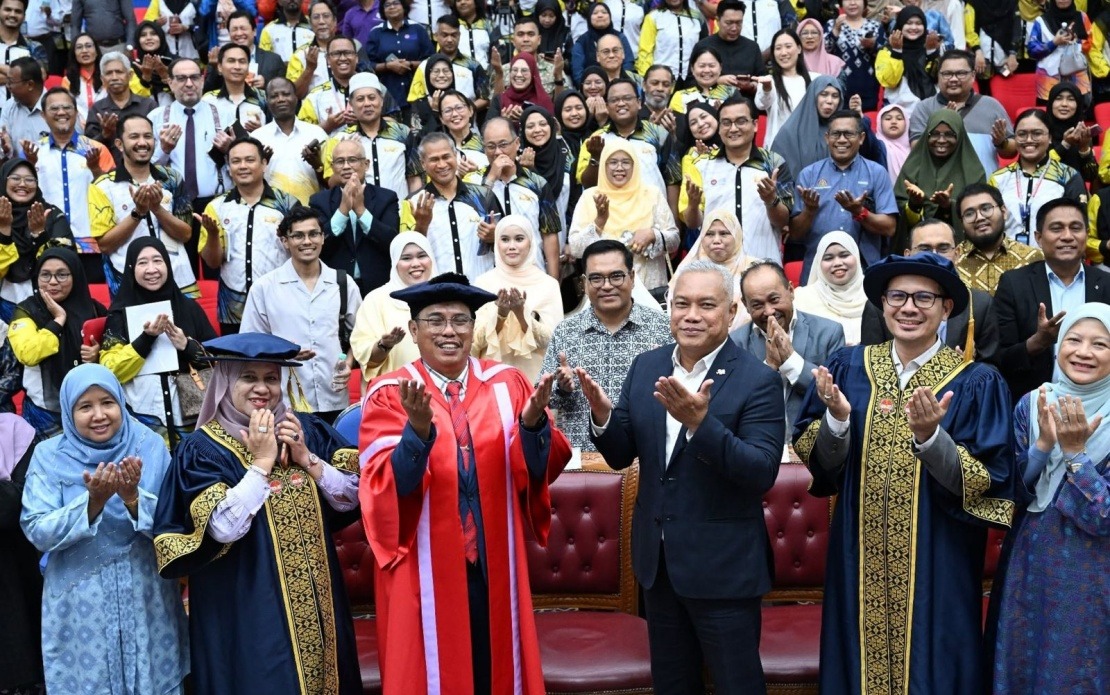
Vice-Chancellor Prof Datuk Dr Md Amin Md Taff outlined the rationale during remarks at the Budiman Lecture Series and Clock-Out Session honouring retiring Dean of the Faculty of Human Development Prof Dr Abdul Talib Mohamed Hashim. The proposed specialist hospital would principally serve the immediate healthcare requirements of UPSI's international student population and workforce, responding to a demographic reality that campus internationalisation creates unique medical and wellness demands distinct from general public health infrastructure.
The university is currently in exploratory phases, examining both the operational mechanics and commercial viability of potential partnerships with private healthcare operators. Rather than pursuing a wholly owned facility, UPSI appears inclined toward collaborative models wherein external providers would either operate within Tanjong Malim or establish services on university land. This approach distributes financial risk while leveraging expertise from established healthcare enterprises familiar with specialist medicine delivery and regulatory compliance across multiple jurisdictions.
Such infrastructure planning aligns with contemporary trends in Southeast Asian higher education, where universities increasingly serve as anchors for broader township development. Malaysia's experience with education cities—most prominently the Malaysian Education City in Cyberjaya and developments around Universiti Malaya—demonstrates how institutions can drive property values, employment generation, and service sector growth when coupled with robust planning for residential, medical, and recreational amenities. UPSI's initiative signals ambitions to replicate this model within Perak, potentially offsetting economic pressures on the state while establishing Tanjong Malim as a destination rather than merely a campus location.
The hospital proposal represents only one dimension of UPSI's longer-term vision for Tanjong Malim. Equally significant in the vice-chancellor's remarks was mention of aspirations to develop retirement facilities and resort-style residential communities for retired faculty. These initiatives would create what amounts to a self-contained ecosystem where former employees maintain campus connections while contributing to the local population base and consumer economy. Such arrangements prove increasingly attractive to academics in Southeast Asia, where portable pension systems and international cost-of-living variations create opportunities for dignified retirement within professionally stimulating environments.
The timing of these announcements carries implications for Perak's broader development agenda. The state has historically struggled to compete with better-resourced neighbours for investment and talent migration. However, strategic institutional development by UPSI—one of Malaysia's largest teacher training universities with significant state and federal backing—could catalyse secondary economic effects. A specialist hospital would attract medical professionals, supporting services sectors would emerge, and the quality-of-life proposition would improve measurably for residents of Tanjong Malim and surrounding communities.
From a healthcare perspective, establishing a private specialist hospital in Tanjong Malim would address genuine gaps in Perak's medical landscape. While the state possesses adequate primary care infrastructure, specialist services remain concentrated in Ipoh and Klang Valley-accessible locations. A facility anchored to UPSI would improve service availability while potentially generating clinical training opportunities for medical and health sciences students. Furthermore, international standards adherence—a prerequisite for attracting fee-paying overseas patients—could elevate healthcare delivery expectations across the surrounding region, creating positive spillover effects on competing public and private providers.
The business model question that remains unresolved deserves scrutiny. Private specialist hospitals in Malaysia typically generate revenue through three streams: fee-paying international patients, domestic middle-class and upper-income populations, and corporate group plans. UPSI's international cohort alone could provide a stable foundation. However, financial viability depends on penetrating broader markets—requiring competitive positioning against established private hospitals in Kuala Lumpur and Selangor. Marketing advantage might derive from lower land costs and operational expenses in Perak, translatable into more competitive pricing or higher margins. Alternatively, UPSI might subsidise operations partially, viewing the facility as serving broader educational mission objectives beyond pure profitability.
The announcement also reflects institutional maturity and strategic sophistication. Rather than pursuing isolated academic excellence, UPSI leadership recognises that universities operating in secondary cities must curate entire environments capable of attracting and retaining world-class talent. Students and faculty increasingly evaluate institutions not merely on academic credentials but on lifestyle amenities, professional opportunities, and community quality. By planning comprehensively across healthcare, housing, and recreational sectors, UPSI positions itself competitively within global higher education markets whilst simultaneously advancing Tanjong Malim's transformation from campus-dependent town to cosmopolitan educational destination.
The specific tribute to Prof Dr Abdul Talib Mohamed Hashim, whose two decades of service concluded with this announcement, contextualises the vision as institutional inheritance. Long-serving academics often embody institutional values and continuity; honouring Hashim's contributions whilst unveiling expansionist plans signals commitment to building upon foundations laid by previous generations. This messaging matters for faculty retention and morale, particularly among senior scholars who might otherwise perceive newer administrations as dismissive of established institutional cultures.
Moving forward, UPSI will need to navigate regulatory requirements from both the Private Healthcare Facilities and Services Act and Perak state health authorities whilst securing financial commitments and partnership agreements. Environmental impact assessments and local community consultation will prove necessary. International accreditation pathways—Joint Commission International or equivalent—would be prudent for a facility positioning itself for overseas patient markets. The complexity suggests this remains multi-year project subject to market conditions, funding availability, and partnership negotiations.

