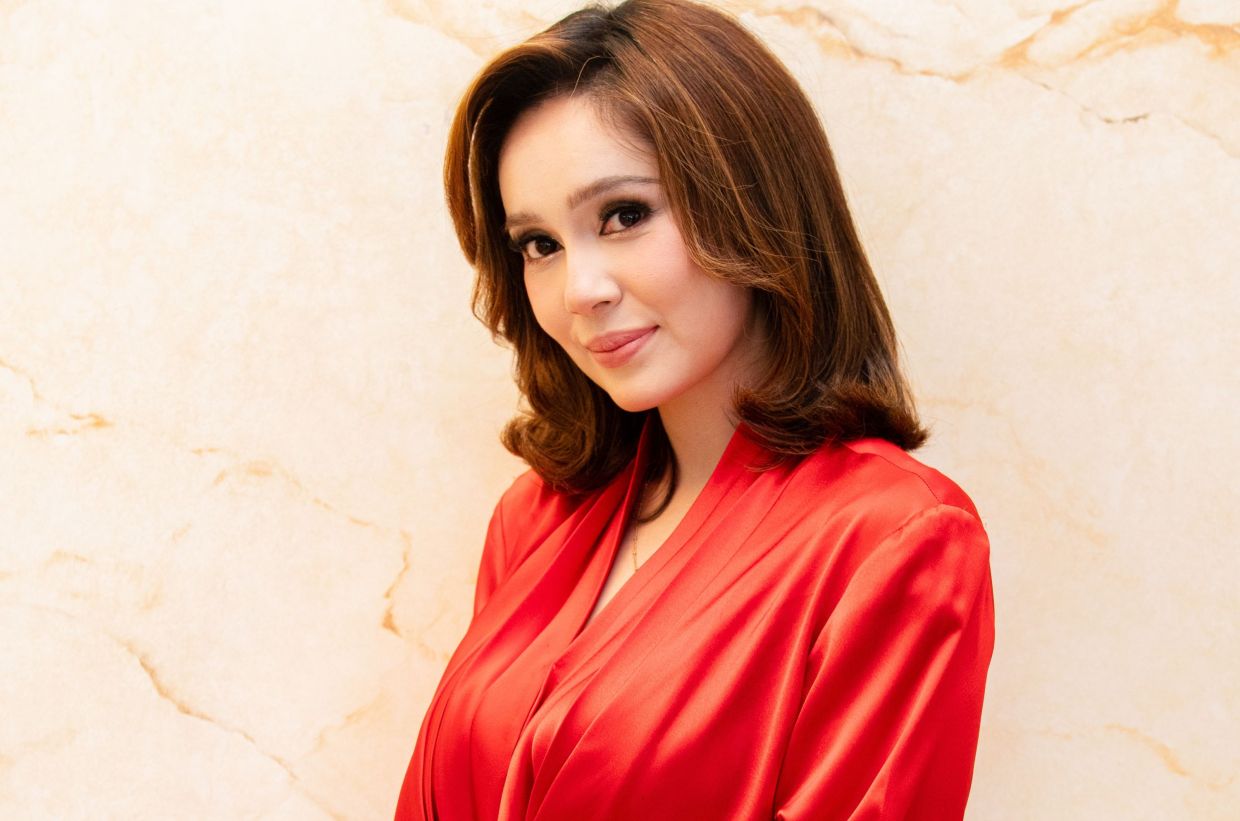
Actress Uqasha Senrose has opened up about her experience collaborating with co-star Aliff Aziz on an upcoming television series, offering insight into how she navigates professionalism amid the personal crises that have consumed both their lives in recent years. Her candid remarks come as the entertainment industry continues to grapple with questions about separating artists' public scandals from their professional work, a tension particularly acute in Malaysia's close-knit entertainment sphere where personal conduct carries significant cultural weight.
Aliff Aziz became the subject of intense public scrutiny in March 2024 when he was implicated in a khalwat incident, a charge that carries legal and social consequences in Malaysia. The controversy triggered the subsequent dissolution of his marriage to Malaysian singer-actress Bella Astillah, with whom he shares two children. The very public nature of the dispute meant that both Aliff and anyone choosing to work with him would face potential backlash, making Uqasha's decision to proceed with the collaboration a notable statement about her own professional values and approach to judgment.
Uqasha's philosophical stance on the matter reflects a measured perspective shaped by her own recent trials. When asked about working alongside someone whose personal life had become tabloid fodder, she offered a response grounded in empathy rather than moral condemnation. She articulated that everyone carries flaws and makes mistakes, positioning herself not as judge but as fellow traveller through human imperfection. This stance carries particular resonance given that Uqasha herself has navigated her own highly publicised marital breakdown during roughly the same period.
Throughout the production process, Uqasha emphasised that Aliff maintained strict professionalism on set. He arrived, completed his work responsibilities, and did not inject his personal turmoil into the workplace environment. For Uqasha, this operational professionalism was the salient factor in evaluating whether collaboration remained viable. She found herself neither anxious nor uncomfortable during filming, suggesting that professional distance and clear role boundaries created sufficient separation between the personal crises both were experiencing and their capacity to perform their craft.
The actress articulated another dimension to her reasoning: the notion that employment constitutes rezeki, or divine provision and livelihood. From this perspective, refusing someone work as punishment for personal failings represents an additional harm layered atop existing consequences. She positioned the set as a space where professional obligation superseded personal judgment, where what mattered was executing their respective roles competently rather than adjudicating each other's moral status or life choices.
Uqasha's own circumstances provide crucial context for understanding her measured response. She had recently navigated divorce proceedings from actor Kamal Adli, initiating the process in October 2025 and finalising it by January 2026. During those proceedings, she publicly accused Kamal of domestic abuse, allegations he refuted. This simultaneous experience of personal upheaval and public exposure likely informed her determination to maintain clear boundaries between personal suffering and professional obligation. Rather than allowing her own pain to create barriers between herself and colleagues, she appears to have adopted a compartmentalisation strategy.
The 12-episode series for which they worked together explores complex relationship dynamics centring on polygamous marriage, with Aliff playing Adli, Uqasha portraying Azura, and Elisya Sandha taking the role of Nikita. The thematic content itself navigates morally ambiguous territory, depicting intimate relationships characterised by competing claims, divided loyalty, and emotional complications. The narrative structure aligns somewhat awkwardly with real-life circumstances, yet Uqasha was explicit about maintaining separation between her character's experiences and her own.
Uqasha deliberately resisted drawing autobiographical material into her portrayal of Azura, a conscious artistic choice reflecting professional maturity. She recognised that importing her genuine emotional wounds into the character would distort rather than deepen the performance. Azura exists as a distinct person with her own narrative arc, one that diverges meaningfully from Uqasha's actual life trajectory. This disciplined approach to character work represents the kind of technical professionalism that allows actors to function effectively regardless of personal circumstance.
Yet the actress acknowledged that emotional labour involved in portraying Azura created its own toll. The character navigates scenes laden with intense feeling, including multiple instances of crying and a sequence involving physical aggression wherein she is slapped and dragged. Uqasha found herself genuinely feeling the character's distress during these moments, experiencing empathetic resonance with Azura's accumulating losses. The pattern of the character's arc particularly moved her—moments of apparent redemption and second chances interrupted by fresh trials and complications.
Uqasha identified a thematic sophistication in the series' treatment of morality and human nature. The production resists painting characters as simply virtuous or villainous. Surface kindness may mask cruelty; apparent harshness may stem from legitimate pain or self-protective reasoning. This nuanced approach to characterisation reflects grown-up storytelling, one that acknowledges the complexity inherent in human motivation and choice. Such thematic depth likely appeals to an actress working through her own moral and relational complications.
Regarding her present situation, Uqasha framed her focus as inward-directed, prioritising her own wellbeing and that of her daughter alongside her career. She articulated that accumulated difficult experiences have generated wisdom and emotional maturity. Motherhood in particular has crystallised a sense of responsibility extending beyond personal interest toward another human being entirely dependent on her stability and presence. This reframing suggests an actress consciously reconstructing her life around core values and relationships rather than remaining caught in cycles of public controversy and judgment.
The broader significance of Uqasha's stance extends to Malaysian entertainment culture's ongoing negotiation with questions of accountability, privacy, and professional redemption. Her willingness to work with Aliff despite his scandal, coupled with her own refusal to weaponise her marital difficulties as either excuse or explanation, models a particular approach to maintaining professional standards while acknowledging human imperfection. Whether this represents emerging maturity within the industry or a somewhat premature forgetting of consequences remains a question individual viewers will adjudicate for themselves.

