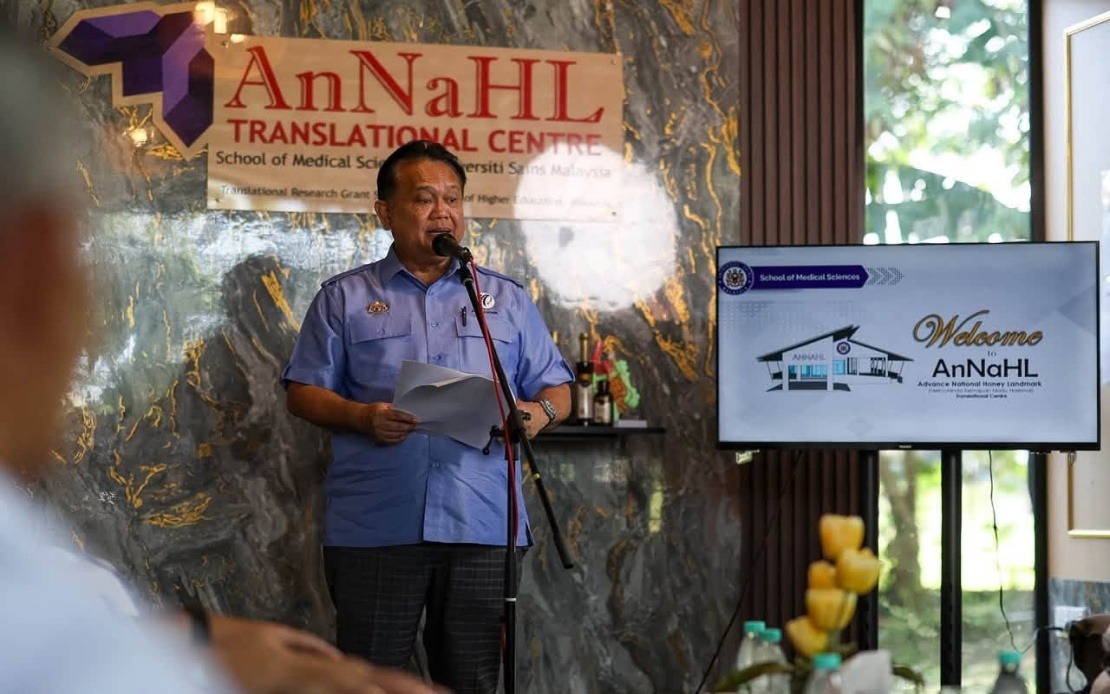
The Upper Rajang Development Agency has committed to forging stronger alliances with tertiary institutions, governmental development bodies, and grassroots communities as it pursues a fundamental shift in how the region approaches rural economic prosperity. Speaking in Sibu on July 16, URDA chairman Datuk Seri Alexander Nanta Linggi outlined a strategic vision that moves beyond traditional extractive industries toward knowledge-intensive, technology-enabled enterprises capable of generating substantially higher returns for rural populations across Sarawak's interior divisions.
The cornerstone of this repositioning reflects growing recognition that commodity-dependent economies leave rural communities vulnerable to global price fluctuations and offer limited pathways for wealth creation and skill development. Nanta articulated that sustainable rural development demands deliberate investment in processing capacity, supply chain sophistication, and direct market linkages, enabling smallholder producers to capture greater value from their efforts. This reframing addresses a persistent challenge throughout Southeast Asia, where rural populations often remain trapped in low-margin production roles despite contributing essential raw materials to global value chains.
Evidence supporting this approach emerged from URDA's High Impact Community Projects initiative, where participating households recorded average income increases exceeding 25 per cent. These results underscore the tangible benefits that materialise when research capabilities, technological expertise, and community engagement strategies converge around locally relevant challenges. Rather than abstract academic pursuits, this model positions universities as essential infrastructure for rural transformation, translating laboratory discoveries into livelihood improvements that measurably enhance household welfare and economic resilience.
The characterisation of universities as strategic partners rather than distant research institutions signals an evolving development paradigm gaining traction across Malaysia and the broader region. When academic research becomes explicitly aligned with community needs and supported by coordinated government action and on-ground implementing agencies, innovation transcends theoretical contribution and becomes a catalyst for structural economic change. This integration proves particularly significant in areas like the Upper Rajang, where geographical isolation and infrastructure limitations have historically constrained access to markets and modern production techniques.
A recent joint visit by URDA and the Regional Corridor Development Authority delegations to the Advanced National Honey Landmark Translational Centre at Universiti Sains Malaysia's Health Campus in Kubang Kerian, Kelantan, exemplified this collaborative approach in practice. The facility functions as both a research institution and a functional hub for product processing, commercial marketing, technical training, and continuous innovation in the honey sector. Such centres bridge the gap between scientific discovery and entrepreneurial application, enabling rural producers to adopt best practices and quality standards that open doors to premium market segments previously inaccessible through informal channels.
Nanta, who serves concurrently as Kapit Member of Parliament and Minister of Works, emphasised that sustainable rural advancement requires deliberately building community capacity across multiple dimensions simultaneously. Knowledge transfer, skills development, technological adoption, and secured market access form an integrated ecosystem wherein progress in one area amplifies gains elsewhere. A farmer equipped with improved beekeeping techniques but lacking market connections remains constrained; conversely, market access without quality assurance capabilities invites reputational damage and lost opportunity. This systems perspective acknowledges the interconnected nature of rural development challenges and prescribes comprehensive rather than piecemeal solutions.
The selection of multiple locations within Kapit parliamentary constituency for high-impact community projects indicates scaling intentions and recognition that viable models must be expanded across diverse communities and production contexts. Stingless bee farming, identified as a priority sector, represents particularly suitable terrain for this innovation-led approach. The enterprise requires relatively modest land investments, generates multiple revenue streams through honey, pollen, and pollination services, builds upon indigenous knowledge systems, and commands premium prices in niche markets increasingly valuing natural and locally-produced goods. Such alignment between market dynamics and local capacity creates genuine commercial viability beyond subsidy-dependent schemes.
For Malaysian policymakers and regional observers, the URDA initiative reflects broader strategic imperatives shaping Southeast Asia's development landscape. Rural populations comprise substantial portions of most regional economies yet frequently lag urban areas in income, employment quality, and access to modern services. Bridging this gap through innovation-driven approaches offers potential for inclusive growth that avoids the social tensions and environmental degradation associated with extractive development models. Countries including Vietnam, Thailand, and Indonesia have similarly embraced university-community-government partnerships as mechanisms for rural transformation, suggesting the approach aligns with regional best practice.
The emphasis on technology adoption and knowledge transfer also positions rural communities to participate in emerging opportunities arising from global sustainability trends and consumer preferences. Markets for certified organic, ethically-produced, and environmentally-sensitive agricultural products continue expanding, particularly in affluent Asia-Pacific markets. Rural producers equipped with modern production standards, quality certifications, and digital marketing capabilities can compete effectively in these segments, capturing value previously extracted by intermediaries. This market-driven sustainability represents more durable development than subsidy or charity-dependent models.
Looking forward, the success of URDA's initiative will depend substantially on institutional coordination and sustained resource commitment. Universities must dedicate genuine research capacity to rural challenges rather than treating engagement as ancillary to mainstream academic priorities. Development agencies must facilitate rather than oversee community efforts, respecting local knowledge and entrepreneurial instincts. Governments must provide enabling policy frameworks, infrastructure investments, and institutional stability beyond electoral cycles. When these conditions align, rural innovation-led development becomes not merely aspirational but operationally achievable, potentially reshaping economic geography across Malaysia's interior regions and establishing models replicable throughout the Southeast Asian context.

