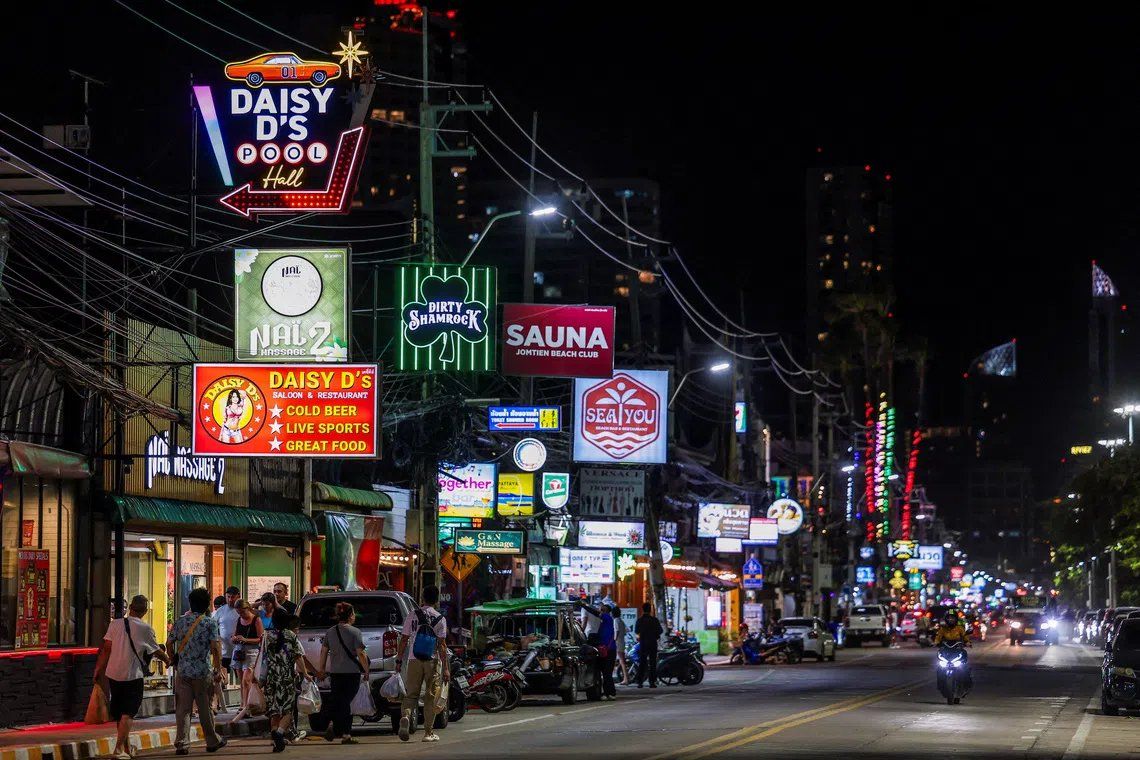
Thailand is bracing for the arrival of the USS Abraham Lincoln this week at Laem Chabang, the deep-sea port near the resort city of Pattaya, marking a significant moment for a destination struggling to recover from years of tourism decline. The aircraft carrier, accompanied by two Navy support vessels, carries nearly 5,000 sailors and Marines who will spend several days ashore following an unprecedented deployment spanning more than 200 days at sea. For local merchants and hospitality businesses operating in Pattaya, the visit represents a rare opportunity to inject urgently needed revenue into an economy that has withered considerably in recent years.
The Abraham Lincoln departed its home port of San Diego in November before being rerouted to the Middle East to support American military operations linked to the Israel-Iran conflict, a reassignment that established a modern-era record for continuous deployment. However, this extended mission has cast a shadow over the sailors' well-being, with military media outlets reporting troubling incidents including suicide attempts and deteriorating morale aboard the vessel. Mental health professionals and policy advocates have raised alarm about the psychological toll of such prolonged separation from home, adding layers of complexity to what might otherwise be celebrated as routine military shore leave.
Pattaya itself holds a unique place in American military history, having transformed from a modest fishing community into a major tourism hub partly through the patronage of U.S. servicemen seeking respite during the Vietnam War. The city has evolved substantially since those decades, yet remains globally recognised for its entertainment district and associated industries. Mayor Poramase Ngampiches estimates that individual military personnel could spend between 1,000 and 3,000 baht daily—roughly $30 to $91—depending on the length and nature of their shore leave, though the staggered scheduling of personnel rotations means spending will be distributed across several days rather than concentrated.
Police authorities are implementing enhanced security measures ahead of the carrier's arrival, deploying additional patrols throughout Pattaya's beachfront and nightlife zones. Weekend enforcement operations resulted in approximately 40 to 50 detentions on suspicion of involvement in prostitution, signalling official determination to project an image of control. Pattaya police chief Anek Srathongyoo acknowledged the inherent difficulty of the task, noting that sex workers could operate in public spaces without detection, underscoring the reality that occasional crackdowns address symptoms rather than structural issues within an industry that, despite being technically illegal, operates openly throughout Thailand's major tourist destinations.
The contradiction between Thailand's anti-prostitution laws and the visible prevalence of sex work in cities like Pattaya and Bangkok reflects deeper governance challenges and the economic dependencies that have developed around tourism. When the FBI assessed Pattaya a decade ago, it identified the city as among the world's most prominent sex tourism destinations, a designation that has influenced the city's reputation internationally and complicated its efforts at economic diversification. This historical characterisation continues to shape perceptions and carries implications for the city's broader development trajectory.
Experts in tourism management and public health have articulated multifaceted concerns about the carrier visit beyond simple economic calculations. Pipatpong Fakfare, an associate professor at Bangkok University's School of Humanities and Tourism Management, highlighted the heightened risks accompanying rapid increases in visitor numbers, including elevated potential for sexual exploitation and transmission of sexually transmitted infections. His analysis extends beyond conventional public health concerns to encompass the psychological vulnerabilities of servicemen dealing with the cumulative stress of extended deployment, creating a context where harm to both visitors and local communities becomes more probable.
The economic dispersal of spending remains uncertain, complicating efforts to forecast the visit's actual financial impact on Pattaya specifically. Thanet Supornsahasrungsi, president of the Association of Chonburi Tourism Federation, suggested that some personnel may choose to travel to Bangkok rather than spend their entire shore leave in Pattaya, fragmenting the economic benefit across a wider geographic area. This possibility means that even with nearly 5,000 visitors, the concentration of spending in Pattaya itself may be substantially lower than headline figures suggest, tempering optimistic forecasts from local business operators.
Yet for businesses operating directly in Pattaya's tourism sector, the visit represents genuine hope after extended hardship. Lisa Hamilton, president of the Pattaya Nightlife Business Association, expressed palpable relief at the news of the carrier's scheduled arrival, remarking that her two decades in the city had not previously witnessed such sustained economic stagnation as the current period. Her comments reflect broader difficulties facing Thailand's tourism industry, which has confronted multiple disruptions including pandemic-related closures, changing travel patterns, regional competition, and shifting perceptions of Thailand's attractions among international visitors. The carrier visit, while temporary, symbolises the possibility of recovery for an industry upon which thousands of livelihoods depend.
The arrival also carries significance within the broader context of US military engagement in Southeast Asia and the strategic importance of Thailand as a regional ally. Port calls by American naval vessels represent tangible manifestations of military cooperation and commitment, reinforcing diplomatic relationships through practical demonstration of naval presence and sailor-civilian interaction. For Thailand, hosting such visits affirms its position within American strategic calculations regarding regional stability and power projection capabilities throughout the Indo-Pacific region.
Regional observers and policymakers across Southeast Asia will likely monitor how Pattaya manages this convergence of economic opportunity and social risk. The situation encapsulates broader tensions between tourism-dependent development models and concerns about exploitation, cultural impact, and quality-of-life considerations for local populations. Thailand's response to the Abraham Lincoln visit will offer insights into how the country balances conflicting priorities: generating essential foreign exchange, protecting vulnerable populations from exploitation, and managing the complex social consequences of rapid militarised tourism spikes.
The week ahead will test whether enhanced policing, merchant optimism, and careful logistical management can produce a positive outcome for Pattaya's struggling businesses while minimising harms associated with concentrated visitor influxes and the particular vulnerabilities of stress-affected military personnel. The visit, in microcosm, illustrates enduring challenges facing tourism-reliant economies throughout Southeast Asia as they navigate globalisation, geopolitical alignment, and internal development contradictions.

