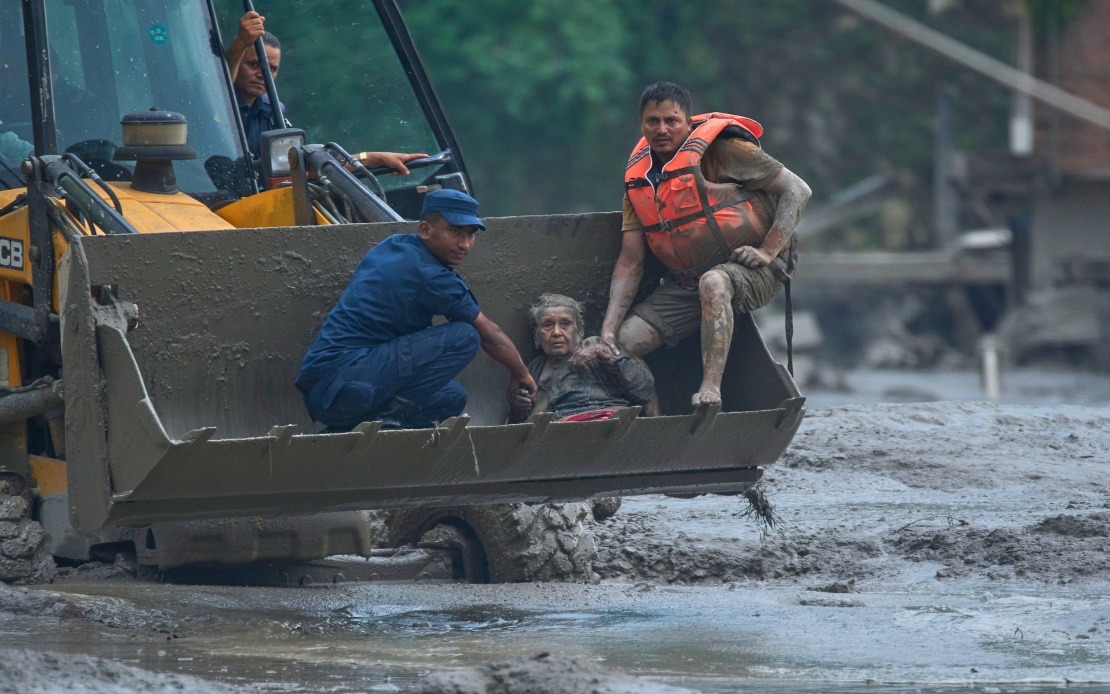
Nepal faces one of its most severe natural disasters in recent years following devastating flash floods and mudslides that tore through regions bordering China, prompting swift diplomatic responses from Western nations concerned about the safety of their nationals. The United States and Canada both announced on Wednesday their commitment to providing emergency aid to the South Asian nation as search and rescue operations intensify in the affected areas. The dual pledges of assistance underscore the international dimension of the crisis, which has claimed numerous lives and displaced thousands across Nepal's mountainous terrain.
U.S. Secretary of State Marco Rubio articulated Washington's position through a social media statement, emphasizing that the State Department stands prepared to offer comprehensive humanitarian assistance to Nepal's government during this critical period. Beyond the formal commitment to aid, Rubio extended expressions of solidarity with the affected Nepali population, characterizing America's response as united in prayer following the catastrophe. This rhetorical framing, common in diplomatic communication, signals both emotional support and institutional readiness to mobilize resources and personnel for relief operations.
Canadian Prime Minister Mark Carney similarly characterized the unfolding situation as profoundly severe, utilizing language that conveyed the scale of human suffering occurring across Nepal. Through his own statement distributed on social media platforms, Carney acknowledged the multifaceted nature of the crisis—recognizing not only those currently in distress but also families grieving lost loved ones and those anxiously awaiting information about missing relatives. Canada's official position reflected a commitment to stand ready with support, positioning the country as a responsible international actor engaged with Nepal's humanitarian emergency.
The human toll extends significantly to foreign nationals caught in the disaster. According to Nepalese government officials, approximately 47 American citizens remain unaccounted for in the aftermath of the floods and mudslides. The Canadian contingent is similarly affected, with 24 nationals reported missing by local authorities. Notably, neither the United States nor Canada has independently verified these figures, suggesting that the actual numbers may fluctuate as rescue operations continue and communication channels with remote affected regions improve. This discrepancy between Nepali government reports and international verification highlights the challenges inherent in documenting casualties during large-scale natural disasters affecting mountainous and geographically isolated communities.
The overall magnitude of the disaster extends far beyond the foreign nationals whose cases have received diplomatic attention. Nepalese authorities have reported that at least 160 individuals have lost their lives in the floods and associated mudslides, while more than 680 people remain missing across the affected regions. These figures reflect a humanitarian crisis of substantial proportions, affecting primarily Nepal's own population who inhabit these vulnerable mountain communities. The disparity in international media coverage between foreign casualties and local victims remains a persistent feature of global disaster reporting, yet the domestic toll represents the true measure of Nepal's suffering.
The infrastructure damage compounds the immediate humanitarian challenge facing Nepal's government and international responders. Thirteen hydropower facilities that provide crucial electricity generation capacity to the nation have been destroyed or rendered non-functional. Additionally, approximately 40 kilometres of road networks have been obliterated by flooding and mudslide activity, severing vital supply routes that connect remote communities to regional markets and medical facilities. The destruction extended to vehicular and bridge infrastructure, with approximately 200 trucks and 19 bridges swept away by the force of water and debris flows. This infrastructure collapse creates secondary humanitarian consequences, impeding relief distribution, medical evacuations, and the restoration of normal economic activity.
For Malaysian and Southeast Asian observers, Nepal's disaster carries significant regional implications. The Hindu Kush and Himalayan mountain range system, of which Nepal's affected regions are a critical component, represents a climate-sensitive environment whose degradation increasingly threatens lowland populations across South and Southeast Asia. Changes in precipitation patterns, glacial melt, and ecosystem instability in these highland zones directly influence monsoon dynamics and river systems affecting Bangladesh, India, and potentially downstream populations throughout the region. Nepal's vulnerability to such catastrophic flooding events signals broader environmental challenges that transcend national boundaries and warrant regional cooperation on disaster preparedness and climate adaptation.
The international response from Washington and Ottawa also reflects geopolitical considerations beyond pure humanitarianism. Both nations maintain strategic interests in Nepal, a nation positioned between China and India in one of Asia's most consequential geopolitical zones. Demonstrated commitment to humanitarian assistance during crises serves multiple purposes—alleviating human suffering while simultaneously reinforcing diplomatic relationships and international standing. For Nepal, which navigates complex relationships with its neighbours, receiving support from Western powers diversifies its diplomatic portfolio and reaffirms its status as a nation deserving of international solidarity regardless of its position in broader great-power competitions.
The coordination between bilateral aid efforts and multilateral humanitarian mechanisms will prove essential in mounting an adequate response to Nepal's emergency. International organizations including the United Nations and regional bodies will likely coordinate with American and Canadian bilateral programs to maximize assistance efficiency. The logistics of delivering aid into mountainous terrain, often requiring helicopter transport and the establishment of temporary supply chains, demand sophisticated planning and substantial resource commitments. Early pledges of support from multiple nations create momentum for sustained assistance throughout what will likely become an extended recovery and reconstruction phase.
As Nepal's government struggles to manage immediate rescue operations and humanitarian response, the pledges from the United States and Canada represent important symbolic and material commitments. However, the transition from initial emergency response to long-term reconstruction will demand sustained international engagement extending far beyond the immediate crisis phase. The destroyed hydropower facilities alone will require years to rebuild, during which Nepal's energy security and economic capacity remain compromised. The road infrastructure destruction similarly necessitates extensive reconstruction efforts that will constrain development timelines across affected regions.
For Nepali citizens and foreign nationals attempting to account for missing loved ones, the coming days and weeks will involve agonizing uncertainty as rescue teams navigate treacherous terrain and search through debris fields. The international dimension of this crisis—with American and Canadian citizens among those missing—ensures continued global media attention and diplomatic engagement. This visibility may ultimately benefit Nepal's recovery efforts by sustaining international interest and support mechanisms that might otherwise diminish had the disaster affected only a poor, geographically isolated nation with fewer international connections. Yet beneath the diplomatic statements and aid pledges lies a profound human tragedy affecting thousands whose stories will remain largely untold in global media coverage.

