The United States and Jamaica have entered into a formal military and strategic partnership aimed at combating narco-terrorism across the Western Hemisphere, marking a significant escalation in their joint security efforts. The agreement was announced by US Southern Command (SOUTHCOM), which oversees American military operations across Central America, South America, and the Caribbean. The pact represents Washington's determination to address what it views as an increasingly destabilizing threat posed by transnational drug trafficking organizations that operate with near-impunity across the region's maritime and land borders.
General Francis L. Donovan, the commander of SOUTHCOM, emphasized that the agreement builds upon decades of established cooperation between the two nations. In his statement released on social media, Donovan framed the partnership as a strengthened defensive posture against cartels and a broadened commitment to neutralizing security threats emanating from criminal enterprises throughout the hemisphere. This language reflects Washington's strategic recalibration toward treating drug trafficking not merely as a law enforcement challenge but as a military and national security concern requiring coordinated institutional responses.
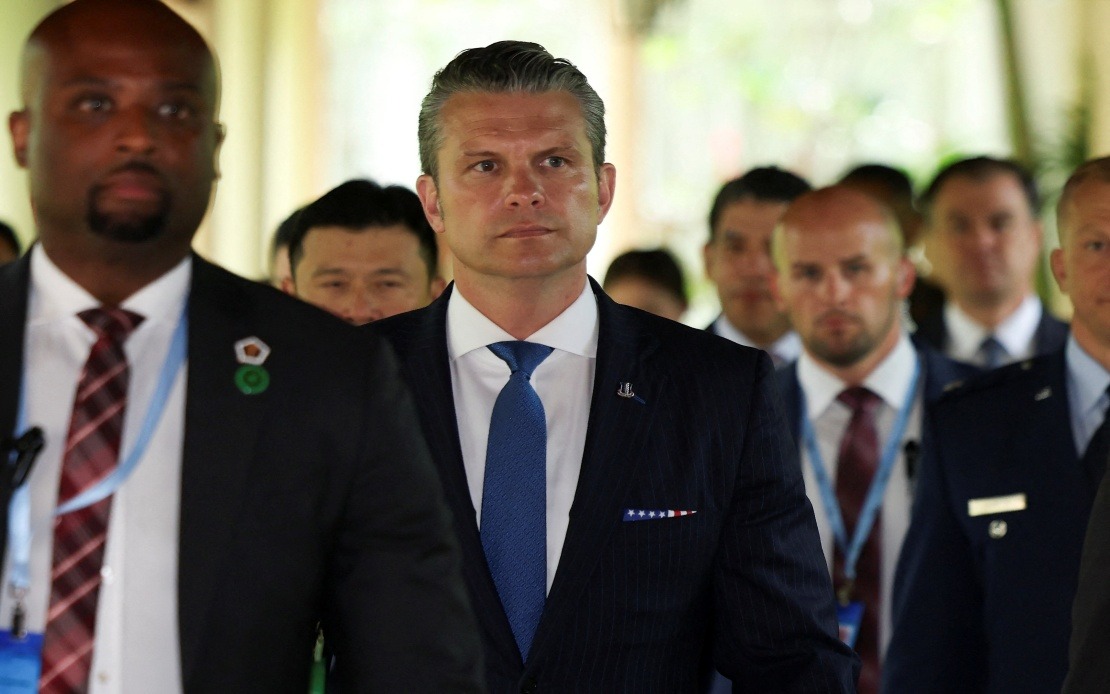
The timing of this announcement follows high-level diplomatic engagement between the two governments in August, when Defence Secretary Pete Hegseth met with Jamaica's Deputy Prime Minister and Minister of National Security Horace Chang at the A3C anti-cartel forum held in Panama. That meeting laid the groundwork for the broader institutional framework now being formalized through this agreement. The A3C forum itself represents a regional initiative bringing together multiple nations committed to developing coordinated strategies against organized crime networks, positioning Jamaica as a willing participant in America's wider Caribbean security architecture.
The agreement arrives in the context of increasingly aggressive American military operations targeting suspected drug smugglers. In November 2025, the US Department of Defense launched Operation Southern Spear, a dedicated campaign explicitly designed to strike at drug cartel infrastructure throughout Latin America. This initiative signals a more assertive military posture compared to previous approaches that emphasized intelligence-sharing and training partnership. Operation Southern Spear represents a fundamental shift toward direct kinetic action against trafficking networks, utilizing American military assets to neutralize perceived threats rather than simply supporting host-nation security forces.
The scale of these operations has been substantial. Since September 2025, SOUTHCOM reports that US military forces have targeted at least 67 maritime vessels suspected of transporting illegal drugs across the Caribbean Sea and Pacific Ocean. The casualty figures associated with these strikes reveal the intensity of the campaign: approximately 221 people have been killed in these operations. These numbers underscore the military dimensions of the counter-narcotics effort and raise important questions about the rules of engagement, civilian protection measures, and the legal frameworks governing these operations across international waters and foreign territorial jurisdictions.
For Malaysia and Southeast Asian observers, this development carries significant implications. The Caribbean narco-terrorism landscape, though geographically distant, operates according to similar transnational criminal dynamics affecting the region closer to home. Drug trafficking organizations across both regions exploit maritime vulnerabilities, leverage corruption, and utilize similar technologies and financial networks. The American military approach in the Caribbean may presage evolving security doctrines that treat drug trafficking as a direct military rather than purely law enforcement concern, potentially influencing security cooperation models that regional nations like Malaysia might encounter in future bilateral arrangements.
Jamaica's role in this partnership deserves particular attention. As a Caribbean nation with significant geographic proximity to major trafficking routes, Jamaica experiences severe internal security challenges stemming from gang violence and drug-related criminality. By formalizing cooperation with the United States, Jamaica gains access to American military intelligence, surveillance capabilities, and operational support that its own security forces lack. However, this deepened reliance on American military engagement also raises questions about Jamaica's institutional capacity, sovereignty considerations, and the domestic political implications of hosting expanded American military operations.
The broader hemispheric context illuminates why the United States is intensifying these efforts. Latin American and Caribbean cocaine production has reached historic levels, with trafficking organizations fragmenting into numerous competing networks that have become increasingly sophisticated in their operational capabilities. These organizations control significant territory, generate enormous revenues that corrupt government institutions, and maintain military-grade arsenals. The violence associated with their activities destabilizes multiple countries and generates migration pressures affecting the United States directly, creating strong domestic political incentives for aggressive counter-measures.
For Southeast Asia, the Jamaica-US agreement underscores how maritime security concerns related to drug trafficking have become genuinely militarized at the global level. Nations throughout the region, including Malaysia, face comparable challenges regarding trafficking organizations operating across borders and international waters. The American model of direct military intervention, surveillance, and targeting of suspect vessels may gain traction as a preferred approach if it achieves measurable success in the Caribbean. Southeast Asian governments might face pressure to adopt similar military-centric strategies or invite comparable levels of American military involvement in addressing transnational crime challenges affecting their own maritime domains.

