The United States has taken formal steps to back an ambitious military stabilisation initiative in Gaza, with the State Department notifying Congress on July 30 of funding intended to support the International Stabilisation Force, a cornerstone of President Donald Trump's recently unveiled Middle East peace strategy. The announcement represents Washington's commitment to operationalising a framework that Trump promoted as a comprehensive solution to decades of Israeli-Palestinian conflict, though the initiative remains largely nascent and faces significant political hurdles on both sides of the dispute.
According to a State Department spokesperson, the funding notification constitutes merely an initial tranche of support, with additional resources expected as planning advances under the oversight of the Board of Peace, an international coordination body tasked with shepherding the peace plan's implementation. The administration did not disclose the specific amount allocated, citing the ongoing consultative process with the Board of Peace and its member nations. This deliberate opacity may reflect sensitivity around the scale of potential American investment, particularly among Congressional members sceptical of expanded Middle Eastern military deployments.
Trump characterised the stabilisation force as integral to his broader twenty-one-point peace initiative, which he announced on July 31 following what the White House characterised as a breakthrough agreement with Hamas. Under the framework, Hamas and other armed Palestinian factions would undergo complete disarmament, Israeli forces would withdraw from Gaza in phased tranches, and the international stabilisation contingent would operate alongside a reconstituted Palestinian police apparatus. State Department spokesman Tommy Pigott framed the initiative as evidence of Trump's dealmaking acumen, noting that a "massive global coalition" had coalesced around the Board of Peace framework and citing the release of hostages as validation of the diplomatic approach.
However, the plan has encountered immediate resistance from the very Israeli government it was designed to accommodate. Prime Minister Benjamin Netanyahu rejected the framework this month during a Cabinet meeting, declaring unequivocally that Israeli Defence Force withdrawal would not commence until Hamas achieved what he characterised as genuine and verifiable disarmament. This fundamental disagreement over sequencing and verification mechanisms strikes at the heart of the peace proposal, suggesting that Netanyahu views the disarmament provisions as insufficient guarantees against Hamas's eventual rearmament or resurgence. For Malaysian observers and other Southeast Asian stakeholders monitoring Middle Eastern stability, this Israeli intransigence signals that even American-brokered frameworks struggle against domestic Israeli political pressures.
Hamas, meanwhile, has maintained public support for the roadmap, though scepticism persists regarding whether the Palestinian faction would genuinely accept permanent disarmament or merely temporary constraint pending circumstances more favourable to renewed conflict. The divergence between Hamas's stated position and Netanyahu's demands creates space for international mediators, but also illustrates the structural challenge of brokering agreements where fundamental security calculations diverge irreconcilably. White House senior advisor Jared Kushner travelled to the region during the week of the announcement, conducting separate meetings with Hamas representatives in Egypt and with Netanyahu in Israel, accompanied by Board of Peace envoy Nikolay Mladenov.
Disputes during these talks exposed deeper fractures within the diplomatic framework. According to media reports, Netanyahu and Kushner disagreed sharply over Israel's ongoing military operations in Gaza, with Netanyahu insisting that Israeli strikes would continue unabated and Kushner voicing opposition to the continuation of kinetic activity. Such disagreements between the Trump administration and the Israeli government underscore the difficulty of achieving unified strategic direction, particularly when one party believes its security depends on unilateral military action rather than multilateral restraint. For regional observers, these tensions hint at the fragility of American-Israeli coordination on critical security matters.
The proposed stabilisation framework builds upon a ceasefire agreement that commenced on October 10, 2025, following years of intensive conflict. Nevertheless, the ceasefire has proven porous and contested, with multiple violations documented by Palestinian health authorities and international monitors. According to the latest figures from the Gaza Health Ministry, Israeli military actions undertaken in violation of the ceasefire agreement have resulted in 1,283 Palestinian deaths and 4,248 wounded individuals. These casualty figures, though substantially lower than the toll from the broader conflict, demonstrate that the ceasefire agreement lacks the enforcement mechanisms and compliance incentives necessary to prevent recurring violence.
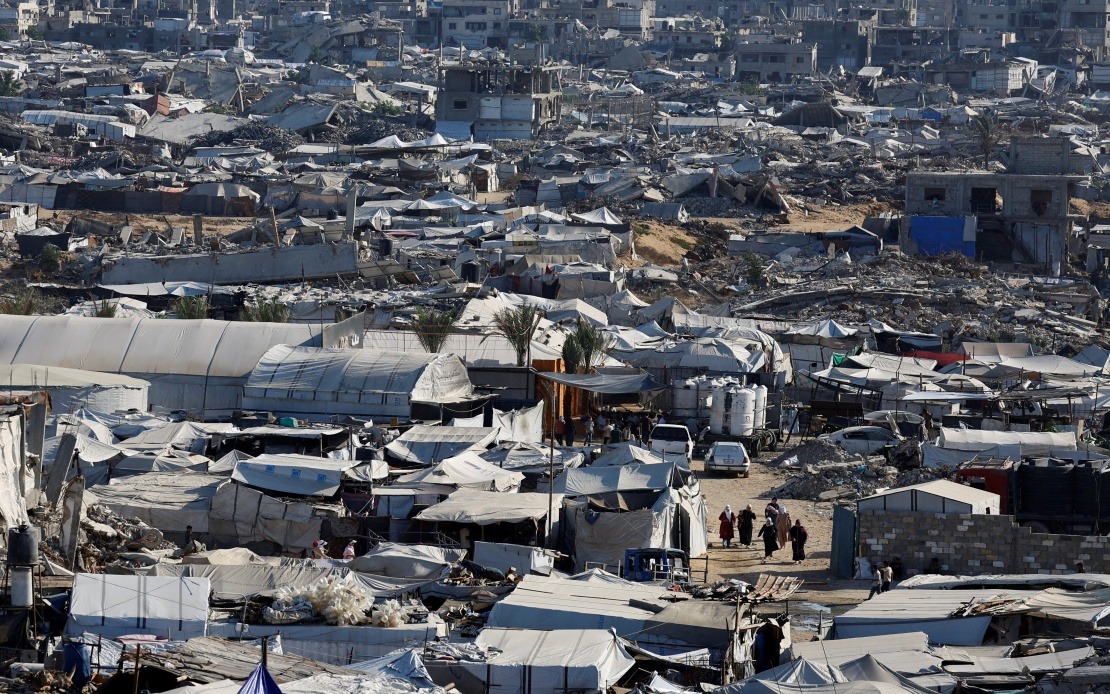
The broader context renders the stabilisation force proposal particularly complex. The Israeli military campaign initiated on October 8, 2023, has resulted in cumulative casualties far exceeding the ceasefire-period figures, with Palestinian health authorities documenting more than 73,000 deaths and 174,000 wounded across the eighteen-month conflict period. Additionally, Israeli military operations have destroyed approximately ninety percent of Gaza's physical infrastructure, creating humanitarian challenges of unprecedented scale and complicating any stabilisation or reconstruction effort. An international force operating in such devastated circumstances would confront not merely security challenges but profound questions regarding reconstruction sequencing, resource allocation, and coordination with humanitarian actors.
For Malaysia and other Southeast Asian nations, the trajectory of Gaza stabilisation efforts carries significant implications. Several Southeast Asian countries maintain diplomatic relations and trade ties with both Israel and Palestinian authorities, requiring careful navigation of these competing commitments. The American initiative to deploy an international stabilisation force, should it proceed, would likely require contributions from multiple nations, potentially including requests directed toward Southeast Asian partners. Malaysian policymakers monitoring these developments must anticipate potential pressure to participate in such arrangements, necessitating clear strategic thinking regarding the conditions under which such participation would serve Malaysian interests.
The fundamental obstacle confronting Trump's peace initiative remains the asymmetry in how Israeli and Palestinian leaderships view the conflict's resolution. Netanyahu's refusal to contemplate Israeli withdrawal until Hamas capitulates entirely, combined with Hamas's reluctance to accept permanent disarmament without security guarantees, creates a logical impasse that international mediation cannot resolve through procedural innovation alone. The stabilisation force, as currently conceived, assumes both parties will ultimately acquiesce to terms neither currently accepts, a proposition that history suggests remains unlikely without substantial shifts in the underlying balance of power or dramatic changes in the cost calculations driving each side's strategy. Washington's funding notification represents diplomatic motion rather than diplomatic progress, advancing the framework's architecture without necessarily advancing its ultimate implementation.
Moving forward, the practical feasibility of establishing and sustaining an international stabilisation force in Gaza depends entirely on whether Netanyahu's government and Hamas can be brought toward genuine compromise positions rather than merely cosmetic concessions designed to satisfy international audiences. The current trajectory suggests such movement remains distant, with both parties signalling intransigence on the issues most central to any durable settlement. American funding and diplomatic engagement, while necessary preconditions for any eventual stabilisation effort, have thus far proven insufficient to overcome the deep structural conflicts that have perpetuated Israeli-Palestinian hostilities. The coming months will reveal whether Kushner's regional engagement and Trump's diplomatic investment can shift these entrenched positions or whether the stabilisation initiative will join the lengthy catalogue of failed Middle Eastern peace proposals.

