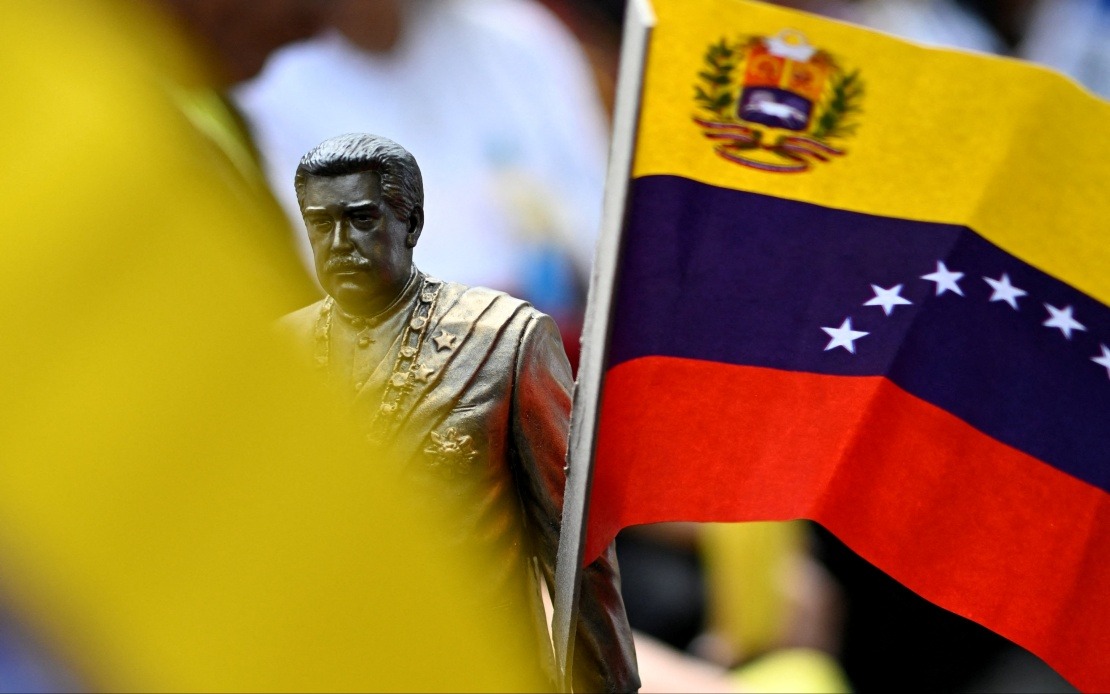
A United States federal judge in New York has scheduled the trial of Venezuelan President Nicolas Maduro and his wife Cilia Flores to begin on June 1, 2027, marking a significant procedural milestone in one of the most controversial international legal cases in recent years. Judge Alvin Hellerstein announced the trial date during a brief 15-minute hearing on Wednesday, following a request from attorneys representing both the prosecution and defence. The couple, who have maintained their not guilty pleas to charges of drug trafficking and illegal firearms transactions, appeared for their third time before a New York court since their extraordinary capture in early January by United States military forces.
The circumstances surrounding Maduro's apprehension have proven deeply contentious on the global stage. On January 3, the US military launched what was characterised as a large-scale military operation in Venezuelan territory, resulting in the forcible seizure of Maduro and his wife from Caracas. The pair were subsequently transported to New York, where they have remained in custody at the Metropolitan Detention Centre in Brooklyn. Since their initial arraignment on January 5, both have consistently denied all charges levelled against them by American prosecutors.
For regional observers and the wider international community, the case raises fundamental questions about state sovereignty and the limits of American military and judicial authority. The seizure itself has drawn widespread diplomatic criticism and formal condemnation from multiple nations and international bodies concerned about the precedent it establishes. Southeast Asian nations, which often navigate complex relationships with larger powers, are watching closely as the case develops, given its potential implications for how international law is interpreted and applied.
Maduro's defence strategy appears focused on challenging the very foundation of the US court's jurisdiction over him. His lawyer, Barry Pollack, has signalled an intention to file a motion asserting sovereign immunity, a legal doctrine that traditionally protects sitting heads of state from prosecution in foreign courts. Should this motion succeed, it could potentially dissolve the entire case before trial, making it a crucial early battleground in the litigation. The strategic importance of this immunity claim cannot be overstated, as it represents one of the most direct challenges to the fundamental legitimacy of the proceedings.
The legal complications extend beyond immunity arguments. The manner of Maduro's capture—through direct military intervention rather than extradition or voluntary surrender—has prompted serious legal scholars and international law experts to question whether the prosecution can proceed validly from what many regard as an illegal abduction. This procedural foundation could become critical as the case advances through the American judicial system over the next two and a half years leading to trial.
Outside the heavily fortified Manhattan courthouse where the hearing took place, a growing movement of protesters has mobilised to challenge what they characterise as an unlawful prosecution. On Wednesday, demonstrators gathered to demand Maduro's immediate release and to voice opposition to what they frame as unauthorised American military intervention in a sovereign nation's territory. The protests underscore a broader global anxiety about American foreign military operations and their increasingly contested legitimacy.
Among those voicing dissent is Tom Burke, a steering committee member of the Anti-War Action Network, who has framed the capture and detention as fundamentally violating established international law. Burke characterised the operation bluntly as an act of armed robbery by the United States, arguing that it demonstrates a dangerous disregard for the legal frameworks that theoretically govern relations between nations. His comments reflect a perspective held by numerous civil society organisations and activists who view the case as emblematic of broader patterns in American foreign policy.
Allison Gunderson, a protester from Minneapolis, articulated the central concern animating opposition movements: that the United States is prosecuting a nation's elected president following what amounts to a kidnapping, rather than through recognised legal channels. This distinction carries weight in international discourse, where procedural legitimacy is seen as foundational to the rule of law. The absence of proper extradition procedures or legal cooperation frameworks casts shadows over the entire prosecutorial effort.
Sara Flounders, an American political writer and analyst, has drawn explicit connections between the Maduro case and other contested American operations targeting countries including Iran and Cuba. She highlighted that Wednesday marked exactly 200 days since Maduro's capture, emphasising that activist communities are maintaining a meticulous accounting of the detention period. This vigilance suggests that opposition to the case extends well beyond Venezuela itself, encompassing a broader critique of American interventionism in Latin America and beyond.
For Malaysian observers and policymakers, the case carries particular significance given the region's own experiences with external pressure from major powers and its commitment to principles of non-interference and sovereignty enshrined in ASEAN founding documents. The Maduro prosecution raises questions about whether international law standards apply equally to all nations or whether powerful states can circumvent established legal processes with military force. Southeast Asia's diplomatic corps and legal communities have noted the potential ramifications for how international disputes are resolved going forward.
The two-and-a-half year interval until trial provides ample opportunity for legal challenges, diplomatic negotiations, and further international pressure to reshape the case's trajectory. Whether the sovereign immunity motion will succeed, whether the capture itself will be deemed legally sufficient, and whether international pressure might eventually lead to some form of negotiated resolution all remain open questions. The trial date of June 2027 appears virtually certain to be subject to further modification as these fundamental legal and political questions work through the American court system.
As the case develops, it will likely continue to generate significant controversy and serve as a testing ground for evolving norms regarding the use of military force for law enforcement purposes. The international community's response to Maduro's prosecution may establish important precedents about the boundaries of state authority and the rules governing interaction between nations. For Venezuela and its allies, for the United States and its geopolitical interests, and for observers worldwide concerned about the direction of international law, the coming years will prove consequential.

