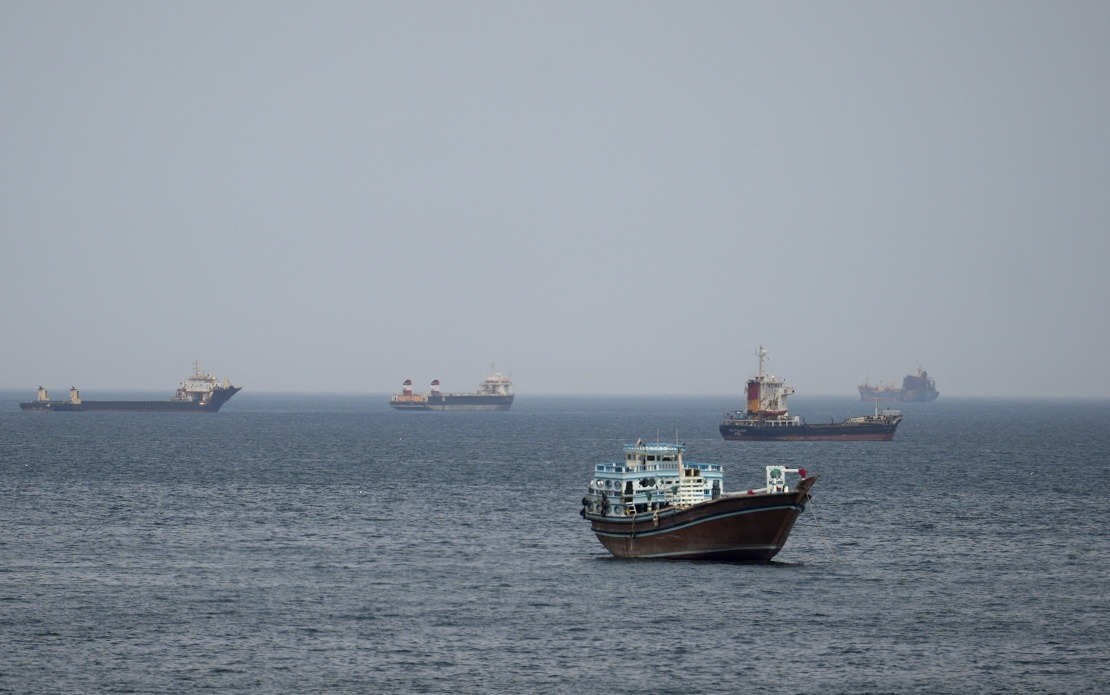
The United States Central Command disclosed Thursday that American military forces have shepherded more than 800 commercial vessels through the strategically vital Strait of Hormuz since the beginning of May, underscoring Washington's determination to maintain freedom of navigation through one of the world's most contested maritime corridors. Along with those vessels, US forces have protected the transit of approximately 380 million barrels of crude oil through the waterway, a figure that highlights the extraordinary volume of global energy supplies that depend on unobstructed passage through this narrow chokepoint between Iran and Oman.
The announcement comes at an especially fraught moment in US-Iran relations, with the fragile equilibrium that has held between the two adversaries showing unmistakable signs of strain. Over the preceding 48 hours, the countries had engaged in tit-for-tat military strikes that have raised serious concerns about a broader regional conflict. Despite this volatile backdrop, commercial shipping through the Strait has continued largely uninterrupted, a testament to the protective presence of American naval assets and the international community's commitment to preventing Iranian actions from disrupting global trade flows.
The escalation began with Iranian attacks on three commercial vessels operating within the Strait of Hormuz, actions that drew swift retaliation from the United States. In response, American forces launched strikes against Iranian military targets, prompting Tehran to escalate the confrontation on Thursday. Iran responded to these overnight US attacks by conducting a series of retaliatory strikes against American military infrastructure positioned across multiple regional locations, including installations in Bahrain, Kuwait, Qatar, and Jordan. This geographic dispersal of Iranian targets underscores the extent to which this conflict extends well beyond the Strait itself and threatens the stability of the entire Middle East.
For Malaysian policymakers and business leaders with interests in regional trade and energy security, the situation in the Strait of Hormuz carries profound implications. As a major trading nation and energy importer, Malaysia's economic interests are directly tied to the stability of this passage. Disruptions to shipping through the Strait could raise transportation costs for Malaysian importers and exporters, increase global energy prices, and disrupt supply chains that feed Malaysian manufacturing and commerce. The ongoing US military presence serves to mitigate these risks, but the escalating tensions suggest that this protection may not remain indefinitely stable.
The sheer volume of traffic that US forces have facilitated—over 800 vessels in roughly ten weeks—demonstrates both the intensity of global maritime commerce and the critical importance of maintaining safe passage. This level of activity also illustrates why any prolonged disruption would have cascading consequences across the global economy. For Malaysian companies engaged in international trade, particularly those dependent on imports from the Middle East or exports destined for global markets, the security of the Strait remains a paramount concern.
The broader context of US-Iran tensions also intersects with regional geopolitical realignments that affect Southeast Asian countries. Malaysia, like other nations in the region, maintains diplomatic and economic relationships with both Iran and the United States, creating a delicate balancing act. The escalation between these two powers forces smaller nations to consider how they might be drawn into a larger conflict and whether their strategic partnerships might be complicated by taking sides in such disputes.
The recent attacks on commercial vessels in the Strait represent a concerning trend toward directly targeting civilian shipping, a practice that violates international maritime law and norms of commercial neutrality. Such actions threaten not only the vessels and crews directly involved but also undermine the broader principle that commercial shipping should remain insulated from military conflicts. This principle has long underpinned the smooth functioning of global trade.
The US military presence in the region, while aimed at protecting shipping, also contributes to the broader security architecture that defines Middle Eastern geopolitics. American naval forces have maintained a dominant position in the Persian Gulf for decades, and their efforts to ensure shipping security reflect Washington's broader strategic interests in the region. However, this dominance is increasingly contested by Iran, which views American military activities as an encroachment on its regional sovereignty.
The challenge facing the international community—including Malaysia and other Southeast Asian nations—is finding a sustainable approach to maritime security in the Strait that neither allows disruptions to critical commerce nor perpetuates cycles of military escalation. The current model, in which US forces provide protective escort services, appears to be functioning operationally but is vulnerable to escalation whenever tensions between Washington and Tehran increase. A more durable solution would likely require diplomatic engagement aimed at reducing fundamental tensions between these adversaries and establishing clearer international protocols governing maritime conduct in contested waters.
Looking ahead, the trajectory of US-Iran relations will significantly influence maritime commerce for the foreseeable future. Malaysia and other regional economies must remain attentive to developments in this sphere while exploring diplomatic channels that might contribute to de-escalation. The stakes are too high for complacency, and the potential costs of further escalation too severe, for the international community to ignore these tensions or assume they will naturally resolve without intervention.

