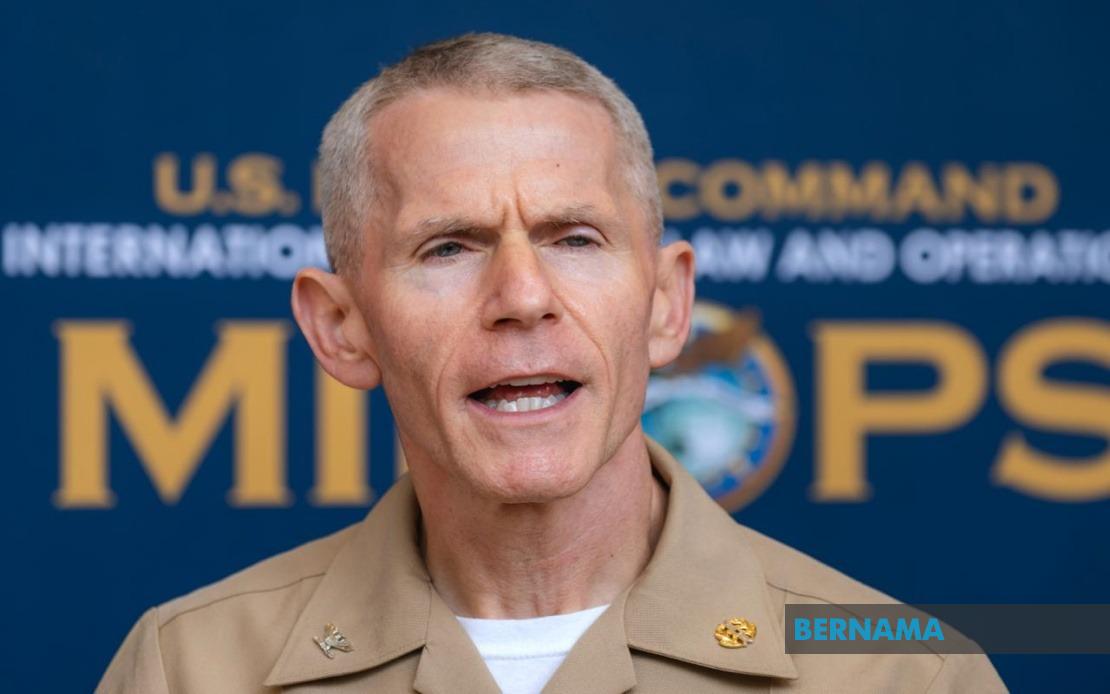
The United States Pacific Command announced its unwavering commitment to preserving security and stability in the South China Sea during a major regional security conference in Kuala Lumpur this week, underlining Washington's strategic pivot toward the contested maritime corridor as geopolitical tensions persist. Speaking at the 37th International Military Law and Operations Conference, USPACOM's Staff Judge Advocate Navy Captain Dustin Wallace reaffirmed the command's intention to sustain an active operational footprint in the region while working closely with regional allies to deter potential aggression and destabilising activities.
Wallace's remarks carry particular significance for Southeast Asian nations, many of which have competing territorial claims in the South China Sea and depend heavily on the region's critical shipping lanes for trade. The commander's emphasis on maintaining a persistent military presence reflects broader American strategy to counterbalance growing Chinese influence in waters through which trillions of dollars in global commerce flow annually. For Malaysia and other ASEAN members, the commitment signals that Washington intends to remain a substantive security partner despite ongoing shifts in global power dynamics.
Central to USPACOM's approach is its stated dedication to upholding international law, freedom of navigation, and freedom of commerce—principles that the command characterises as foundational to protecting the sovereign equality and rights of all nations. This framing directly addresses concerns among Southeast Asian states that have witnessed increasingly assertive maritime behaviour in disputed areas. By anchoring its mission in established international legal frameworks, the US is positioning itself as the defender of a rules-based order that smaller nations rely upon to safeguard their interests against larger powers.
Wallace also emphasised USPACOM's recognition of ASEAN's centrality to regional stability, a diplomatic acknowledgment that carries weight given the bloc's historical preference for non-alignment and inclusive dialogue. The command's stated willingness to work with individual ASEAN member states according to their respective sovereign interests and priorities suggests a nuanced approach that respects the grouping's internal diversity. Different ASEAN nations maintain varying relationships with China, the US, and other powers, and USPACOM's flexibility in tailoring partnerships could strengthen its appeal across the region.
The conference itself, titled "From the Seabed to Space: Advancing Security, Freedom, and Prosperity for All Across the Indo-Pacific," convened over 300 military leaders, security lawyers, policymakers, and scholars from more than 30 countries, reflecting the broad international concern about Indo-Pacific security governance. The broad participation underscores how the South China Sea disputes extend beyond bilateral US-China tensions, affecting regional and global stakeholders. For Malaysia, hosting the conference alongside the Defence Ministry and Malaysian Armed Forces enhanced the country's profile as a serious contributor to regional security discussions.
Wallace's comments suggest USPACOM intends to deepen partnerships selectively rather than impose uniform security arrangements. By identifying and addressing each nation's specific strategic priorities, the command aims to build durable coalitions based on mutual interest rather than great-power coercion. This approach potentially offers advantages to mid-sized powers like Malaysia, which can leverage US military capabilities while maintaining diplomatic flexibility and engagement with other major powers.
The broader context of these commitments reflects ongoing competition between the United States and China for influence in the Indo-Pacific region. While China has invested heavily in military modernisation and infrastructure development throughout Southeast Asia, the US emphasises its institutional security partnerships, military expertise, and commitment to international legal norms. For regional observers, the question remains whether either approach can fully address the security dilemmas and economic anxieties affecting Southeast Asian nations navigating between competing powers.
Wallace's emphasis on freedom of navigation particularly resonates with maritime-dependent economies throughout Southeast Asia. Nations relying on sea routes for trade—including Malaysia, which sits astride critical chokepoints—have vested interests in ensuring that military activities or territorial assertions do not disrupt commercial traffic. USPACOM's commitment to protecting such freedoms aligns with these economic imperatives, creating natural convergence between US strategic interests and Southeast Asian prosperity.
The conference's focus on advancing the rule of law and reinforcing sovereign equality reflects ongoing diplomatic efforts to establish clearer norms and expectations governing conduct in contested waters. Through dialogue and cooperation among military lawyers, operational commanders, and policymakers, participants work toward consensus on how international law applies to activities in the South China Sea. These technical discussions, though sometimes overlooked, create foundations for managing future disputes more peacefully.
Moving forward, the durability of USPACOM's regional partnerships will likely depend on sustained commitment backed by resources and consistent policy implementation. Southeast Asian nations have grown cautious about great-power promises after experiencing previous withdrawals or shifts in strategic focus. The command's success in this region ultimately hinges on demonstrating that its commitment to security and stability transcends political cycles and remains responsive to evolving regional challenges and opportunities.

