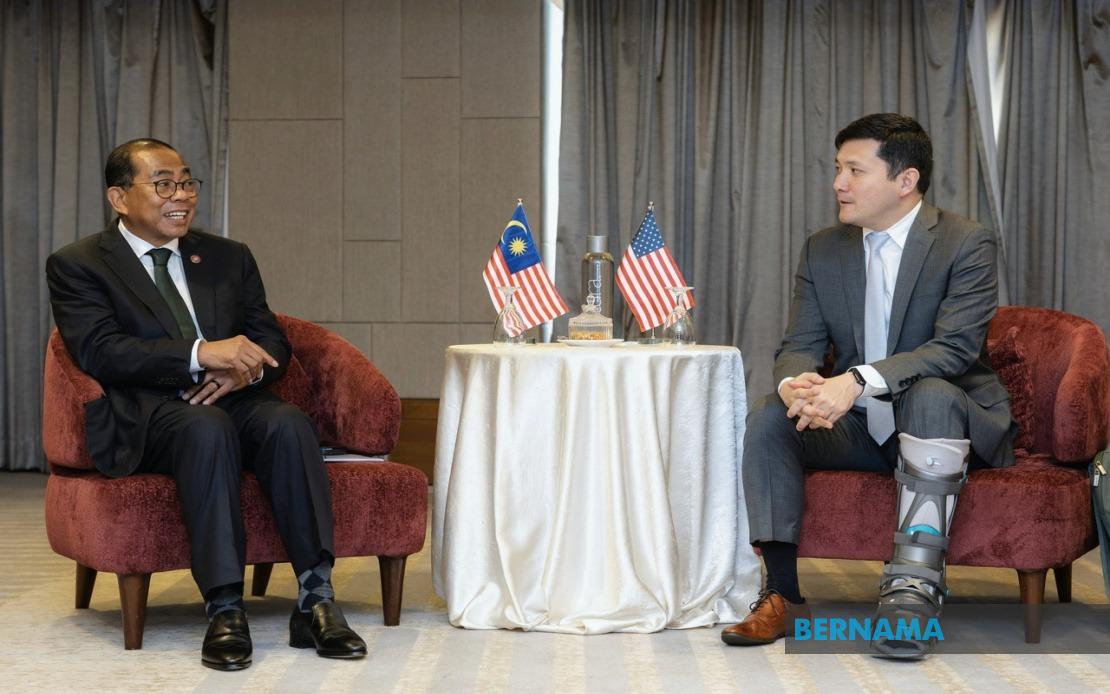
Malaysia's Defence Minister Datuk Seri Mohamed Khaled Nordin has confirmed that the United States maintains a strong commitment to deepening defence relationships with the country across multiple strategic dimensions. The assurance came during a formal courtesy call by US Ambassador to ASEAN Kevin Kim, held on the sidelines of the 37th Annual Military Law and Operations Conference (MILOPS) in Kuala Lumpur on August 3. The exchange underscores Washington's continued prioritisation of bilateral ties with Malaysia at a time when regional security dynamics remain fluid and complex.
The meeting between Mohamed Khaled and Ambassador Kim concentrated primarily on consolidating existing defence arrangements rather than introducing new policy initiatives. According to the Defence Minister, the discussion touched upon America's determination to sustain and expand collaborative efforts across defence and security domains. This measured approach reflects the underlying stability of Malaysia-US defence relations, which have matured over decades of institutional cooperation and mutual strategic interest in maintaining regional security architecture.
Beyond the American engagement, Mohamed Khaled also received delegations from other key regional partners, signalling the breadth of Malaysia's defence diplomacy during the conference period. ASEAN Secretary-General Dr Kao Kim Hourn called on the Defence Minister to discuss the shared challenges confronting the regional bloc and avenues for the defence sector to reinforce ASEAN Centrality—a concept that emphasises Southeast Asia's autonomy and central role in shaping regional affairs. The two officials acknowledged that military and defence establishments carry significant responsibility in supporting ASEAN's collective objectives of maintaining peace, stability, and shared prosperity.
The conversation between Mohamed Khaled and Dr Kao highlighted an emerging consensus within ASEAN that defence cooperation must serve not merely bilateral interests but also strengthen intra-regional solidarity. The defence sector, they agreed, functions as a critical pillar supporting ASEAN's diplomatic objectives and enabling member states to work together on transnational security challenges ranging from maritime threats to humanitarian disasters. This institutional alignment suggests that Malaysia views its defence relationships as extensions of ASEAN's broader strategic positioning in an increasingly multipolar Indo-Pacific region.
Singapore's newly appointed Permanent Secretary for the Ministry of Defence, Joseph Leong, similarly reaffirmed his country's intention to intensify cooperation with Malaysia across bilateral and multilateral frameworks. The appointment of Leong to this senior defence position carries symbolic weight, indicating Singapore's continued focus on deepening engagement with key ASEAN partners. The scope of Singapore-Malaysia defence cooperation encompasses not only direct bilateral defence initiatives but also multilateral mechanisms such as the Five Power Defence Arrangements (FPDA), which brings together Australia, Malaysia, New Zealand, Singapore, and the United Kingdom in coordinated security planning and exercise activities.
The FPDA dimension of regional cooperation remains particularly significant for Malaysia's strategic positioning. As a cornerstone framework for defence cooperation in the region, FPDA activities serve multiple purposes: they build interoperability among allied forces, establish protocols for responding to security threats, and provide a mechanism for dialogue between traditional maritime powers and Southeast Asian nations. Malaysia's involvement in these arrangements reflects its balancing act between maintaining strong partnerships with Western security partners while simultaneously upholding its commitment to ASEAN Centrality and non-alignment principles.
The 37th MILOPS conference, hosted in Kuala Lumpur from August 3 to August 6, attracted government officials and military representatives from more than 30 countries, making it a significant gathering for regional security dialogue. The conference's focus on military law and operations indicates a growing recognition among defence establishments that legal frameworks governing military conduct, rules of engagement, and humanitarian considerations require constant refinement and multilateral coordination. Malaysia's role as host country enhances its diplomatic standing and provides a platform for articulating regional perspectives on security governance.
The convergence of these diplomatic exchanges reveals Malaysia's multifaceted approach to defence statecraft. Rather than relying upon a single security patron, Malaysia cultivates relationships with the United States, Singapore, and broader ASEAN institutions, creating overlapping layers of partnership that provide flexibility and resilience. This strategy reflects lessons learned from regional history and acknowledges that no single power can adequately address the spectrum of security challenges confronting Southeast Asia.
For Malaysian readers, these developments carry implications for domestic security planning and regional stability. The reinforcement of defence ties with the United States ensures continued access to advanced military training, technology partnerships, and intelligence-sharing arrangements that enhance Malaysia's capacity to protect its maritime interests and territorial integrity. Simultaneously, the emphasis on ASEAN Centrality and cooperation with Singapore suggests Malaysia remains committed to resolving disputes and managing competition within the regional framework rather than through great power alignment.
The timing of these assurances also matters within the broader context of Indo-Pacific strategic competition. As tensions surrounding Taiwan, South China Sea maritime claims, and trade disputes create uncertainties, Malaysia's defence partnerships serve as anchors of predictability. The willingness of the United States and other partners to reaffirm commitment to defence cooperation with Malaysia sends a stabilising signal at a moment when regional actors require reassurance about the durability of existing security arrangements.
Looking forward, Malaysia will likely continue balancing its relationships with established security partners against its commitment to ASEAN solidarity and non-aligned positioning. The various courtesy calls during the MILOPS conference demonstrate that Malaysia occupies a valued position within multiple overlapping security frameworks. This status grants Malaysia influence in regional security discussions and access to diverse partnership opportunities, though it also requires careful diplomatic navigation to avoid appearing to favour any particular strategic grouping at the expense of others.

