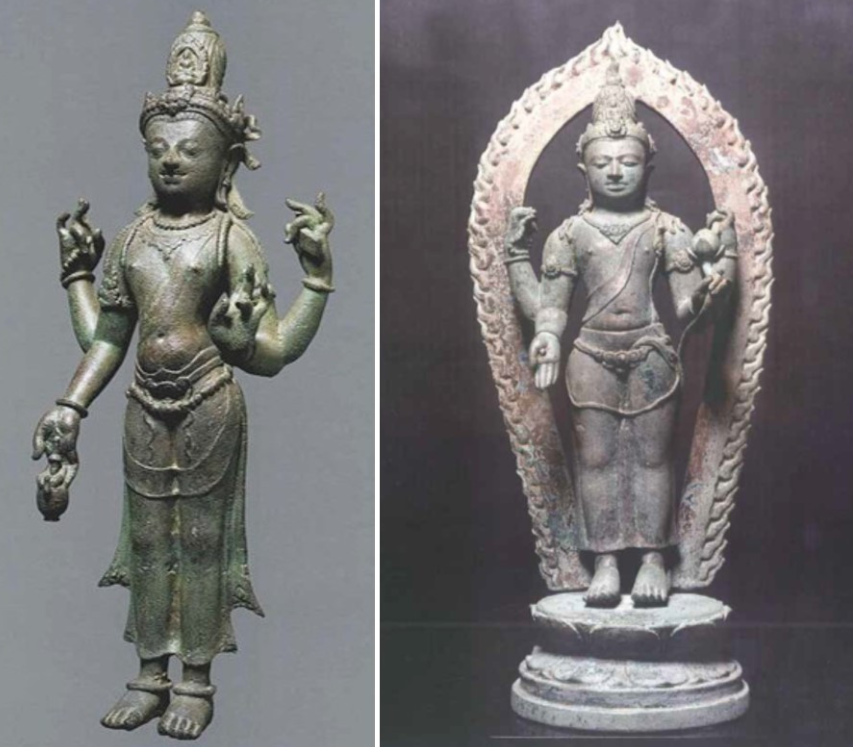
Two eighth-century bronze Buddhist statues have made their way home to Indonesia following their recovery by American authorities investigating one of Asia's most significant antiquities trafficking networks. The pair of standing Avalokiteshvara sculptures, revered bodhisattva figures symbolising compassion in Buddhist tradition, were formally returned during a ceremony at the Indonesian Consulate in New York last week. Their recovery underscores the ongoing international effort to dismantle illicit art smuggling operations that have systematically plundered cultural treasures across Southeast Asia for decades.
The statues were trafficked into the United States by Douglas Latchford, a British antiquities dealer whose name became synonymous with the large-scale looting of Cambodia's archaeological heritage and broader Southeast Asian cultural sites. Operating primarily from Bangkok and later becoming a Thai citizen, Latchford built an empire dealing in Khmer and Southeast Asian artefacts over more than four decades. His reputation as a foremost collector and dealer masked what US prosecutors would later allege was orchestrated trafficking of stolen goods into the international market, a scheme that unravelled only in 2019 when federal authorities brought charges against him.
Latchford's involvement with these Indonesian pieces exemplifies how a single trafficker's network could span multiple countries and cultures. The statues were looted from Indonesian archaeological sites decades ago before being acquired by Latchford in Bangkok. Between 2003 and 2007, he sold them to an American collector, deliberately concealing their illicit origins by withholding information about their provenance and providing false documentation. This deliberate misrepresentation allowed stolen objects to pass into legitimate-appearing private collections, enabling them to circulate through the international art market with an appearance of legitimacy.
The path to repatriation began when charges against Latchford were ultimately dismissed following his death in 2020, yet investigation into his network continued. A pivotal moment came in 2021 when a US-based collector voluntarily surrendered 34 Cambodian and Southeast Asian antiquities that had been acquired from Latchford. This decision proved instrumental not only for Indonesia but also for Cambodia, which had suffered centuries of systematic looting. Among the surrendered pieces were these two Indonesian bronze sculptures, which had been spirited away from their original archaeological context without proper documentation or scholarly record.
US Attorney Jay Clayton, speaking at the repatriation ceremony, framed the return as part of a broader commitment to combating art trafficking. He emphasised that the return represented not merely the recovery of objects but the restoration of cultural identity to the Indonesian people. The statement reflects a significant shift in how law enforcement agencies view antiquities trafficking—no longer as a victimless white-collar crime affecting only wealthy collectors, but as a theft of national heritage with implications for how nations understand and connect with their own histories.
The investigation that recovered these statues is part of a much larger pattern of repatriations that has accelerated in recent years. Latchford's death and the subsequent cooperation of his daughter, who agreed to return his collection valued at more than US$50 million to Cambodia, opened floodgates. Museums and private collectors across the United States, Europe, and Australia have since repatriated dozens of Khmer artefacts linked to his network. This cascade of returns demonstrates how successfully prosecuting or investigating one trafficking operation can uncover evidence and create pressure that leads to recovery of materials from multiple sources.
Indonesia's own experience with cultural heritage trafficking extends well beyond the Latchford case. In 2024, US authorities returned three additional Indonesian artefacts valued at approximately Rp6.5 billion that had been trafficked through different networks. These items—a stone relief from the Majapahit period, a seated bronze Buddha statue, and a standing bronze Vishnu sculpture—were recovered during investigations into an entirely separate trafficking operation involving Indian-American dealer Subhash Kapoor and US dealer Nancy Wiener. That investigation recovered 27 Cambodian artefacts as well, demonstrating how antiquities trafficking networks often operate across multiple countries simultaneously.
The Kapoor-Wiener case reveals the industrial scale of modern antiquities trafficking. Between 2011 and 2023, investigators from the Manhattan District Attorney's Office and the US Department of Homeland Security recovered more than 2,500 antiquities allegedly trafficked by Kapoor and his associates through the Manhattan-based Art of the Past gallery. The combined estimated value of these recovered pieces exceeded $143 million, illustrating the enormous financial incentives driving the illicit market. What makes this figure particularly striking is that it represents only what was recovered—the actual volume of looted artefacts circulating through global markets likely dwarfs these numbers.
For Southeast Asian nations including Indonesia, Malaysia, Cambodia, and Thailand, these repatriations carry significance beyond the monetary value or historical importance of individual pieces. They represent a gradual reclamation of control over narratives about Asian cultural history that were long dominated by Western institutions and private collectors. When ancient Buddhist and Hindu sculptures remain in Western museums or private hands, the story told about Asian civilisation is mediated through Western collecting practices and aesthetic preferences. Repatriation restores the ability of Southeast Asian nations to determine how their own heritage is presented, interpreted, and integrated into contemporary cultural life.
The recovery mechanisms illustrated by these cases—voluntary surrender by collectors, cooperation with law enforcement, and diplomatic channels—remain imperfect but increasingly effective. The appeal to collectors' conscience, combined with legal pressure and international diplomatic coordination, has proven more successful than simple seizure or criminal prosecution alone. However, challenges persist. Many trafficking networks operate across jurisdictions with varying legal frameworks and enforcement capacities. The exact archaeological sites from which the Indonesian statues were looted remain officially unclear, illustrating how thoroughly many traffickers obscure the initial theft and provenance information.
Looking forward, these repatriations signal that the cost of dealing in looted antiquities is rising. Museums and major collectors face reputational damage and legal liability. Dealers face prosecution even years after initial trafficking occurred. The existence of recovered objects also creates evidentiary trails that help authorities understand wider networks. Yet as long as wealthy collectors and institutions value Southeast Asian antiquities and weak enforcement exists in source countries, incentives for looting will persist. The solution requires not only law enforcement but also sustained international cooperation, stronger protections at archaeological sites, and a fundamental shift in how Western collectors and institutions view their relationship to Asian cultural heritage.

