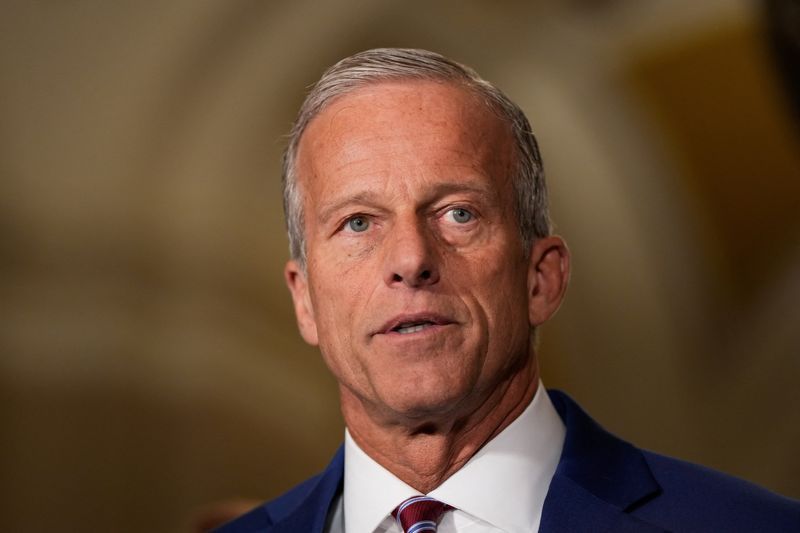
Senate Majority Leader John Thune initiated procedural steps on Saturday to advance the Clarity Act, a comprehensive cryptocurrency regulatory bill that would establish the first federal rulebook for digital assets in the United States. By filing for a key procedural vote scheduled for mid-September after the August recess, Thune signalled that Republican leadership believes passage remains achievable despite substantial Democratic opposition. The move represents a critical juncture in what has become one of the most heavily lobbied legislative efforts in recent congressional history.
The legislative framework would fundamentally reshape how cryptocurrencies are classified and regulated within America's financial system. Currently, the regulatory landscape remains fragmented and uncertain, with multiple federal agencies claiming overlapping jurisdiction. The Clarity Act would provide definitive guidance on whether digital tokens qualify as securities subject to Securities and Exchange Commission oversight or as commodities falling under Commodity Futures Trading Commission authority. This distinction carries enormous practical implications for how crypto companies operate, which investors they can market to, and what disclosure requirements they must satisfy.
Realising passage requires securing at least 60 votes in the 100-member chamber, a threshold that mandates Republican unity plus support from at least eight Democrats. Currently, all voting Republicans would need to align, along with the eight Democratic crossovers, to achieve this supermajority. The arithmetic underscores how polarised the cryptocurrency issue has become along partisan lines, though some Democrats represent states with significant crypto industry presence and may feel pressure from constituents to support clarity-focused legislation.
The cryptocurrency industry invested more than USD 119 million in political contributions during the 2024 election cycle, strategically backing candidates who signalled support for the Clarity Act and related legislation. This substantial financial commitment reflects the sector's assessment that regulatory certainty could unlock substantial growth opportunities and institutional investment flows. Industry advocates argue that the current ambiguous regulatory environment restricts innovation and drives cryptocurrency business activity offshore, creating competitive disadvantages for American companies.
President Donald Trump has elevated cryptocurrency policy as a priority during his second administration, reflecting both his campaign commitments to the industry and his family's direct financial interests in digital assets. Trump disclosed more than USD 1.4 billion in income from family cryptocurrency ventures in 2024, a revelation that Democrats have wielded as evidence of potential conflicts of interest in his administration's aggressive promotion of pro-crypto legislation. This connection between executive family wealth and regulatory push creates unusual political dynamics and raises governance questions about whose interests the policy prioritises.
The bill would represent Trump's second major legislative victory on crypto matters, following his previous signing of stablecoin legislation supporting dollar-backed digital tokens. Stablecoins—cryptocurrency tokens pegged to fiat currency values—represent a hybrid financial instrument that regulators worldwide view with varying degrees of concern and tolerance. The earlier Trump-backed stablecoin law generated significant debate about whether such legislation adequately protected consumers and financial stability or primarily benefited cryptocurrency companies seeking competitive advantages against traditional banking.
Banking institutions have mobilised substantial resistance to certain provisions within the Clarity Act, particularly language that would permit cryptocurrency companies to offer deposit-like services and rewards on customer stablecoin holdings. Banks argue this creates an unequal competitive playing field, as crypto platforms could attract customer funds through higher yield offerings without accepting equivalent regulatory burdens. The banking sector's opposition reflects genuine concerns about systemic risk and customer protection, though critics suggest established financial institutions primarily fear disruption to their traditional deposit-gathering business models.
Democrats have insisted that any cryptocurrency legislation include stronger restrictions on government officials' personal involvement in digital asset ventures, seeking to create ethical guardrails around the potential conflicts demonstrated by Trump's family crypto wealth. These negotiations remain ongoing and represent one of the few remaining points of genuine bipartisan dialogue on the bill. The outcome of these discussions could determine whether any Democrats support final passage and whether the regulatory framework includes meaningful conflict-of-interest provisions.
For Southeast Asian policymakers and financial regulators, the US legislative developments carry significant implications. American regulatory decisions typically influence global cryptocurrency standards, as international markets look to the world's largest economy for guidance on digital asset governance. Malaysia and other regional economies that have adopted cautious approaches to cryptocurrency regulation may feel pressure to revisit their frameworks should comprehensive American legislation establish clear precedent. The potential USD 1.4 billion income flow from Trump family crypto ventures also illustrates the genuine economic scale of digital asset markets and their capacity to generate substantial wealth concentrations.
The timing of the procedural vote for mid-September creates an opportunity for additional negotiation and potential deal-making over the coming weeks. Both Republican leadership and the White House will likely invest considerable effort in persuading hesitant moderate Democrats to support passage, highlighting the bill's ostensible focus on clarity rather than deregulation. Conversely, crypto-sceptical Democrats and consumer protection advocates may intensify efforts to modify the legislation or convince colleagues that the risks outweigh the benefits of regulatory certainty.
Beyond the immediate legislative battle lies a broader question about whether comprehensive cryptocurrency regulation represents genuine policy maturation or capitulation to concentrated industry lobbying. The substantial financial investment by crypto companies in political contributions demonstrates sophisticated engagement with the legislative process, though similar financial commitments characterise many other major industries seeking favourable regulatory treatment. The balance between industry innovation interests, consumer protection requirements, and systemic financial stability considerations will ultimately shape whether the Clarity Act, if enacted, proves successful in achieving stated policy objectives.

