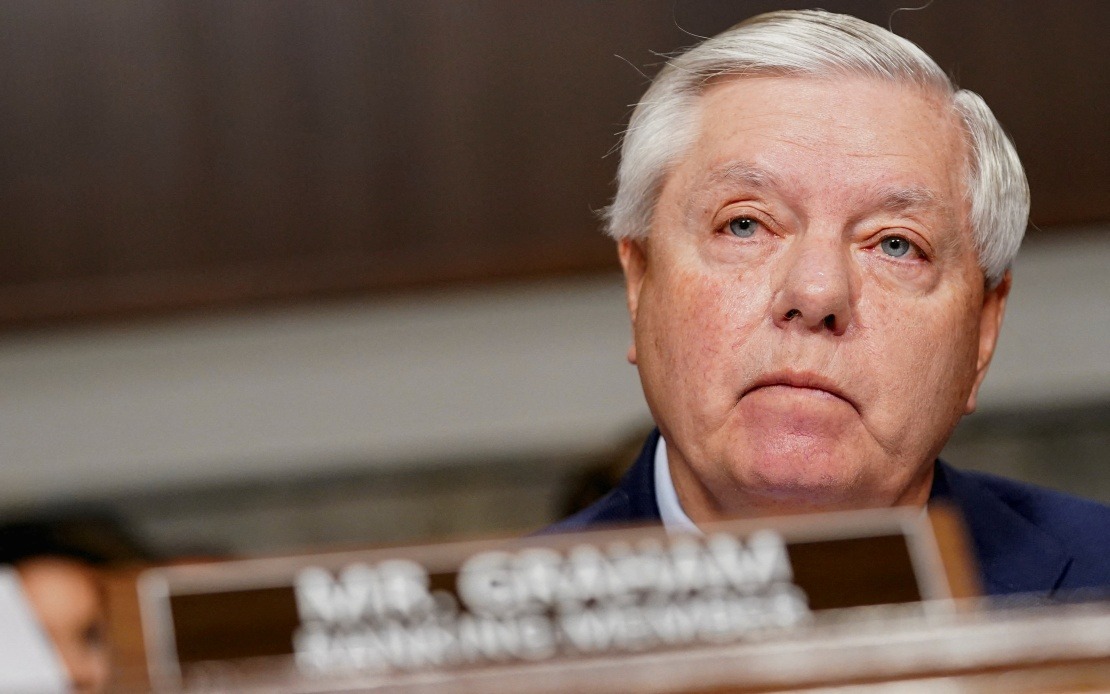
Lindsey Graham, the influential Republican senator from South Carolina, died Saturday evening at the age of 71 after succumbing to a brief and unexpected illness, according to a statement released by his office on Sunday. Graham's passing marks a significant moment in American politics, removing from the Senate a figure who had shaped defence and foreign policy discussions for over two decades and maintained considerable influence within the Republican Party leadership circles.
Graham's office released a brief statement acknowledging the loss while requesting privacy for his family during what it described as an incredibly difficult period. The senator's passing came with relatively little advance warning, as the illness that claimed his life appeared to have developed and progressed rapidly without prior public indication of serious health concerns. His family requested that the public respect their need for solitude in the immediate aftermath of his death.
Elected to the Senate in 2002, Graham had established himself as a durable political presence through successive reelection campaigns in 2008, 2014, and 2020. His consistent victories in the traditionally conservative South Carolina electorate reflected his ability to maintain strong support among the state's Republican base while also occasionally engaging in bipartisan legislative efforts. At the time of his death, Graham was actively campaigning for a fifth consecutive six-year Senate term, with the November election campaign already underway.
Within Republican circles, Graham was particularly notable as a steadfast ally of President Donald Trump, a relationship that had evolved from initial scepticism during the 2016 presidential race into a close working partnership. As chairman of the Senate Budget Committee, Graham wielded substantial influence over the chamber's fiscal agenda and budgetary priorities. His committee position represented one of the most powerful roles available to individual senators, granting him significant leverage in shaping legislation and directing federal spending.
Graham's international engagement remained active until very recently. He had recently completed a visit to Kyiv, where he held meetings with Ukrainian President Volodymyr Zelenskyy on Friday, just hours before his death that evening. This trip underscored Graham's continued involvement in overseas diplomacy and his particular focus on Ukraine policy, an issue that had occupied considerable attention within Congress throughout the ongoing conflict in Eastern Europe.
The timing of Graham's death carries particular significance for the political landscape heading into the November elections. His absence from the ballot and the Senate will necessitate special arrangements for his replacement, creating an opening that will likely attract significant attention from Republican candidates seeking to claim one of the party's most substantial Senate seats. South Carolina, as a solidly Republican state, will almost certainly elect another Republican to fill the vacancy, but the transition period may create uncertainties regarding committee assignments and leadership positions.
Graham's legislative record extended across multiple domains, including defence policy, immigration, and counterterrorism. He had positioned himself as an advocate for robust military spending and interventionist foreign policy positions, though his willingness to work across party lines on certain issues occasionally distinguished him from more ideologically rigid colleagues. His presence in the Senate had often served as a counterbalance to more isolationist voices within the Republican conference.
For Malaysian and Southeast Asian observers, Graham's death removes a figure who had taken interest in regional security concerns and Indo-Pacific strategy. His committee work and foreign policy engagement had occasionally touched on issues relevant to the region, including China policy and defence relationships. The particular constellation of influence and relationships that Graham had assembled would need to be rebuilt by his successor, potentially affecting the continuity of certain policy approaches.
The sudden nature of Graham's passing has sent ripples through Washington's political establishment, with colleagues from both parties preparing tributes and assessments of his legislative legacy. His death at age 71 cuts short what many observers had expected to be several more years of active Senate service, particularly given his recent international travel and campaign activities. The circumstances surrounding his illness remain undisclosed, with his family maintaining privacy regarding medical details.
Graham's departure from the Senate represents a notable transition point in American politics at a crucial moment, with the November elections approaching and significant questions surrounding the direction of both parties and the Trump movement within Republican ranks. His institutional knowledge, personal relationships, and strategic influence will be difficult to replicate quickly. The special election process that will follow his death offers an opportunity for Republican primary voters in South Carolina to shape the future complexion of their Senate delegation.

