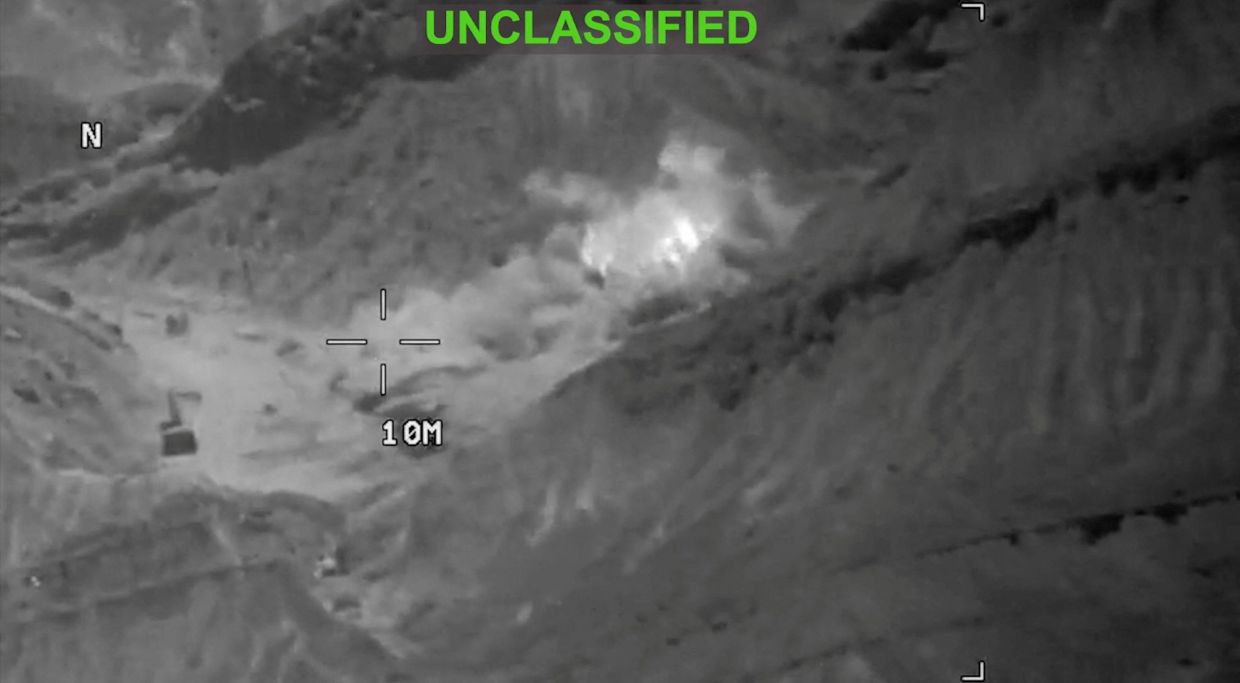
The United States has resumed intensive military operations against Iran following the deaths of two service members stationed in Jordan, marking the eighth consecutive evening of coordinated strikes. The operations, authorised directly by President Donald Trump, targeted Iranian military infrastructure including coastal surveillance systems and air defence installations across the country. The strikes represent a dramatic escalation in hostilities between Washington and Tehran after a fragile ceasefire agreement collapsed just one week prior, threatening to drag the already-volatile Middle East into a more widespread conflict.
The immediate trigger for the renewed American bombardment came after Iranian forces launched an attack on a US military installation in Jordan that resulted in the confirmed deaths of two military personnel, with a third reported missing in action. Central Command's statement indicated that the strikes were specifically designed to degrade Iran's capacity to threaten commercial shipping corridors through the Strait of Hormuz while delivering what the US characterised as swift punishment against Islamic Revolutionary Guard Corps units responsible for the Jordan attack. The intensity and scope of the response signals Washington's determination to maintain military dominance in one of the world's most strategically significant waterways.
According to Iranian state media reports, American forces targeted locations near Sirik in southern Iran and Shadegan, located close to the Iraqi border. Most controversially, Iran's Atomic Energy Organization reported that US forces struck a nuclear power plant under construction at Darkhovin, though Tehran did not specify the timing of this particular strike. These attacks raise serious concerns about potential environmental and nuclear safety implications, adding a dangerous dimension to an already volatile military confrontation that extends far beyond conventional weapons.
Despite the sustained American assault, Iranian forces have continued to respond with their own coordinated attacks throughout the region. Iranian military units conducted drone operations targeting American military assets at Kuwait's Al-Adiri camp and Ali Al Salem Air Base early Sunday morning, according to statements broadcast by Iranian state television. Kuwait, which endured sustained Iranian bombardment throughout Saturday, successfully intercepted additional Iranian missiles and drone strikes the following day, while Bahrain's air defence systems also repelled Iranian attacks without reported casualties or infrastructure damage.
For Malaysian readers and Southeast Asian observers, the escalation holds particular significance given the region's dependence on stable energy supplies. The Strait of Hormuz typically processes approximately one-fifth of global oil shipments, making any disruption to maritime traffic a matter of direct economic concern. Both the United States and Iran have increasingly weaponised control of shipping lanes, with Washington claiming enforcement of a naval blockade while Tehran asserts authority over vessel navigation through the waterway. This tug-of-war threatens to disrupt energy markets and inflate global prices affecting economies throughout Asia.
The military toll continues mounting on both sides of the conflict. American defence officials reported that two service members were killed on Friday, bringing the total number of US military deaths since the broader conflict began to sixteen, with more than four hundred and twenty personnel wounded. In contrast, Iran's Health Ministry claimed that American strikes over the preceding three weeks alone had killed fifty people and wounded more than five hundred others, though independent verification of casualty figures remains impossible given the fog of war and competing narratives.
The diplomatic situation has deteriorated markedly, with Iran's Supreme Leader Ayatollah Mojtaba Khamenei releasing a written statement through state media characterising President Trump's commitments as lacking any credible foundation. Khamenei explicitly warned of "even heavier costs and further humiliation" awaiting the United States, suggesting Iranian leadership sees no near-term resolution to the escalating conflict. The White House declined to issue a response to these provocative declarations, maintaining what appears to be a strategy of military demonstration rather than diplomatic engagement.
The broader conflict genesis traces back to February 28, when the United States and Israel launched coordinated strikes intended to disable Iran's nuclear and missile capabilities while degrading its regional proxy networks. That initial operation triggered a cascading cycle of retaliation and counter-retaliation that has now consumed several weeks and shown no signs of de-escalation. The ceasefire agreement that briefly interrupted hostilities proved insufficient to prevent resumption of direct military confrontation, suggesting the underlying strategic competition remains unresolved.
For regional stability and global commerce, the current trajectory is deeply concerning. Beyond immediate military considerations, the conflict threatens major disruption to energy supply chains that numerous Southeast Asian nations depend upon for economic function. Rising oil prices stemming from Middle Eastern instability carry direct implications for inflation pressures throughout the Association of Southeast Asian Nations, potentially affecting everything from transportation costs to manufacturing competitiveness. The regional community faces the prospect of watching superpower competition reshape Middle Eastern geography with serious downstream consequences for Asian prosperity.
The broader humanitarian dimension cannot be overlooked despite the focus on military operations and strategic competition. Mounting casualties on both sides, potential nuclear facility damage, and the displacement of civilian populations all suggest a conflict entering a more destructive phase. Iran's reported military response against Kuwaiti and Bahraini targets also implicates US regional allies in direct hostilities, potentially widening the geographic scope of the conflict beyond direct Iranian-American confrontation. For Malaysia and other ASEAN members seeking stability and predictability in international relations, the escalating Middle East conflict represents an unwelcome reminder of how distant great power competition can disrupt regional prosperity and strategic autonomy.

