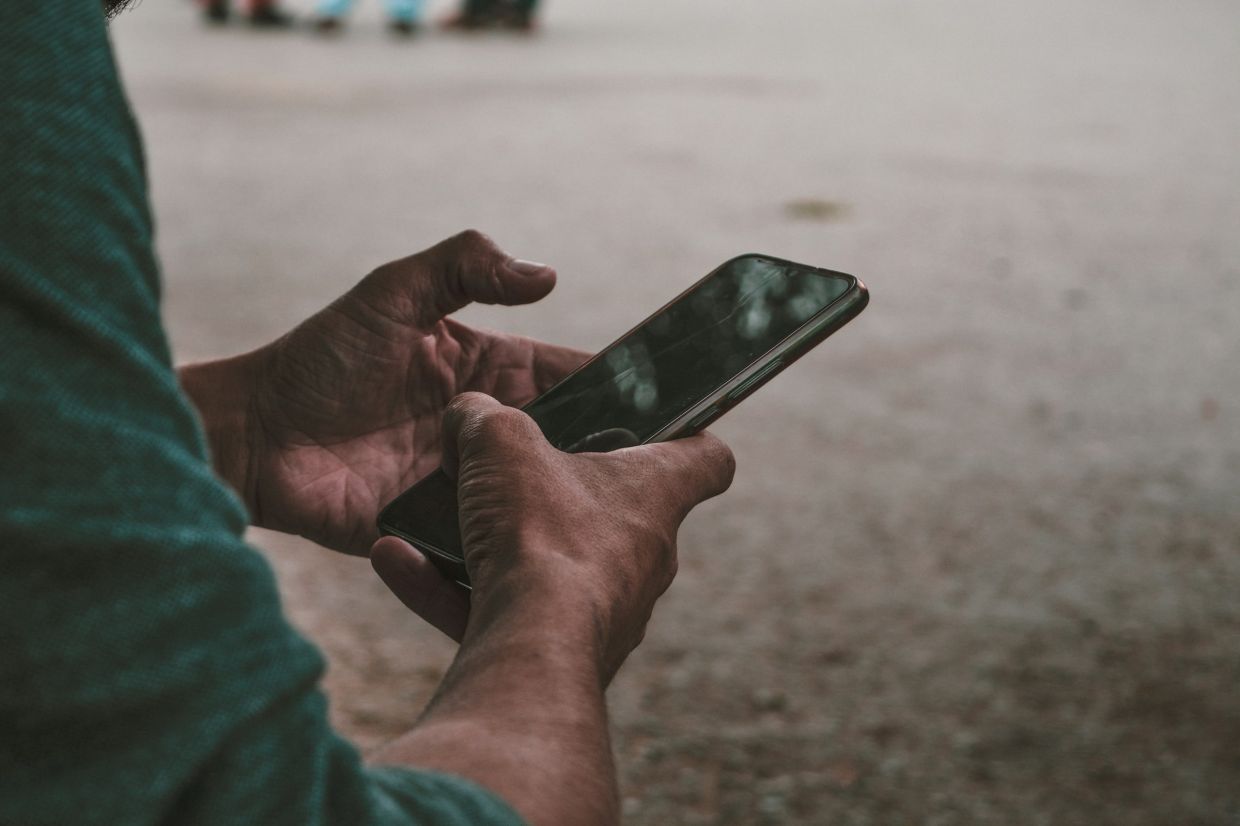
In a significant decision with implications for digital privacy worldwide, the United States Supreme Court has determined that law enforcement's use of geofence warrants to scan cellphone location records requires Fourth Amendment protection against unreasonable searches. The 6-3 ruling emerged from a case involving a Virginia bank robbery suspect, fundamentally reframing how American courts will evaluate the legality of these increasingly common investigative techniques that have become central to modern policing.
Geofence warrants function by compelling technology companies to produce location data for all devices present within a defined geographic area during a specific timeframe. Police use this tool to cast a wide net, identifying every person whose phone pinged cell towers or accessed location services within the target zone, then narrowing down suspects through additional investigation. The technique has proven enormously popular with law enforcement agencies seeking to solve crimes where perpetrators' whereabouts matter critically to establishing guilt or innocent presence.
The case centered on Okello Chatrie, who became a suspect in a 2019 armed bank robbery in Virginia after authorities obtained a warrant to access Google's cellphone location database. Investigators used a geofence warrant to identify phones present near the bank during the robbery, and Chatrie was subsequently convicted of taking USD195,000 (RM793,845) while armed. He now serves a 12-year prison sentence. Chatrie's legal team, led by attorney Adam Unikowsky, mounted a constitutional challenge arguing that geofence warrants inherently violate the Fourth Amendment because they authorize examination of location records belonging to innocent bystanders simply to identify one or two suspects.
Justice Elena Kagan, writing for a coalition of the court's three liberal justices and three conservative justices, articulated the majority's reasoning in straightforward terms. The opinion emphasized that individuals possess a reasonable expectation of privacy in their cellphone's location history, and that this expectation remains protected even when such information is held by third-party technology companies rather than stored on a person's device. Kagan's statement that "police intrude on that constitutionally protected interest when they demand the information" represents a watershed moment in digital privacy jurisprudence, acknowledging that modern surveillance capabilities create privacy concerns requiring constitutional guardrails.
However, the court stopped short of abolishing geofence warrants entirely. Instead, the ruling requires lower courts to evaluate whether specific applications of such warrants satisfy Fourth Amendment reasonableness standards in individual cases. This approach leaves open the possibility that law enforcement could justify geofence searches under certain circumstances, but establishes that judges cannot simply rubber-stamp such warrants without meaningful scrutiny regarding their scope and the government's justification for sweeping searches that inevitably capture innocent people's data.
Civil liberties advocates celebrated the decision as essential protection against unchecked technological surveillance. Eden Heilman, legal director of the American Civil Liberties Union of Virginia, characterized the ruling as confirmation that law enforcement lacks "a blank check to use new technology to conduct warrantless surveillance of people's movements." The decision reflects growing recognition that privacy rights must evolve alongside technology, preventing situations where police exploit technical capabilities to sidestep constitutional protections simply because those capabilities didn't exist when the Fourth Amendment was drafted.
The government's defense of geofence warrants rested on a narrow argument: smartphone users possess the technical ability to disable location services and therefore assume some risk by keeping them activated. This position found little traction with the majority, which recognized that ordinary people neither understand the privacy implications of location tracking nor reasonably anticipate that their location history might become available to police through geofence warrants. The court implicitly rejected the notion that constitutional rights depend on users' technical sophistication or their ability to navigate complex privacy settings in commercial applications.
Geofence technology has proven particularly controversial in high-profile investigations. Law enforcement notably deployed geofence warrants to identify supporters of President Donald Trump who entered the US Capitol building on January 6, 2021, during the assault intended to disrupt congressional certification of Joe Biden's election victory. That application demonstrated both the technique's power to solve serious crimes and the dangers it poses when applied to politically sensitive situations, illustrating why constitutional limits matter beyond ordinary criminal investigations.
The technology landscape continues evolving in ways that may complicate implementation of the court's ruling. Google, the dominant provider of location data services, no longer retains location history on its servers and has deleted previously collected data. However, competing technology companies and location data brokers continue gathering and storing vast quantities of movement information, ensuring that geofence warrants will remain viable investigative tools even as specific sources change. This ongoing data collection means the Supreme Court's privacy protections will require vigilant enforcement by lower courts.
The decision carries particular resonance for Malaysian and Southeast Asian audiences navigating the intersection of law enforcement needs and digital privacy. Regional jurisdictions increasingly adopt advanced surveillance technologies without equivalent constitutional protections, and the US Supreme Court's framework provides useful guidance for policymakers considering how to balance security interests against citizens' reasonable privacy expectations. As technology companies expand operations throughout Asia, questions about location data handling and law enforcement access will become increasingly urgent across the region.

