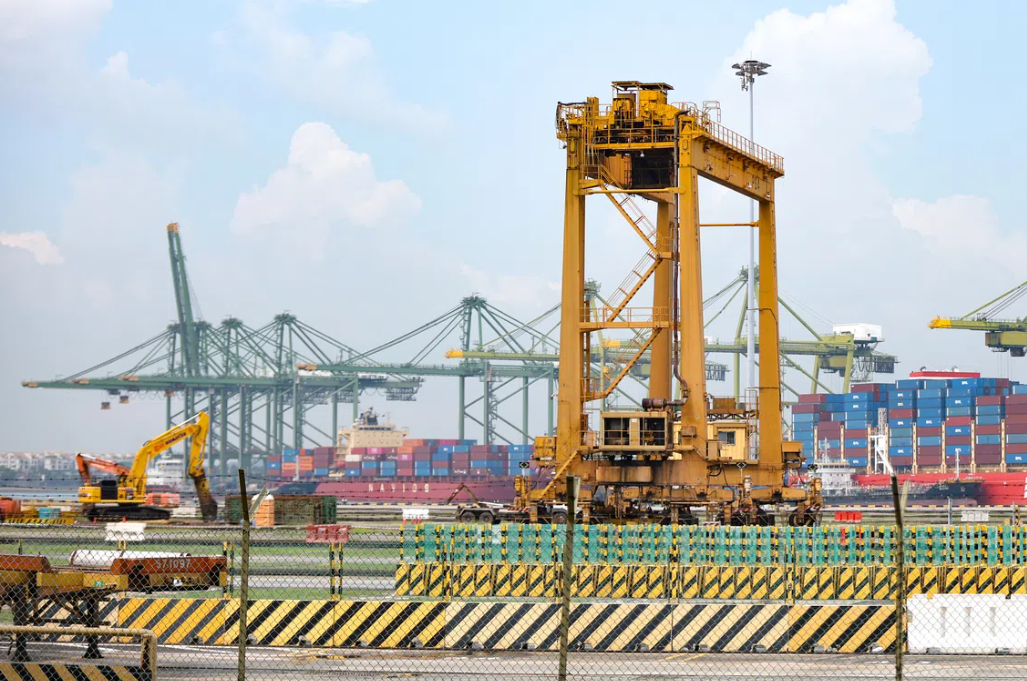
The United States has publicly flagged Singapore alongside 39 other nations as vulnerable entry points in what the Trump administration characterises as an elaborate scheme enabling Chinese manufacturers to evade billions of dollars in American tariffs. The White House released a detailed report in August identifying these economies as strategic nodes in what officials term the "Great Transshipment Scam," a system in which goods manufactured in China are shipped through intermediate countries with lower tariff rates, allowing exporters to obscure their true origin and qualify for preferential trade treatment when entering the American market.
The implications for Southeast Asia are particularly acute, given the region's prominent place in this categorisation. Indonesia, Malaysia, Thailand, and Vietnam have been placed in the second tier of this assessment, indicating significant economic interdependence with China that creates both opportunities and risks for tariff avoidance. Singapore, despite its reputation for stringent customs procedures, has been classified in the third tier alongside Cambodia, Laos, Myanmar, and the Philippines—economies Washington characterises as "small, opportunistic Chinese targets." The White House's framing suggests these smaller nations possess particular vulnerabilities: lower labour costs, free trade zones, strategic port access, and more limited customs enforcement capacity that makes them attractive staging points for rerouting Chinese exports.
The financial stakes underlying this crackdown are staggering. Using data compiled from government agencies and private research organisations, the administration estimates that illegal transshipments have cost the US Treasury between $40 billion and $303 billion in uncollected customs duties. This wide range reflects genuine uncertainty about the true extent of the problem, but even the lower bound represents losses equivalent to several years of development assistance budgets for developing nations. The scale of these figures underscores why Washington views this issue as both an economic and strategic priority, particularly given the political salience of manufacturing job losses in key American constituencies.
The White House strategy extends beyond rhetorical warnings. The administration intends to deploy an artificial intelligence-powered border detection system called "Detective Border" to identify illegally transshipped goods at entry points. This technological intervention signals a sophisticated understanding of how modern supply chains operate—goods move through complex networks involving multiple jurisdictions, carriers, and documentation systems. Machine learning systems capable of analysing transshipment patterns across thousands of shipments daily represent a qualitatively different enforcement capability than traditional customs procedures. The announcement that the US will impose an additional 40 per cent tariff on goods determined to have been illegally transshipped provides concrete teeth to these detection efforts.
The timing and magnitude of trade flows offer compelling circumstantial evidence supporting the administration's thesis. Following the imposition of comprehensive tariffs on Chinese goods in 2018, Washington observed a measurable decline in direct Chinese exports to the United States, while shipments from identified transshipment countries increased correspondingly. This pattern—declining direct flows matched by rising indirect flows—aligns with predictions of tariff avoidance behaviour. However, the White House itself acknowledges that not all such reallocation reflects illegal activity; some represents genuine shifts in investment, production location, and legitimate sourcing decisions by multinational corporations responding to changed economic incentives.
Singapore's position in this framework warrants particular attention for Malaysian stakeholders. The city-state's classification as a Tier 3 economy seems anomalous given its reputation as a financial and logistics hub with world-class customs administration and no meaningful free trade zones in the manner China might exploit. Yet the White House analysis suggests that Singapore's very sophistication—its deep integration into global supply chains, extensive port facilities, and bonded warehousing capacity—creates opportunities for rerouting that might be less visible than in less developed transshipment hubs. The Republic's authorities have responded by reiterating their commitment to international best practices and their assertion that transshipped goods cannot legally be relabelled as Singapore-origin products.
Malaysia faces distinct vulnerabilities in this environment. As a Tier 2 economy with significant economic integration with China across manufacturing, electronics, and resources sectors, Malaysia occupies a middle position in Washington's threat assessment. The country's importance as a semiconductor producer and electronics manufacturer means that legitimate supply chains involving Chinese inputs are embedded in the domestic economy. Yet this same integration creates potential vulnerabilities to accusations of transshipment, particularly as Chinese companies expand investment in Malaysian manufacturing facilities. The distinction between genuine value-addition and minimal processing for tariff evasion purposes may become increasingly contested as US enforcement tightens.
The broader geopolitical dimension of this initiative deserves consideration. The White House report explicitly warns that as regional export sectors become increasingly dependent on Chinese inputs, logistics networks, and capital, Beijing may gain "additional commercial and geopolitical leverage." This framing repackages economic interdependence as a national security concern, reflecting the Trump administration's consistent prioritisation of strategic competition with China over traditional free-trade principles. For Southeast Asian nations seeking to maintain balanced relationships with both Washington and Beijing, this dynamic creates uncomfortable pressures to demonstrate compliance with American standards while managing economic relationships with their largest investor and trading partner.
The enforcement mechanisms outlined in the report will inevitably create friction in regional trade relationships. The new 40 per cent levy on suspected illegal transshipments represents a significant escalation beyond previous tariff levels and applies retroactively to practices that may have operated in legal grey areas. Companies operating in Southeast Asia that have organised supply chains around cost minimisation and tariff optimisation will face sudden exposure to substantially higher duties. This may incentivise some firms to relocate processing operations back to China or the United States, potentially reducing manufacturing employment in the region.
Singapore Customs has outlined the technical position clearly: transshipped goods cannot change their origin status merely by passing through Singapore, and all companies must comply with local legislation and international standards. Yet this statement, while legally accurate, sidesteps the core difficulty American officials have identified: determining whether goods that arrive in Singapore as raw materials or semi-finished products and subsequently ship to the US have been legitimately processed or merely relabelled. The distinction depends on assessing value-added content and production processes, determinations that require technical expertise and coordination across multiple jurisdictions.
For Malaysia and neighbouring economies, the immediate imperative is ensuring that customs administrations and trade regulators operate with adequate resources and transparency to withstand American scrutiny. Investment in capacity building, data systems, and cross-border coordination mechanisms will become essential. Companies must also anticipate that their supply chain documentation will face heightened examination. The integration of artificial intelligence into border enforcement suggests that patterns invisible to human inspectors—correlations in shipment timing, value declarations, or routing—may trigger investigations and reclassification of goods' origin.
The broader implications extend beyond tariffs to the architecture of regional trade governance. Southeast Asia has long served as a bridge between Chinese manufacturing and global markets, a position that generates substantial economic value through logistics, processing, and financial services. The American initiative to systematically identify and penalise this intermediation challenges a fundamental aspect of regional economic strategy. Nations must now weigh whether accommodating US enforcement priorities—which may require stricter customs procedures and deeper scrutiny of Chinese-origin goods—aligns with their long-term economic interests and diplomatic relationships with Beijing.
Ultimately, this episode reflects the broader fragmentation of the global trading system. Rather than resolving trade disputes through multilateral negotialism, the Trump administration has chosen unilateral enforcement targeting intermediate nations perceived as participants in tariff evasion schemes. Southeast Asian governments and businesses must adapt to this reality by ensuring full transparency, upgrading enforcement capacity, and preparing supply chains for a world where tariff optimization is no longer viable strategy.

