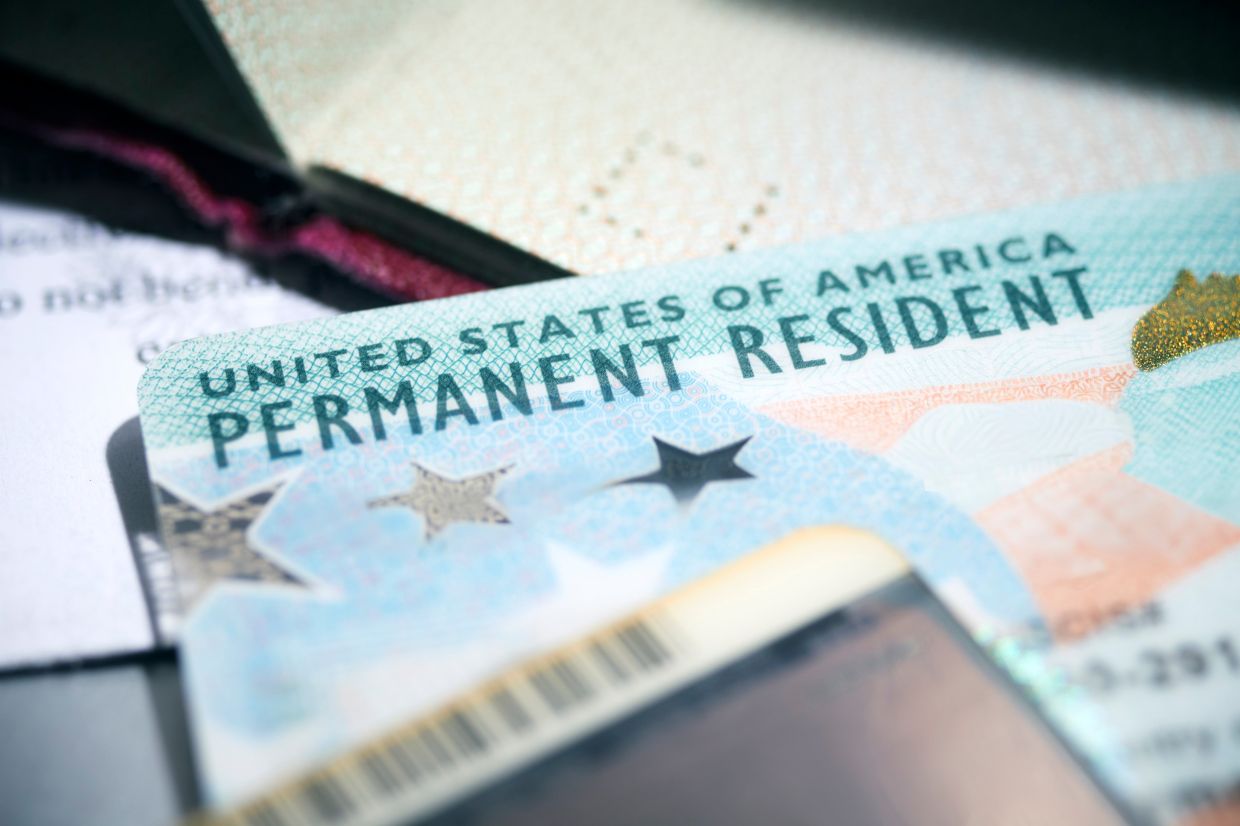
Immigration pathways to the United States have become substantially more restrictive following a decision by US State Department officials to pause immigrant visa interviews across embassies and consulates internationally. The postponement is designed to allow consular officers to receive fresh instruction on implementing a stricter interpretation of the "public charge" doctrine—a legal framework that determines whether visa applicants might eventually depend on government assistance. This development arrives shortly after a federal court invalidated a separate travel restriction affecting 75 nations premised on similar reasoning, signalling an administration determined to enforce immigration controls through multiple policy channels simultaneously.
The core assessment mechanism itself relies on longstanding criteria: applicant age, physical and mental health status, household size, financial resources, educational attainment, professional qualifications, and employment prospects. However, the substantive change lies in how aggressively consular officers are now instructed to apply these factors. Under the new framework, officials have been authorised to impose "public charge bonds"—financial guarantees that applicants must post to demonstrate self-sufficiency. Sarah Pierce, director of social policy at the Washington-based think tank Third Way and a former analyst at US Citizenship and Immigration Services, characterises the rollout as deliberately disruptive. The administration, in her assessment, selected "the most disruptive possible way" to implement these heightened standards. This framing suggests the policy shift was designed to achieve maximum deterrent effect rather than to refine administrative procedure incrementally.
The practical implications for prospective immigrants differ markedly depending on visa category and immigration stage. Family-sponsored applicants—typically the largest cohort seeking permanent residence through non-employment channels—face considerably steeper evidentiary burdens. Diversity lottery winners, whose selection is already statistically rare and whose processing windows narrow as the US fiscal year approaches its September 30 deadline, encounter additional complications from interview delays. Charles Kuck, an Atlanta-based immigration attorney who represented more than one hundred students in litigation against the administration during the previous year, observes that consular officers are being systematically trained "on how to deny cases under public charge rules." This formulation suggests the reorientation moves beyond neutral application of existing law toward goal-oriented case resolution designed to produce rejections.
A cancelled interview appointment, legally speaking, does not automatically invalidate an already-approved petition or extinguish a visa priority date. The State Department has issued no announcement revoking underlying approvals, Pierce clarifies. Nonetheless, the practical harm materialises through indefinite postponement. Individuals who have booked transatlantic flights, liquidated property, or completed medical examinations face mounting costs and dislocations as the State Department remains silent on when normal scheduling procedures will resume. For diversity visa recipients especially, uncertainty becomes acute; these visas must be issued before fiscal year conclusion or are forfeited entirely. The cumulative effect distributes burden unevenly: those with financial flexibility to absorb delays occupy a privileged position relative to applicants with modest resources or time-sensitive circumstances.
Tourist visas, student visas, and employment-based H-1B petitions nominally remain outside the current interview freeze, yet the expanded public charge doctrine carries legal applicability to non-immigrant categories as well. Kuck notes this distinction between what the statute permits and what current policy implements. As a practical matter, the public charge assessment appears presently confined to immigrant visa holders, though the legal architecture supports broader application if the administration elects to expand the framework. For H-1B workers already selected in the lottery, the proposed fee increase to USD103,000 and the planned lottery reform remain forward-looking rather than immediately operative, offering marginal reassurance to individuals already committed to the visa process. However, those whose path to lawful status depends on securing consular stamps abroad encounter maximal vulnerability under the new regime.
The traditional I-864 affidavit of support—a sponsor's written commitment to financially support an immigrant relative—historically functioned as a near-conclusive demonstration of financial capacity in family cases, absent unusually significant concerns. Under the tightened approach, this document no longer provides equivalent reassurance. Officers possess substantially broader discretion to probe circumstances and demand supplementary financial documentation. Pierce cautions that while the policy framework does not constitute a "legal blanket ban," the danger materialises when aggressive implementation begins operating "like one for certain populations." This formulation identifies the enforcement discretion problem: even facially neutral rules become restrictive prohibitions if applied with hostile intent across particular demographic cohorts or national origin groups.
Kuck emphasises the problematic vacuum created by insufficient legislative guidance. "There is no guidance in the statute," he states, which "allows for a great deal of mischief." This observation points toward institutional risk: when immigration officers operate within broadly-defined discretionary space without detailed oversight, variance in decision-making increases, and consistency—the State Department's stated commitment—becomes difficult to verify or maintain. Consular officers stationed in different jurisdictions may interpret the same factual circumstances divergently, creating arbitrary outcomes for applicants based partly on geographic assignment rather than legal principle.
For applicants whose interviews have been cancelled, the operative legal reality is that petitions typically survive administrative postponement. Kuck advises individuals still residing abroad to remain in their home countries unless they already possess work visas permitting re-entry. Those contemplating travel must evaluate risk carefully. Individuals with lawful status inside the United States should avoid international departure unless genuine emergencies necessitate travel, given that consular appointment cancellations create substantial risk that returning would require securing new visa stamps under the heightened scrutiny regime. An approved O-1 visa petition, Pierce warns, does not constitute sufficient reason to travel abroad for visa stamping under present circumstances.
For workers maintaining US employment while attempting to secure consular processing abroad, documentary preparation becomes critical. Applicants should carry original payroll records and employer verification letters establishing current employment. Individuals lacking lawful status—including those on 240-day extensions following H-1B expiration or those with pending green card or asylum petitions—should not attempt international travel. The administration's intensification of immigration enforcement throughout the federal bureaucracy heightens consequences of administrative errors or procedural missteps that previously might have proven reversible. Pierce notes this contextual factor: "This administration has dramatically increased the volume and aggressiveness of immigration enforcement, which makes the consequences of bureaucratic mistakes much higher."
New entrants to the United States under the reformed procedures now receive fixed duration-of-status determinations, typically extending four years with a 30-day grace period for departure, replacing the previous 60-day window. This compression further constrains flexibility for individuals managing work-related transitions or family circumstances requiring international movement. The cumulative effect of tightened public charge assessment, interview postponements, heightened enforcement environment, and shortened status windows substantially narrows the practical corridor through which legal immigration proceeds. For Malaysian and Southeast Asian populations seeking pathways to the United States through family sponsorship, employment-based mechanisms, or diversity visas, the narrowed window demands far greater attention to documentation preparation, financial proof, and risk assessment before initiating consular processing.
The broader implications extend beyond individual applicant circumstances. By implementing tighter public charge standards across family-based and diversity visa categories simultaneously with increased enforcement activity and compressed status periods, the administration signals that legal immigration pathways—particularly those available to middle-income applicants and those without pre-arranged employment—face sustained policy pressure. This approach contrasts sharply with employment-based immigration, where skilled worker shortages in sectors like technology and healthcare create countervailing pressure toward maintaining accessible channels. The resulting immigration system increasingly bifurcates between high-skilled, employer-sponsored workers on one hand and family reunification applicants on the other, with the latter facing progressively more demanding scrutiny and delayed processing. For countries like Malaysia with growing numbers of diaspora members seeking to sponsor relatives or populations competing for diversity visas, this reorientation represents a significant deterioration in accessibility and processing certainty.

