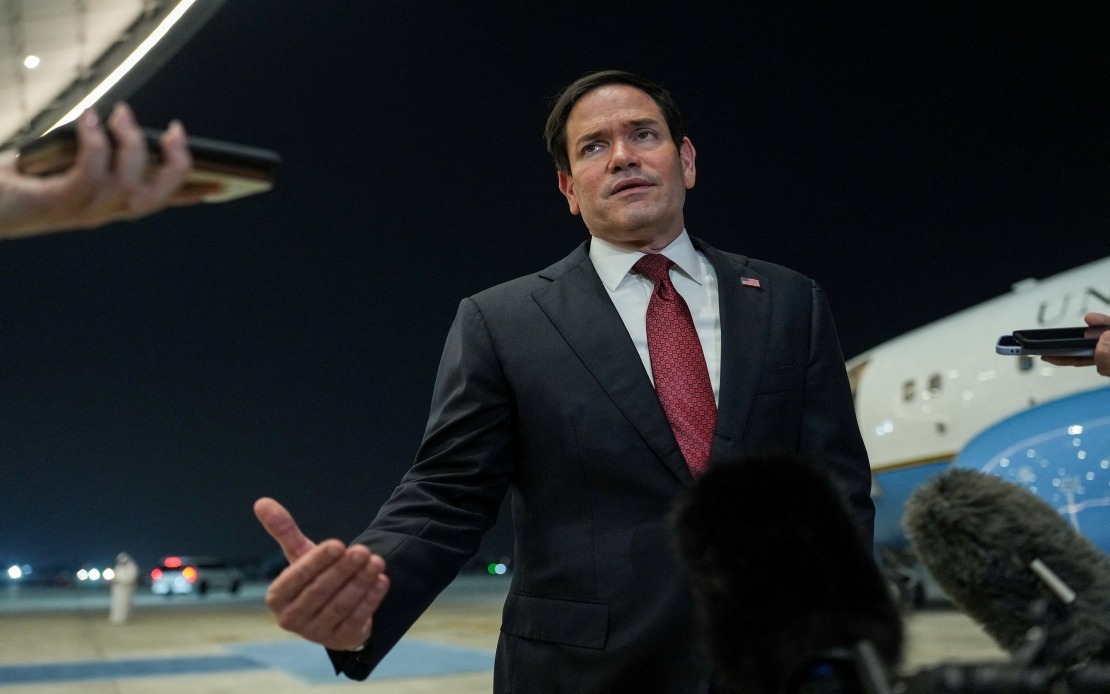
The United States will not provide government funding toward any reconstruction programme for Iran, according to Secretary of State Marco Rubio, who addressed speculation about a major economic investment package amid ongoing diplomatic negotiations between Washington and Tehran. Speaking to reporters on Tuesday, Rubio emphasized that while various proposals are being discussed as part of broader peace talks, direct US financial contributions are definitively off the table. His comments come as the two countries navigate a complex series of negotiations aimed at resolving decades of animosity and establishing new frameworks for regional stability.
Rubio's remarks follow reports suggesting that Gulf Arab states, traditionally close allies of the United States, might participate in financing Iran's economic recovery. However, the Secretary of State stressed that it remains too early to identify which nations, if any, would ultimately commit resources to such an initiative. The ambiguity surrounding potential contributors reflects the preliminary nature of discussions, with multiple variables still being resolved between the parties. Rubio's explicit rejection of US government involvement signals Washington's desire to position any reconstruction effort as a regional or international endeavour rather than an American-led initiative.
The diplomatic process has accelerated considerably in recent weeks. Last Sunday, representatives from the United States and Iran held substantive talks in Burgenstock, Switzerland, with Qatar and Pakistan serving as mediators in the discussions. The American delegation was led by Vance, while Iran's parliamentary speaker Mohammad Bagher Ghalibaf headed the Iranian negotiating team. Both sides issued statements indicating progress on key issues, suggesting that the dialogue, despite its inherent challenges, is producing movement toward potential agreements.
A significant development emerged when Iran and the United States jointly signed a memorandum last week that formally terminates the military conflict that commenced on February 28. This agreement represents a major breakthrough in halting active hostilities, addressing one of the most urgent dimensions of the broader dispute. The document includes concrete timelines specifying when the United States will lift its naval blockade that has constrained Iranian commerce, whilst Iran commits to restoring normal shipping operations through the Strait of Hormuz, one of the world's most critical maritime chokepoints for global energy supplies.
The memorandum also establishes Iran's commitment to forgo nuclear weapons development, a cornerstone concern for Western powers and regional actors. Recognizing the complexity of nuclear issues, the parties have allocated 60 days for separate negotiations specifically addressing Iran's nuclear programme. This bifurcated approach allows both sides to address immediate security concerns while creating dedicated space for technical discussions on enrichment, inspections, and verification protocols that have historically complicated US-Iran relations.
Rubio's reference to "progress made on a host of other security issues" underscores that any economic reconstruction funding would likely remain contingent on continued diplomatic momentum and concrete adherence to security commitments. This conditional framing suggests the US approach treats economic incentives as tools to reward compliance rather than gifts extended unconditionally. The Secretary of State's emphasis on security prerequisites reflects Washington's historical concern that economic normalization without verified behavioural change could prove counterproductive to long-term stability objectives.
For Malaysia and Southeast Asian observers, these developments carry significant implications. The Strait of Hormuz remains essential to regional trade routes and energy security, with disruptions potentially affecting commodity prices and shipping costs across Asia. A stabilized arrangement addressing Iranian maritime activities could benefit the region's economic interests. Additionally, any lasting settlement between the US and Iran might reshape geopolitical alignments in the Middle East, influencing how powers like China and Russia engage with regional actors and potentially affecting competition for influence across the Indian Ocean and beyond.
The involvement of Qatar and Pakistan as mediators also reflects broader patterns of regional diplomacy. Both nations maintain relationships with multiple Middle Eastern actors and have previously facilitated US-Taliban negotiations in Doha, demonstrating their capacity to bridge seemingly intractable divides. Their participation here suggests a multilayered diplomatic effort rather than purely bilateral discussions, which could create more durable frameworks for implementation and monitoring.
Rubio's clarification regarding US financial non-involvement simultaneously raises questions about who bears the economic burden of reconstruction. If Iran's economy requires substantial investment to recover from sanctions, blockades, and conflict-related damage, alternative funding sources become crucial. Gulf states possess significant capital reserves but may hesitate to contribute without US blessing or security guarantees. International institutions like the World Bank or regional development banks might eventually play roles, though their involvement typically requires broader consensus and established frameworks.
The timeline established for nuclear negotiations—60 days—suggests a deliberate pacing intended to demonstrate progress while allowing negotiators to address technical complexities. Previous attempts at nuclear agreements, most notably the Joint Comprehensive Plan of Action, foundered partly over interpretation disagreements and verification mechanisms. The current approach appears more granular, separating immediate conflict resolution from longer-term nuclear architecture discussions.
As these negotiations continue, the international community watches carefully. European nations, concerned about regional stability and their own Middle Eastern interests, may seek involvement in reconstruction efforts. China and Russia, despite tensions with Washington, could view Iranian economic recovery as aligned with their own strategic interests in countering Western dominance. The emerging framework thus represents not merely a bilateral US-Iran settlement but a potential recalibration of Middle Eastern power dynamics with ripple effects across Asia's maritime and commercial systems.