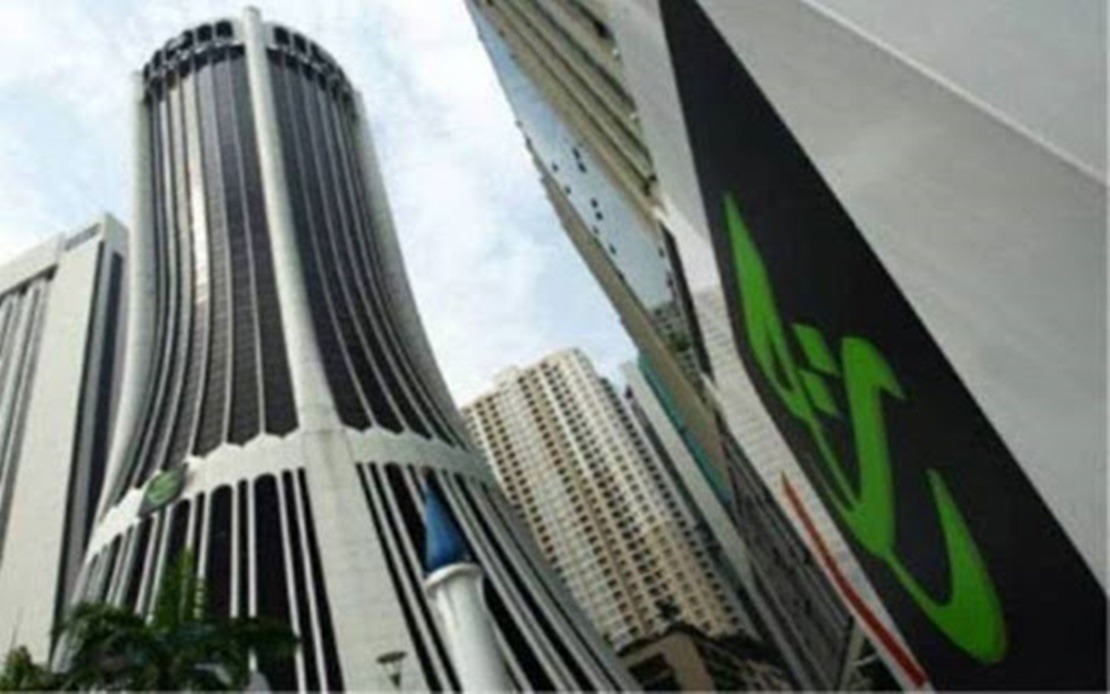
The Royal Commission of Inquiry's recent examination of Tabung Haji's operations has uncovered a troubling gap in how the institution values its property portfolio. Of the RM4.6 billion in total property asset valuations recorded for 2017, only RM556 million was supported by independent professional valuers' reports, with the remainder derived from internal management estimates alone. This finding has prompted leading economists to warn that the practice exposes Malaysia's biggest pilgrimage savings institution to substantial financial risks that could ultimately threaten the deposits and expected returns of hundreds of thousands of Malaysian pilgrims.
The core concern centres on what economists call the inherent conflict of interest when management estimates asset values. Prof Emeritus Dr Barjoyai Bardai from Malaysia University of Science and Technology notes that while this does not necessarily indicate fraudulent conduct, managers have a direct stake in how their institution's financial health appears to outsiders and investors. When individuals tasked with day-to-day operations are also responsible for determining the worth of assets, they face subtle but powerful incentives to present an optimistic picture. Independent professional valuers, by contrast, have no such stake in the outcome and operate under established methodological standards.
The practical consequence of this distinction becomes clear when examining Tabung Haji's capacity to distribute hibah, or profit-sharing returns to depositors. If property assets are valued at amounts substantially higher than what could realistically be obtained in an actual sale, the institution's overall financial position appears healthier than it truly is. This inflated asset base then becomes the foundation for calculating how much can be safely returned to depositors in the form of hibah. Should those assets need to be liquidated at market prices significantly below their recorded valuations, Tabung Haji could face a serious shortfall in its ability to fulfill promised returns, directly harming the retirement security of pilgrims whose savings are entrusted to the organisation.
Prof Dr Ahmed Razman Abdul Latiff, director of the MBA Programme at Putra Business School, emphasises that the board of directors and audit committee bear responsibility for subjecting management assumptions to rigorous scrutiny before they become the basis for major financial decisions. The governance failure here is not simply one of accepting estimates, but of failing to demand multiple layers of independent verification for figures carrying such significant implications. When the valuation of a single asset category comprises roughly RM4 billion and directly influences distributions that affect hundreds of thousands of depositors, the standard of proof should be correspondingly elevated.
The stakes were particularly high because these asset valuations directly determined Tabung Haji's compliance with Section 22 of the Tabung Haji Act 1995, a legislative requirement that has direct bearing on the institution's operational framework and the security of depositor funds. Yet the RCI's investigation found that previous auditors did not subject these calculations to heightened scrutiny despite their materiality. Ahmed Razman questions whether auditors adequately challenged management on its valuation methodology or whether they accepted representations too readily without demanding comprehensive supporting evidence. The RCI report itself suggests that concerns about Tabung Haji's financial position deserved earlier, more thorough examination during the audit process.
Central to the valuation problem is the treatment of investments and holdings within Tabung Haji's portfolio. According to the PwC audit report examined by the RCI, Tabung Haji management did not employ market prices for listed shares or professional valuations when calculating the Realisable Asset Value used for hibah distributions. Instead, it created a parallel valuation system divorced from the figures reported in the institution's own audited financial statements. This approach allowed management to include RM2.294 billion relating to Tabung Haji Plantations Berhad in the RAV calculation based on the inflated RM4.6 billion property asset base, while simultaneously making no downward adjustments for investments whose market prices had declined to minimal levels.
The justification offered by Tabung Haji management reveals the ambiguity that enabled this practice to persist. The institution argued that Section 22 of the Tabung Haji Act 1995 does not provide an explicit definition of which assets should be included or how they should be valued, thereby claiming discretion in its valuation approach. This interpretation essentially allowed Tabung Haji to operate its own asset valuation framework independent of standard financial reporting principles. While the law's silence on specific methodology may technically permit multiple interpretations, sound governance would counsel moving towards transparency rather than exploiting ambiguity. The gap between what the law requires and what prudent practice demands has been exposed.
Prof Barjoyai recommends that Tabung Haji establish clear, binding standards for asset valuation that require high-value properties to be independently valued using consistent methodologies supported by clear market evidence. These standards should also mandate that RAV calculations be independently audited and verified by a specialised committee comprising investment experts and qualified accountants without operational involvement in the institution. The purpose would be to create distance between those responsible for managing Tabung Haji's day-to-day operations and those determining its financial position for hibah purposes.
The governance principles that should govern hibah distribution calculations are deceptively simple yet consistently overlooked in Tabung Haji's case. Figures used to determine dividend capacity must be conservative, meaning they should err on the side of caution rather than optimism. They must be verifiable through transparent, documented processes that others can independently confirm. Most critically, they must not rely excessively on estimates provided by parties with a direct interest in showing strong financial results. When these principles are violated, the consequences extend far beyond accounting precision. They affect retirement security for hundreds of thousands of Malaysian families whose pilgrimage savings rest on the integrity of Tabung Haji's financial position.
The RCI's disclosure of these valuation practices raises broader questions about institutional accountability and the effectiveness of existing oversight mechanisms. If management can substantially depart from independent valuation standards while auditors raise no alarms, if boards do not demand multiple layers of verification for material figures, and if regulatory gaps permit wide discretion in asset valuation methodology, then depositor protection becomes vulnerable. Tabung Haji's case demonstrates that legal silence does not equal legal permission, and that institutions holding public trust must interpret ambiguity in favour of transparency and conservative financial reporting.
Moving forward, the challenge for Tabung Haji will be rebuilding confidence through demonstrable changes in valuation practice. This means implementing the governance improvements recommended by economists, establishing independent oversight of asset valuation decisions, and adopting valuation methodologies that align with professional standards rather than internal estimates. For Malaysian depositors, particularly those in their final years before planned pilgrimages, the resolution of these governance issues carries personal significance. The institution's credibility depends not merely on accepting the RCI's findings but on demonstrating substantive reform in how it determines the financial position underlying hibah promises.

